
- AI Infrastructure
- Capital Allocation
- Data Centers
- Earnings Report
Nvidia Lifts Fiscal 2028 Outlook as Board Rules Out Huang Return
9 minute read
Revenue doubled to $115.8 billion and Nvidia raised its fiscal 2028 growth outlook to about 75%, but thinner margins and an open CEO search keep governance at the center of the story.
Key Takeaways
- Third-quarter revenue rose 103% to $115.8 billion, clearing the top of Nvidia’s own range by $5.7 billion, as data center sales of $107.6 billion reached nearly 93% of the total.
- Kress raised the fiscal 2028 growth outlook to about 75% from 70%, though the $130 billion Q4 guide includes an extra week and implies about 4% underlying sequential growth.
- Board chair Harvey Jones said the board does not intend to reinstate Jensen Huang; shares, down 24% in November, rose about 3.5% in extended trading after the call.
The Numbers Before the Turmoil
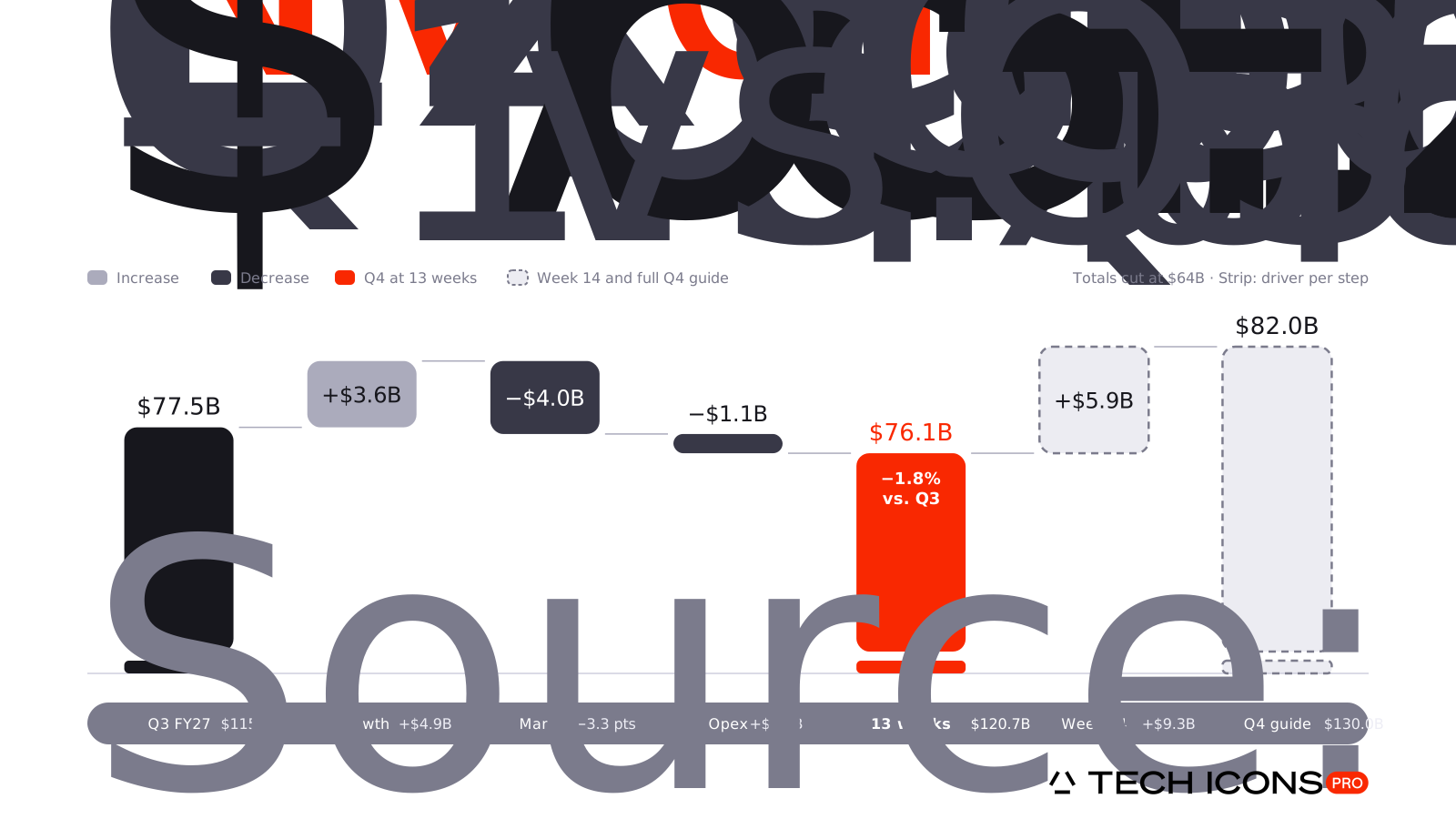
Nvidia’s fiscal third quarter ended on October 25, more than two weeks before its board accepted Jensen Huang’s resignation. The results published on Tuesday therefore describe a company still run by its founder, and they leave little room for doubt about demand. Revenue reached $115.8 billion, up 103% from a year earlier and 20% from the second quarter. That was $7.8 billion above the midpoint of the $108 billion outlook Nvidia set in August and $5.7 billion beyond the top of its own range. Adjusted earnings of $2.68 a share compared with the $2.47 analysts expected, according to LSEG data. Sequential growth quickened from 18% in the prior quarter, on a revenue base roughly double that of a year ago.
The composition matters as much as the total. Data center revenue rose 110% to $107.6 billion and now accounts for close to 93% of sales. Edge Computing, which gathers PCs, gaming, automotive, robotics and telecom, added $8.2 billion, up 42%, a business that would be substantial on its own yet barely moves the group’s trajectory. GAAP operating income was $77.5 billion, an operating margin near 67%, and net income was $65.3 billion. Operating expenses rose 57% while revenue doubled, which is why operating income grew faster than sales, up 115%. Margins of that order are rare in hardware at any size.
Rubin Changes the Shape of the Business
The quarter’s defining operational fact was Vera Rubin. Nvidia began shipping the Vera Rubin NVL72 rack during the period and described the rollout as the fastest product ramp in its history, with systems running at CoreWeave, Google Cloud, Microsoft Azure, Oracle Cloud Infrastructure and Nebius. On the August call, Kress said Rubin would make up about a fifth of third-quarter data center revenue and that hyperscale growth would reaccelerate in the fourth quarter as supply widened. It arrived a quarter early. Hyperscale revenue grew 23% sequentially to $60.1 billion in the third quarter, according to the CFO commentary, while AI clouds, industrial and enterprise customers, a group Nvidia calls ACIE, grew 18% to $47.5 billion, nearly triple a year earlier. “Vera Rubin is off to an explosive start, our roadmap is on track.” Colette Kress, interim CEO and CFO
Our momentum is real. With the market-leading multi-year roadmap, supply agreements extending through to the end of the decade and sustainable demand, we are well positioned to accelerate NVIDIA’s leadership position. Our ambition will not change, our passion to innovate will not change, and our commitment to customers, partners, and shareholders will not change.
That second group is where the strategic shift is most visible. Specialist AI clouds, sovereign programs and large enterprises rarely design their own accelerators, which makes them natural buyers of complete Nvidia systems and a counterweight to the custom-silicon programs of the largest cloud providers. The release extends the same logic outward: a broader Meta collaboration spanning Vera Rubin, Vera CPUs, Spectrum-X networking and BlueField-4; an agreement to acquire Hugging Face, the open-model platform; and support for an Australian buildout of up to 2 gigawatts of AI factory capacity by 2027. Nvidia is selling the factory, the network and, increasingly, the software commons around them.
The Cost of Scale
Gross margin is where the quarter’s strength meets its limits. GAAP gross margin of 74.8% cleared August guidance of 74.0%, plus or minus half a point, but Nvidia expects 71% to 72% in the fourth quarter, while operating expenses climb to about $11.0 billion from $9.2 billion. In August, Kress attributed the decline to memory prices that had run ahead of the company’s expectations and said margins should recover to 72% to 73% in fiscal 2028 as Nvidia’s own price increases take effect. For now, a meaningful share of the AI profit pool is migrating to the makers of high-bandwidth memory. The coming quarter will show how much of that cost Nvidia can pass on.
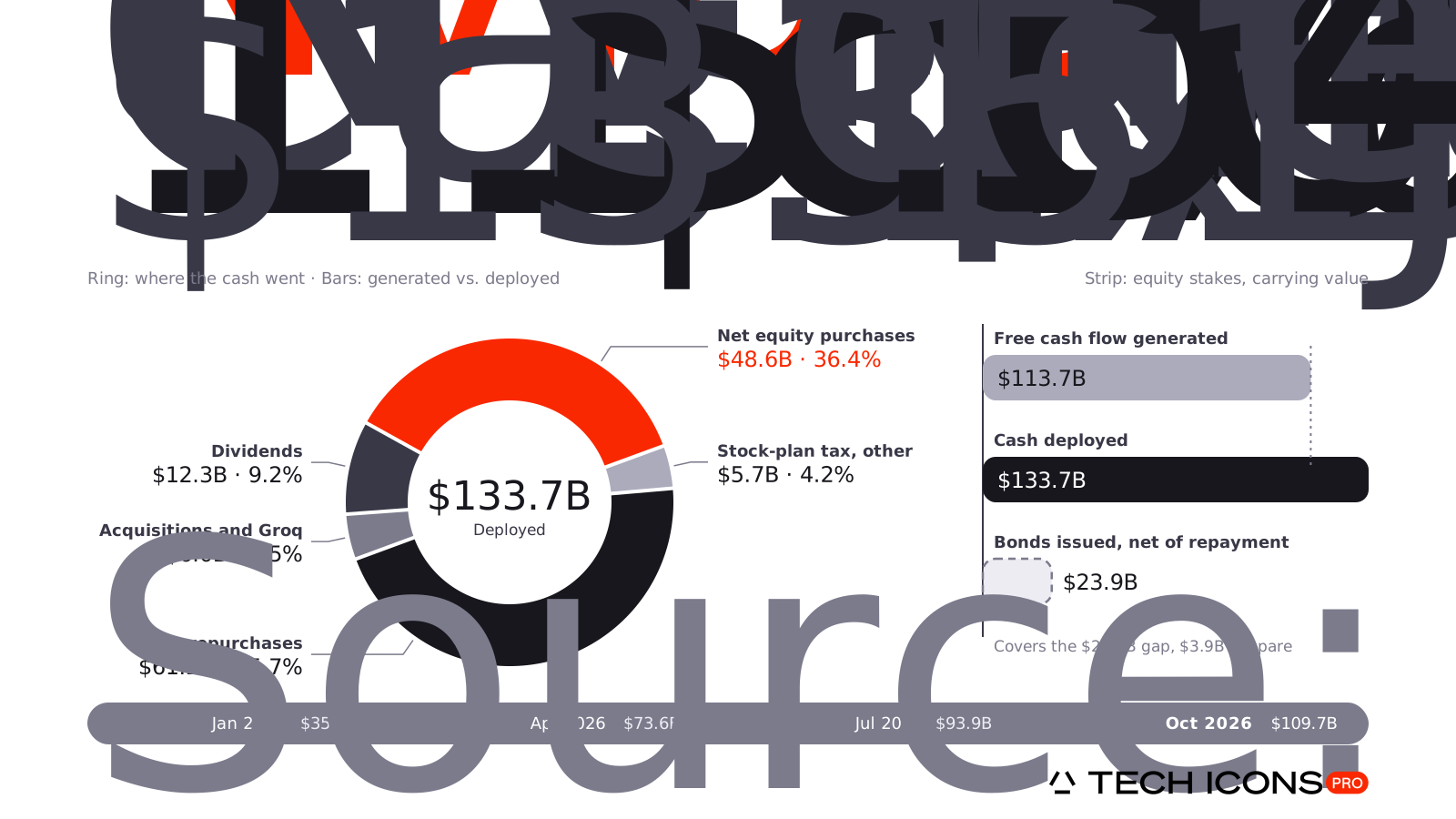
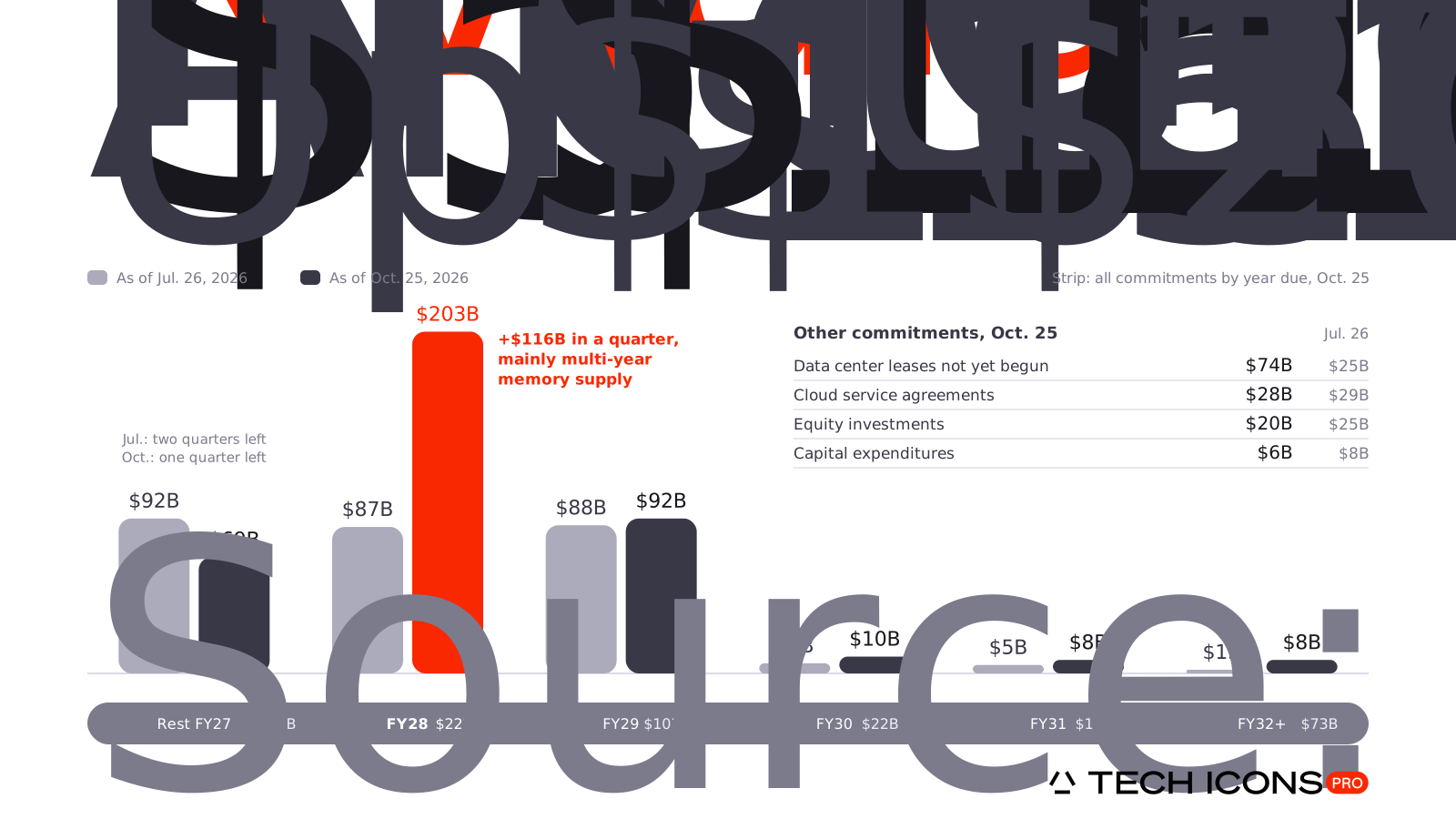
Cash flow offers a more sober measure. Free cash flow of $43.8 billion equaled about two-thirds of GAAP net income. The quarter’s filings point to the reasons: receivables reached $81.0 billion, or 64 days of sales against 51 in January, as Nvidia gives some investment-grade data center builders payment terms of up to a year. Supply and capacity commitments rose to $390 billion from $279 billion in a single quarter, mainly for multi-year memory supply, and guarantees reached a maximum of $118.0 billion, including $105 billion for a campus to be leased to OpenAI.
A Board Steps Forward
The governance story has moved faster than the financial one. On November 11 the board accepted Huang’s resignation as president, chief executive and director, ending a 33-year tenure. Kress, finance chief since 2013, became interim CEO while keeping the CFO role, and Harvey C. Jones, a director since 1993, became the board’s first chair. The search for a permanent successor will consider internal and external candidates. Nvidia has given no reason for the departure. Three days earlier, the board had opened an independent investigation, overseen by independent directors with outside counsel, after reports that Huang had been the target of a foreign intelligence effort. It said it had no reason to believe national security or company secrets were compromised. Huang said on Tuesday he would be open to returning. Hours later, opening the earnings call, chair Harvey Jones said the board had unanimously accepted his resignation and does not intend to reinstate him, and declined to discuss the circumstances or the investigation.
On November 12th, our Board of Directors announced that after disclosure of personal behavior inconsistent with the company’s code of conduct, standards, and cultural norms, Jensen Huang voluntarily resigned his positions as President, CEO, and board member. The NVIDIA Board unanimously accepted his resignation and does not intend to reinstate Jensen as CEO.
The board’s first structural answer arrived on results day: a standing National Security and Export Control Oversight Committee, chaired by director Suzanne Nora Johnson and empowered to retain outside legal and trade experts. It brings the company’s most politically sensitive function under direct board oversight, and it addresses an exposure that has grown with the company. Washington opened a case-by-case licensing path for H200-class sales to China in January, yet Nvidia’s filings show Beijing has restricted those purchases, and Hopper shipments to China came to $2.4 billion in the third quarter, about 2% of data center revenue. The fourth-quarter outlook again assumes no China data center compute revenue, which keeps a political variable out of the guide and leaves any recovery there as unpriced upside.
What the Market Is Pricing
Investors had already sold. Nvidia shares fell 24% in November ahead of the report, through six consecutive weekly declines, the longest such run since 2012, and closed on Tuesday at $155.46, their lowest level since July 2025, during a broad sell-off in which the Dow fell more than 800 points. After the release and the call, the stock traded about 3.5% higher in extended trading. For a beat of this size and a raised outlook, the response was restrained. It suggests the discount now applied to Nvidia reflects leadership and governance risk, which no single quarter can retire, more than any doubt about demand.
We have an incredibly talented leadership team, and we have every confidence in Colette’s leadership, integrity, and ability to deliver as interim CEO. Colette has been at the center of this company’s extraordinary growth for the last 13 years, instrumental in executing strategy, and with a deep understanding of our business, customers, operations, and financial position.
The guidance deserves a closer reading than the headline allows. Nvidia expects fourth-quarter revenue of $130 billion, plus or minus 3%, about $5 billion above consensus, but the quarter includes an additional week. Pro-rated to a standard 13 weeks, the midpoint is about $121 billion, roughly 4% above the third quarter rather than the 12% the raw figure implies. The longer view is firmer. On the call, Kress raised the fiscal 2028 growth outlook to about 75% from 70%. On a fiscal 2027 base near $424 billion, that implies revenue above $740 billion, and the $203 billion of supply Nvidia has already committed for that year shows the bet being placed in advance. The board has settled who will not lead Nvidia. It has yet to say who will.