- Biotech
- Healthcare
- Pharmaceuticals
Wegovy Pill Powers Novo Nordisk Beat, but Pricing Will Decide 2027
9 minute read
Novo Nordisk raised its 2026 guidance for a third time after its oral Wegovy outsold forecasts and adjusted profit rose 27%. A US list-price reset in January will now test how durable the recovery is.
Key Takeaways
- Third-quarter sales of DKK 79.2 billion and adjusted operating profit of DKK 31.7 billion both beat consensus, and 2026 guidance of -2% to +2% now allows for growth over 2025.
- The Wegovy pill brought in DKK 5.39 billion against a DKK 4.62 billion forecast. Combined US Wegovy sales rose 21% even though the injectable fell 13% at constant exchange rates.
- DKK 8.7 billion of impairments cut reported operating profit by 9%. With $675 US list prices from January and Lilly’s scale, net pricing is the number that will define 2027.
The Year Changes Direction
Novo Nordisk came into its third-quarter report after a year of steadily lowered expectations. Its Copenhagen-listed shares were down roughly 17% year-to-date, its September strategy day had disappointed, and investors had come to treat each report as a likely source of bad news. Wednesday’s numbers did not fit that pattern. Sales reached DKK 79.2 billion, up 4% at constant exchange rates, and adjusted operating profit increased 27% at CER to DKK 31,720 million. Analysts had projected 28.39 billion crowns for adjusted operating profit and 73.22 billion for adjusted sales, so neither figure was a narrow beat.
The guidance history matters more than the size of the beat. In February, Novo said adjusted sales growth for 2026 was expected to be -5 to -13%. In May the range moved to -4% to -12% at CER, and in August to down 6% to flat. Adjusted sales growth and adjusted operating profit growth are now both expected to be -2% to +2% at CER. It was the third time the company raised its full-year guidance, and the first range this year that allows for growth over 2025. The profit increase still needs to be read with care. The comparison base included DKK 9 billion of company-wide transformation costs recognised in Q3 2025. Adjusted operating margin of about 40% is also well below the 46.9% reported in the first quarter, which shows that lower realized prices are still feeding through to the income statement.
The Pill Proves Its Commercial Case
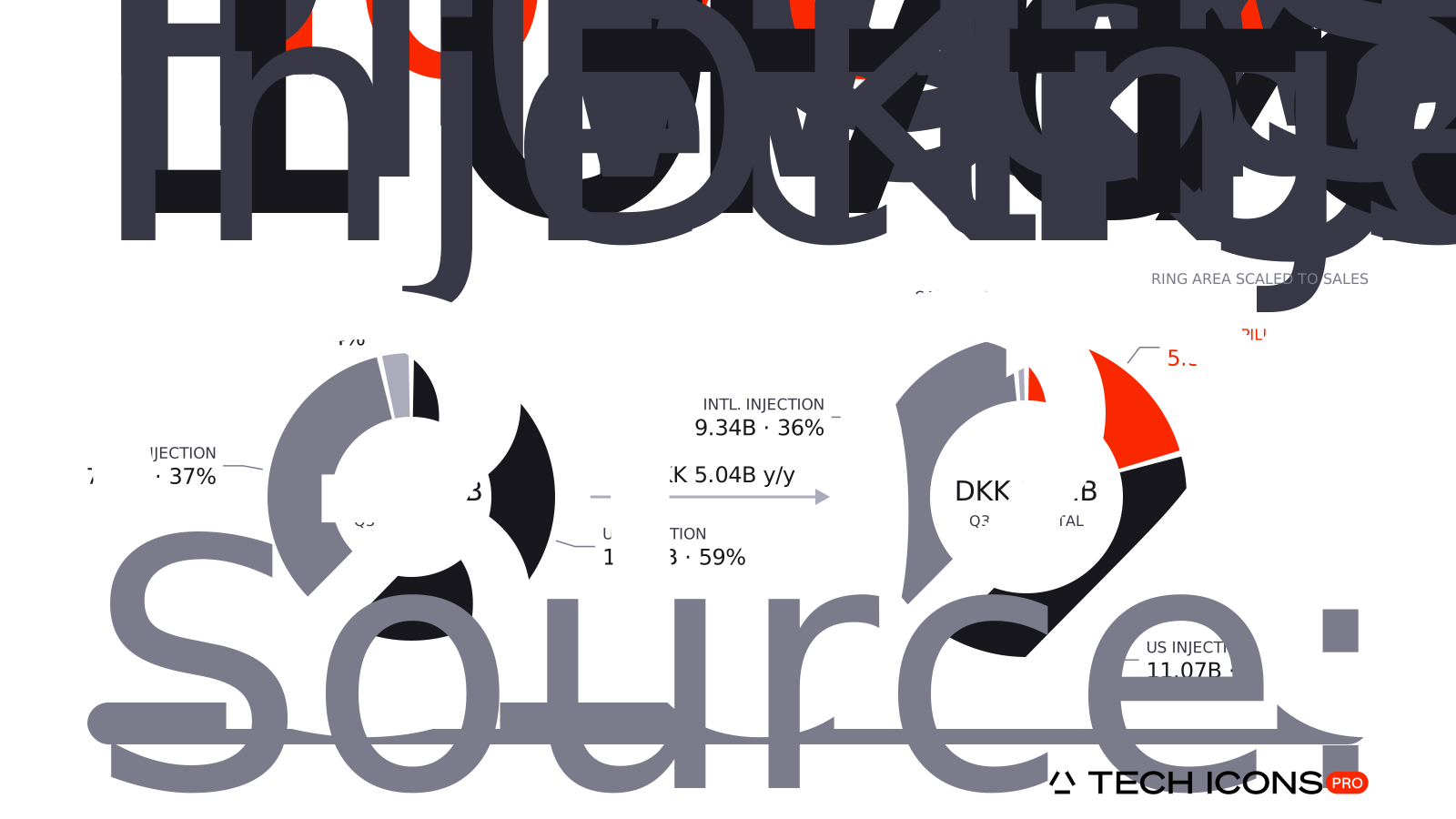
One product drove the result. Sales of the pill, launched in the United States in January, were 5.39 billion Danish crowns, above the 4.62 billion forecast in company-compiled consensus. In the second quarter the figure was 3,218 million kroner. The U.S. accounted for 4.18 billion crowns and international markets for 1.22 billion; U.S. prescriptions were about 3.6 million during the quarter and more than 8 million since launch. The international rollout is early but under way. By the end of Q3, Wegovy pill had been launched in the US, UAE, UK and Germany, and launches in four additional countries have since increased the total to eight.
The bigger question is whether the pill adds new patients or only moves existing ones to a different format. This quarter’s numbers point mostly to new patients. U.S. sales of injectable Wegovy fell 13% at constant exchange rates, while combined U.S. Wegovy sales rose 21%. Obesity care sales rose 22% at constant exchange rates to 26.15 billion kroner. This fits what management said in the spring, when close to 80% of Wegovy pill users were GLP-1 treatment-naive. Injectable Wegovy and Ozempic sales were 20.4 billion and 29.7 billion kroner, both above expectations, but Ozempic is still below its second-quarter level of 31,375 million. In the US, the Wegovy franchise maintains its leadership in new patient starts, with more than 50% share in the branded obesity market.
The Charges Beneath the Headline
Reported profit looks weaker, and the reasons are worth noting. Reported operating profit decreased by 9% at CER, reflecting DKK 8.7 billion of non-cash impairment charges related to ziltivekimab (DKK 4.6 billion) and right-sizing of the manufacturing network (DKK 4.1 billion). The ziltivekimab charge followed a setback in September, when Novo stopped two cardiovascular trials, HERMES and ATHENA, after a data monitoring committee found they were unlikely to succeed. The manufacturing charge says more about the business. Novo spent heavily to secure capacity, including the integration of three former Catalent sites, and is now cutting some of it back. The company’s limiting factor is no longer supply. It is price.
The year-to-date figures need the same care. Reported nine-month sales grew 13% at constant rates, but adjusted sales grew only 2%. The difference comes from the first-quarter reversal of US 340B rebate provisions: reported revenue rose 32% at constant currency, but excluding this effect, sales fell 4%. Cash generation is still strong. Novo Nordisk expects free cash flow of between 60 billion and 70 billion kroner in 2026, and a share buyback has been running since May. Chief executive Mike Doustdar avoided calling this a turnaround. He told reporters that recovery is not done based on one data point.
The Price of Volume
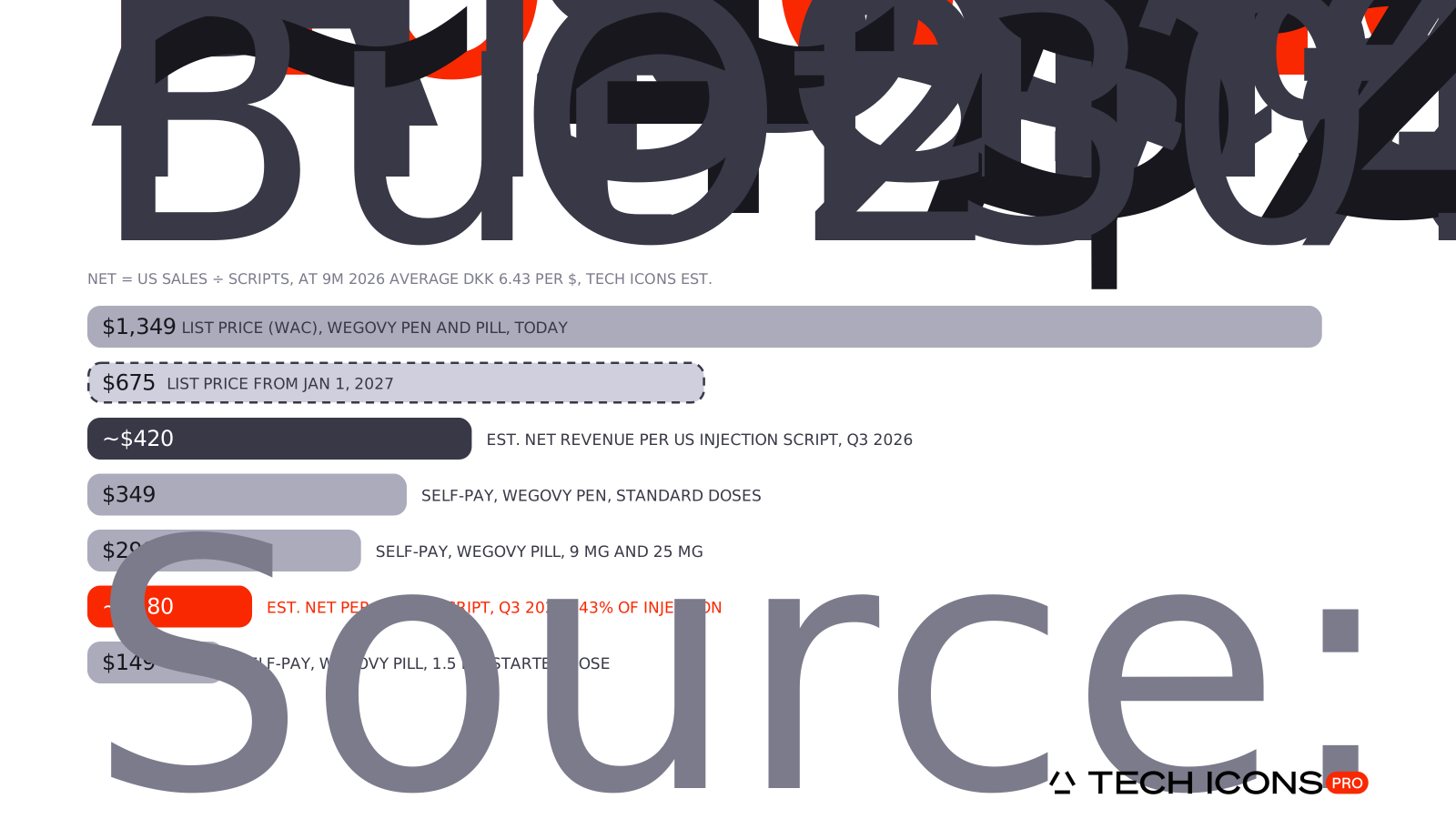
The 2026 outlook already includes lower US realized prices, and the next cut has a fixed date. Novo Nordisk will reduce the U.S. list price of Wegovy, Ozempic and Rybelsus to $675 per month starting Jan. 1, 2027, a reduction of approximately 50% for Wegovy and 35% for Ozempic. On the same day, the negotiated Medicare prices for those three drugs will be $274 per month. Novo expects wider coverage and lower out-of-pocket costs to bring in enough extra volume to offset the lower price per prescription. Trading price for volume is now how the whole obesity market works, not a problem unique to Novo.
Eli Lilly’s results show how large the gap has become. Lilly’s Q3 2026 revenue increased 39% to $24.4 billion, and it raised its full-year revenue guidance to $91.0 to $92.0 billion. Its U.S. revenue rose on a 41% increase in volume, partially offset by a 7% decrease in realized prices. Novo’s 79.2 billion Danish kroner ($11.9 billion) in quarterly sales is less than half of Lilly’s. Lilly’s rival Foundayo pill is winning a growing share of new prescriptions. Novo’s early lead with its pill is real, but it is a lead of months, not years. It is worth most if Novo can turn early prescriptions into lasting insurance coverage before Foundayo catches up.
Relief, Not Yet Conviction
The share price reaction was positive but limited. Novo Nordisk stock surged 5.8% today, which is within the +/- 8.23% move that options had priced in before the report. The stock is still well below its 52-week high of DKK 409.95. Investors also remember September, when shares dropped 7.7 percent after the announcement of a new company strategy. That 2030 plan targets peer-rate sales growth but gives no numeric growth rate.
The next tests are close. Novo plans to launch CagriSema in the US in early 2027, subject to approval. It will do so with the record of a trial in which CagriSema achieved 20.2% weight loss versus 23.6% for tirzepatide over 84 weeks. A later REIMAGINE 5 study, in which CagriSema beat a low dose of tirzepatide in type 2 diabetes, improves that picture but does not reverse it. The fourth-quarter report will then bring 2027 guidance that has to absorb the full January price cuts. Novo has shown it can beat the lowered expectations of this year. Whether it can lift them again depends less on demand, which is plentiful, than on how much each prescription earns.