Ahead of Consensus.
Intelligence across tech and capital markets, for investors, policymakers, and business leaders.
12 minute read
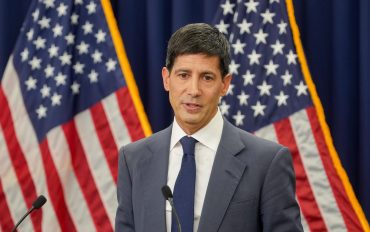
There is a particular kind of institutional authority that does not announce itself loudly. It arrives in the precision of what is omitted, in the deliberate compression of language that once ran longer, in the sentence that ends where a predecessor’s would have continued. Kevin Warsh’s debut as Federal Reserve chairman, on June 17, was that kind of statement. The rate did not move. Almost everything else did.
The Federal Open Market Committee voted unanimously, 12–0, to hold the federal funds target range at 3-1/2 to 3-3/4 percent, extending what has become a settled pattern of consecutive holds. No one in the market expected otherwise. The suspense resided entirely in the surrounding architecture: a policy statement rewritten in a leaner register, a set of economic projections that significantly raised both the inflation forecast and the implied rate path, and a press conference in which a new chairman laid out, with quiet precision, what kind of institution he intends to run.
Taken together, the June package constitutes a coherent first act. The easing bias that survived from the Powell era has been excised. The inflation forecast has been updated to reflect conditions rather than aspirations. And a philosophical overhaul of how the Fed communicates and deliberates has been placed formally on the agenda. None of this required drama. The point, one sensed, was that it did not.
The policy text that emerged from June’s meeting is shorter, blunter, and more self-contained than its predecessors. Gone is the language that had previously gestured toward “additional adjustments” in the direction of easing. Gone, too, is any reference to the likely direction or timing of future rate moves. In their place stands a sentence that functions more like a pledge than a forecast: “The Committee will deliver price stability.” Five words. No qualifications. No conditional clauses. No data-dependency carve-outs.
For an institution whose communications have, over the past decade, grown progressively longer and more elaborate, the compression is striking. It also reflects a view that Warsh has held and articulated for years: that the Fed’s migration toward highly prescriptive forward guidance introduced a structural distortion into financial markets, anchored policy to trajectories the data could not always support, and ultimately cost the institution the credibility it was trying to project.
If the statement set the tone, the Summary of Economic Projections supplied the substance. The Committee’s median forecast for PCE inflation in 2026 was revised to 3.6 percent from 2.7 percent in March. Core PCE was lifted to 3.3 percent from 2.7 percent. Real GDP growth was trimmed to 2.2 percent. The unemployment rate was marked modestly lower at 4.3 percent. And the median projection for the federal funds rate at year-end rose to 3.8 percent from 3.4 percent in March, effectively closing the case for near-term easing and lifting the implied terminal rate.
What makes the inflation revision particularly significant is the context in which it was made. A preliminary U.S.-Iran framework agreement has already driven Brent crude below $80 a barrel, with markets pricing in the reopening of the Strait of Hormuz and a return of Iranian supply. The relief is welcome and the oil market move is material. Yet the Committee declined to treat it as grounds for revising the inflation trajectory lower. Supply shocks, in the FOMC’s June reading, are broad enough and have proven durable enough that falling crude prices alone do not resolve the problem. That is a sober judgment, dressed in the restrained language of central bank officialdom.
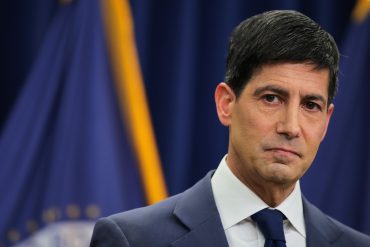
The press conference extended the statement’s logic into institutional territory. Warsh described his ambition as leading a “reform-oriented Federal Reserve,” one that learns from the record, escapes the gravitational pull of static models and frameworks, and holds itself to clear standards of performance and integrity. He announced the formation of an internal task force to review the Committee’s communications practices, its use of forward guidance, and its broader deliberative processes. The stated objective: reduce the Fed’s footprint in financial markets and restore a larger role to incoming data in shaping policy outcomes.
This is not rhetorical housekeeping. It is a direct institutional response to a critique that Warsh has developed over more than a decade. His argument, in brief, is that the Federal Reserve has talked too much, committed too early, and paid too high a price when reality diverged from its own projections. The solution is not silence but discipline: fewer pre-commitments, greater tolerance for uncertainty, and a communications posture that follows the data rather than tries to lead it.
The irony is that announcing a communications reform is itself an act of communication, and a fairly prominent one. Warsh appeared aware of the tension. His remarks were careful to frame the task force not as a repudiation of recent practice but as a forward-looking initiative consistent with the Fed’s tradition of institutional self-examination. The signal, nonetheless, was unmistakable.
The market response was, by the standards of recent Fed meetings, subdued. Treasury yields moved modestly higher, consistent with a firmer median rate projection and the removal of a dovish tilt that had been built into prices. Equity indices held their ground, buoyed by the relief in energy markets and the absence of any outright escalation in the Committee’s posture. The dollar barely moved. Markets had, over the preceding weeks, partially repriced for a more disciplined Fed, and the June package confirmed rather than exceeded those expectations.
Warsh enters the role carrying pressures that are not of his making. His 54–45 Senate confirmation, completed on May 22, was thin by historical standards and reflected a political environment in which the Fed’s independence has become a live controversy. The current administration’s preferences on interest rates are not secret. Any perception that the Committee is resisting political pressure can quickly become a story about institutional integrity, and Warsh’s first months will be read partly through that lens. He returns to a building he knows well, having served as a Fed governor from 2006 to 2011 through the financial crisis and the early phases of unconventional policy, but the political weather surrounding the institution is considerably more turbulent than anything he navigated then.
What Warsh’s debut accomplished, finally, is the harder thing to do: it changed the meaning of the Fed’s posture without changing the level of the rate. The easing bias is gone. The inflation assessment is honest. The rate path has been revised upward to reflect actual conditions. The communication philosophy has been reframed, and a process to institutionalize that reframing has been launched. None of this is dramatic. All of it is consequential.
The underlying economic challenge remains formidable. Inflation is still well above target, and the Committee’s own projections show only gradual convergence toward 2 percent under the assumption of appropriate policy. The labor market is resilient but not inexhaustible. Geopolitical risks, though easing on the energy front, have not disappeared. The window between now and the July meeting is long enough for the data to complicate any narrative that June appeared to settle.
Central banking at its best is not a performance of confidence. It is the disciplined, often unglamorous work of aligning what an institution says with what the data actually support, and then holding that position when pressure mounts. By that standard, Warsh’s first FOMC meeting was, on its own terms, exactly what it needed to be.