Ahead of Consensus.
Intelligence across tech and capital markets, for investors, policymakers, and business leaders.
12 minute read
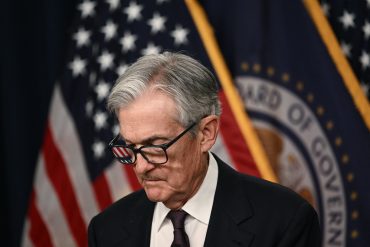
On the morning of April 24, Washington’s institutional machinery performed a quiet act of self-correction. D.C. U.S. Attorney Jeanine Pirro announced that her office was closing its criminal investigation into Federal Reserve Chair Jerome Powell, referring cost-overrun questions related to the central bank’s headquarters renovation to the Fed’s independent Inspector General. The probe, which had proceeded with considerable public drama and produced, by a federal judge’s assessment, essentially no evidence of criminal conduct, was finished.
The announcement attracted no triumphant statements. There were no concessions of error. The file was simply closed, the matter redirected to familiar bureaucratic terrain. That understated conclusion was, in many respects, fitting for an episode that was never convincingly about what it claimed to be.
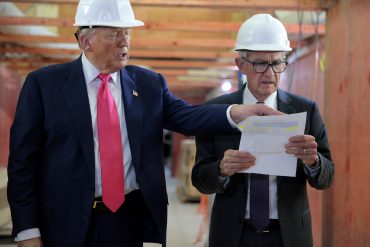
The ostensible subject was federal spending. The Federal Reserve has been renovating its two historic Washington buildings — the Eccles headquarters, completed in 1937, and the adjacent 1951 Constitution Avenue structure — for nearly a decade. The Board of Governors approved the project in 2017, with costs eventually reaching a Board-approved budget of $2.46 billion. The increases were attributable to well-documented factors: design modifications required by the Commission of Fine Arts and the National Capital Planning Commission, higher-than-expected material and labor costs, and unforeseen structural conditions including asbestos, contaminated soil, and a higher-than-anticipated water table. Critically, the project is funded entirely from the Federal Reserve’s own revenues. Not a dollar of congressional appropriations was at issue.
Powell addressed the renovation in Senate Banking Committee testimony in June 2025, explaining the scope and the reasons for cost escalation. Prosecutors focused on whether those statements were accurate, and on January 10, 2026, grand-jury subpoenas were served on the Fed. The next day, Powell issued a statement that cut directly to the political reality: “The threat of criminal charges is a consequence of the Federal Reserve setting interest rates based on our best assessment of what will serve the public, rather than following the preferences of the President.”
The context was not subtle. Throughout late 2025 and into 2026, President Trump had mounted a sustained and public campaign pressing Powell to cut interest rates more aggressively. The criminal inquiry landed in that environment, and the interpretation inside the Fed, on Capitol Hill, and across financial markets converged quickly: this was leverage, applied through prosecutorial process. Three former Fed chairs condemned the move. A bipartisan group of economists followed. The concern was not merely about one official’s reputation but about something more structural — whether the credibility of monetary policy could survive being treated as a variable in a political negotiation.
U.S. District Chief Judge James Boasberg provided the clearest judicial articulation of that concern. In a ruling issued March 13, he quashed the subpoenas, finding that the government had produced essentially no evidence to suspect Powell of a crime and that a substantial body of evidence pointed instead to an improper purpose: pressuring the chair to reduce rates or resign. The ruling cited the President’s own public statements as part of the pattern. When the government sought to revive the subpoenas, Boasberg declined. Even a prosecutor from Pirro’s office acknowledged in a sealed March hearing that evidence of criminal conduct was absent, though the office continued to press on appeal.
The legal setbacks alone might not have been sufficient to end the matter. The decisive procedural check came from the Senate. Senator Thom Tillis of North Carolina made clear he would not advance Kevin Warsh’s nomination to succeed Powell unless the probe was resolved, describing the inquiry as an illegitimate threat to Federal Reserve independence. With Powell’s term expiring next month and the nomination stalled, the administration faced a straightforward choice: extend a losing legal fight, or clear the path for the successor it wanted. The file was closed.
That convergence of judicial review, prosecutorial limits, and senatorial leverage was not incidental. It was the system functioning as designed, three separate institutional actors reaching the same conclusion through their own distinct mechanisms. The episode demonstrated that the constitutional architecture of American governance retains real force even under conditions of sustained political pressure. It also demonstrated, less comfortably, that such pressure can be applied in the first place, and that its resolution depended less on any single rule than on the alignment of multiple checks arriving simultaneously.
Financial markets observed the saga with the detached pragmatism that characterises institutional capital. When news of the subpoenas emerged in January, the Dow opened lower by roughly 300 points, the dollar weakened, and bond yields edged down on the view that political pressure might in fact accelerate rate cuts. By afternoon, however, markets had largely recovered; the S&P 500 closed higher. The episode was processed as political noise rather than a structural threat to policy.
The closure on April 24 produced a correspondingly muted reaction. Equity futures ticked modestly higher. Treasury yields stabilised. The message from investors was consistent throughout: rhetorical conflict at the political level can be tolerated so long as the Federal Reserve’s operational autonomy remains intact. That threshold was not crossed. But it was approached, and the market’s composure throughout should not be mistaken for indifference. Investors were watching the institutional boundaries with considerable care, and pricing the outcome accordingly.
Jerome Powell will leave the chairmanship later this year having steered monetary policy through a pandemic-era expansion, a historic inflation surge, and a rate-tightening cycle that carried its own political costs. His conduct during the investigation was characteristic of the manner in which he operated throughout his tenure: deliberate, institutionalist, and resistant to pressure without being theatrical about it. He declined to resign, stating he would remain until the matter reached transparency and finality. The DOJ’s decision gave him that.
His successor, Kevin Warsh, inherits a central bank whose credibility has been tested in a manner without modern precedent. Warsh, a former Fed governor whose views align broadly with the administration on regulatory relief and growth orientation, will take the role with the immediate political pressure resolved but the underlying structural question still open. The referral to the Fed’s Inspector General returns the renovation matter to the internal governance process it likely should never have left. What is not resolved is the precedent itself.
No sitting Fed chair had previously been subjected to a criminal investigation by an administration over policy disagreements framed as fiscal oversight. The episode will be studied in law schools and economics departments not as a tale of scandal but as a serious stress test of American governance — one that, this time, the institutions passed. For senior investors and policymakers, the lesson is more direct: credibility built across decades is not easily undone by months of political theatre. The more demanding question, the one Warsh will face from his first day, is whether the norms that held this time will hold the next.