
Ahead of Consensus.
Intelligence across tech and capital markets, for investors, policymakers, and business leaders.
11 minute read
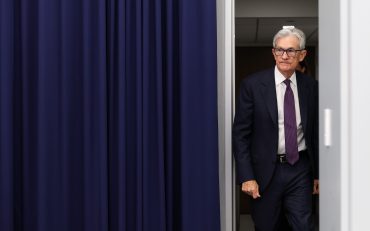
When the Federal Reserve says nothing new, it is often saying everything. The Federal Open Market Committee’s April 29 decision to hold the federal funds rate at 3.5 to 3.75 percent carried no surprises for markets. CME FedWatch had placed the probability of a hold near certainty heading into the meeting. Yet the announcement carried weight beyond its immediate content, laying bare a committee divided on fundamentals, a macroeconomic landscape increasingly shaped by forces beyond Washington’s reach, and a central bank resolved to outlast uncertainty rather than capitulate to it.
The decision extends a pause now entering its third consecutive meeting. The Fed last moved in late 2025, delivering three 25-basis-point cuts as supply chains normalised and the labor market eased from its post-pandemic tightness. That measured easing brought the target range to its current level, and since December it has not moved. What has changed, materially and in ways the institution cannot ignore, is everything around it.
Four dissents from a single FOMC decision is uncommon, representing one of the highest levels of internal disagreement in decades. It signals not dysfunction but genuine intellectual tension within an institution that prizes consensus. Governor Stephen Miran favored a 25-basis-point cut, reflecting concern that restrictive policy is bearing unnecessarily on employment as job gains remain modest. Presidents Beth Hammack, Neel Kashkari, and Lorie Logan occupied the opposite ground: they supported the hold but objected to language they read as preserving an easing bias in the statement’s construction.
The divide maps cleanly onto the Fed’s dual mandate and the difficulty of honouring both sides simultaneously. Inflation remains above target. The labor market, with unemployment at 4.3 percent in March and softening demand only partly offset by slower labor-force growth, is no longer the engine it was. In that environment, serious policymakers can reach opposing conclusions with equal conviction, and four of them did. Powell, presiding over what is widely understood to be his final policy meeting before his term ends on May 15, has kept the institution anchored without foreclosing the debate it requires to reach sound judgements.
That internal friction serves a purpose. A unanimous hold can sometimes reflect groupthink. A fractured one confirms the committee is stress-testing its own assumptions, weighing evidence against competing interpretations rather than arriving at consensus through inertia. In the present environment, that rigour is not incidental. It is the point.
The statement’s explicit reference to Middle East developments is significant for an institution that typically reserves geopolitical language for moments of genuine macroeconomic consequence. Energy prices have risen materially amid regional tensions, and their effect on inflation is neither negligible nor, on current evidence, fading quickly. Headline inflation reached 3.5 percent in the 12 months to March, driven in meaningful part by oil. Core PCE, at 3.2 percent over the same period, tells a less acute but equally persistent story.
The U.S. economy has been expanding at a solid pace. While job gains have remained low, the unemployment rate has been little changed in recent months. Inflation has moved up and is elevated, in part reflecting the recent increase in global energy prices.
At his press conference, Powell addressed the mechanism directly: higher energy prices would lift overall inflation in the near term, though the broader economic effects remained difficult to quantify. Longer-term inflation expectations, he noted, remain anchored to the 2 percent goal, and the Fed’s framework depends heavily on that anchor holding. Near-term measures have moved higher, but sustained pass-through into wages and services, rather than a commodity-driven headline spike, is what policymakers are watching for and, so far, have not seen decisively.
What the committee appears determined to avoid is a reactive tightening in response to an external supply shock. An oil price surge rooted in geopolitical disruption is categorically different from demand-driven overheating. Treating it as equivalent risks imposing additional restriction on an economy already absorbing the weight of elevated rates, and the committee’s language reflects precisely that distinction.
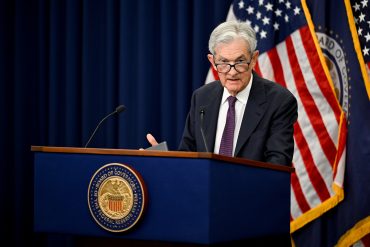
The press conference carried an undertone that purely technical communications rarely do. With his term ending May 15, Powell’s remarks had the quality of a considered institutional farewell. He congratulated Kevin Warsh on progress through the Senate confirmation process and reaffirmed his commitment to remain on the Board until relevant investigations reach what he described as “transparency and finality.” The posture was orderly and deliberate, a chairman ensuring continuity rather than commentary.
I welcomed the announcement last Friday by the U.S. Attorney for the District of Columbia that she had closed the criminal investigation… I have said that I will not leave the Board until this investigation is well and truly over, with transparency and finality, and I stand by that.
On policy, Powell was equally precise. “We are well positioned to determine the extent and timing of additional adjustments to our policy rate based on the incoming data, the evolving outlook, and the balance of risks. Monetary policy is not on a preset course, and we will make our decisions on a meeting-by-meeting basis.” In a period of compressed visibility, that framing is both honest and strategically disciplined. It commits to nothing while foreclosing nothing, and it leaves the institution maximum room to respond as conditions develop. After years of navigating post-pandemic inflation, a fractious political environment, and a global rate cycle without precedent in a generation, it is, in its own way, an apt final statement.
Equity markets entered the session cautiously. The S&P 500 and Nasdaq had touched intraday records in prior sessions, leaving growth and technology names exposed to any hawkish reinterpretation of the Fed’s tone. Treasury yields held near 4.36 percent on the 10-year. The dollar was stable.
Post-announcement trading settled into a narrow range, consistent with a market that had already priced the decision and was reduced to parsing nuance rather than reacting to news. Modest rotation out of rate-sensitive sectors reflected the absence of any dovish signal. Oil’s sustained elevation added a separate layer of caution: prolonged energy costs threaten to extend the inflation timeline while compressing margins in sectors without meaningful pricing power.
Bond markets showed little movement, and that composure is telling. Fixed-income investors appear broadly satisfied that the Fed is oriented toward data rather than headlines, and that the bar for renewed easing remains substantive. Forward curves retain a modest probability of one cut before year-end, though that estimate has tracked oil prices and geopolitical headlines with an uncomfortable correlation that suggests investors are hedging a scenario rather than pricing a conviction.
At 3.5 to 3.75 percent, the federal funds rate sits modestly above most estimates of the neutral rate, which recent projections place around 3 percent or slightly higher. The current setting is restrictive but measured, providing insurance against resurgent inflation without applying force sufficient to fracture growth. Consumer spending and business investment have held up. Housing remains weak. That divergence within the domestic economy complicates any clean narrative about whether restriction is transmitting evenly or accumulating unevenly in ways that will surface later.
We see the current stance of monetary policy as appropriate to promote progress toward our maximum employment and 2 percent inflation goals.
For institutional investors and corporate treasurers, the practical implications are consistent with those of prior quarters, which is itself a signal. Borrowing costs remain elevated relative to the post-financial-crisis era, rewarding capital discipline and penalising leverage taken on in the expectation of rapid normalisation. Short-duration fixed income continues to offer carry. Equity positioning increasingly favors companies with durable pricing power and limited exposure to energy cost volatility. Rate-sensitive sectors face a ceiling that is unlikely to lift until the inflation picture clarifies.
Emerging markets absorb the effects from a greater distance but no less acutely. Elevated U.S. rates and a stable dollar sustain pressure on capital flows and local borrowing costs in developing economies, particularly those carrying commodity import dependencies. For sovereigns managing tight fiscal positions, an extended Fed pause is a constraint, not a neutral backdrop.
The Fed’s message on April 29 was one of deliberate patience, delivered with institutional composure at a moment that demanded it. It has not declared premature victory on inflation. It has not signalled alarm about employment. It has absorbed a geopolitical shock without flinching and maintained the credibility that gives its future decisions their weight. In a period when institutional authority is under pressure across much of the developed world, that steadiness is a policy output in its own right.
The dissents, far from undermining that composure, reinforce it. They confirm a committee that is thinking hard, not one that has arrived at consensus through convenience. The framework is intact, the debate is live, and the institution is functioning as it should under conditions that have no clean historical parallel.
Leadership transition sharpens the stakes. Powell’s departure on May 15 hands his successor an institution in a deliberate holding pattern, with a clear policy architecture and a set of unresolved questions it is actively managing. Chief among them: whether energy-driven inflation proves transient, as the Fed’s framework expects, or begins embedding more deeply into services prices and wage expectations in ways that would demand a different response. The incoming chair will not have the luxury of acclimatisation. The June meeting, with its fresh Summary of Economic Projections, arrives within weeks.
Until the evidence moves, the Fed holds. And in holding, it sends its own message: that in an environment of genuine uncertainty, the discipline to wait for clarity is itself a form of leadership.