- Federal Reserve
- Monetary Policy
- US Economy
Kevin Warsh Faces Senate Test on Fed Independence
12 minute read
The former Fed governor’s confirmation hearing before the Senate Banking Committee laid bare the central tension of his nomination: institutional autonomy versus political proximity to the White House.
Key Takeaways
- Warsh pledged unconditional independence on rate decisions, telling senators the president never sought a commitment on rates and that no such agreement would ever be made.
- Democratic scrutiny centred on opaque financial positions and potential conflicts of interest, with Warsh maintaining full compliance with ethics requirements while pledging divestment of prohibited holdings.
- Markets responded with modest caution, with Treasury yields rising four basis points and equities slipping as traders weighed the prospect of a more reform-minded Fed leadership against political uncertainty.
The Weight of the Chair
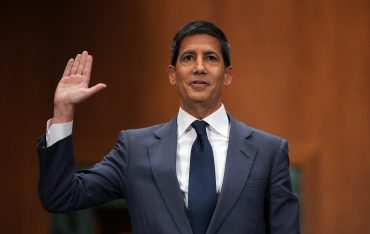
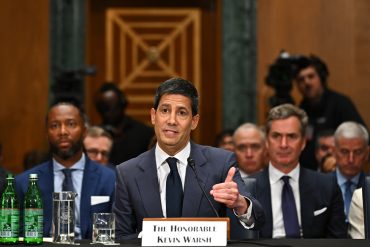
There are hearings that confirm and hearings that reveal. Kevin Warsh’s appearance before the Senate Banking Committee on April 21 was the latter. Convened in Dirksen 538 with the procedural trappings of routine congressional oversight, it functioned in practice as a stress test of whether the Federal Reserve’s institutional autonomy can hold its shape under the sustained pressure of a second Trump administration. The question before the committee was not merely whether Warsh is qualified. It was whether the Fed, under his stewardship, would remain what it has always claimed to be: an institution that answers to its mandate rather than its appointer.
Warsh, 56, brings credentials that are difficult to dismiss. He served as a Fed governor between 2006 and 2011, absorbed the full force of the financial crisis from inside the institution, and spent the years since building a private investment portfolio that his mid-April disclosures placed in the $131 million to $226 million range. That figure does not include the separate holdings of his wife, Jane Lauder. If confirmed, he would enter the Eccles Building as the wealthiest chair in the institution’s modern history, a fact that cuts in two directions: it signals independence from financial need while simultaneously raising the complexity of divestiture.
The Independence Pledge
Warsh’s prepared remarks were carefully engineered to thread a needle that has become progressively harder to navigate. He reaffirmed that “monetary policy independence is essential” while simultaneously arguing that such independence is “earned” through institutional self-discipline, specifically by confining the Fed’s activities to its congressional mandate and resisting encroachment into what he called “fiscal and social policies where it has neither authority nor expertise.” The framing was deliberate. It offered something to nearly every faction in the room: to Republicans, a promise of a more focused, leaner Fed; to markets, a signal of continuity; to Democrats, at least the language of independence.
The president never once asked me to commit to any particular interest rate decision, period, and nor would I ever agree to do so if he had.
What it did not offer was unconditional reassurance. His description of the 2021-to-2022 inflation surge as the product of “fatal policy errors” was pointed, even if the Powell era went unnamed. His opening statement contained only a single, glancing reference to the labour market, suggesting that the dual mandate’s traditional equilibrium may shift toward price stability under his tenure. That imbalance, though subtle, was not lost on the committee’s more attentive members.
The independence question reached its sharpest edge when Warsh addressed the nature of his conversations with the president directly. To Senator John Kennedy he was unequivocal: “The president never once asked me to commit to any particular interest rate decision, period, and nor would I ever agree to do so if he had.” To Senator Jack Reed he acknowledged the universal truth that every president prefers lower rates, while drawing a firm line between preference and dictation. The distinction matters. Whether it will hold under future pressure is a question that no hearing can answer in advance.
The Financial Disclosure Problem
If Warsh’s performance on independence was measured and credible, the financial disclosure dimension of the hearing was less settled. Senator Warren pressed him on two substantial, opaque positions within the Juggernaut Fund LP, consulting income from the office of Stanley Druckenmiller, and any potential exposure to entities connected to Trump family businesses, Chinese state interests, or the financial network of Jeffrey Epstein. Warsh repeated his commitment to divest all holdings prohibited by Fed ethics rules and to place remaining assets in a qualified blind trust. He cited compliance with Office of Government Ethics requirements as the governing standard.
Minority staff had released a report prior to the hearing noting that the nominee had not disclosed buyers for certain illiquid positions or provided granular valuations, raising questions about whether residual conflicts would persist even after formal divestment. Warsh’s response, that further disclosure would breach confidentiality agreements with fund managers, was technically defensible. It was not, however, the kind of answer that forecloses the issue. The opacity will likely resurface during floor debate and could complicate a cloture vote in a chamber where the Republican majority is narrow.
The Policy Architecture
Republican committee members showed less interest in process and more in substance. Chairman Tim Scott framed the moment as a chance to reorient the Fed toward “the American dream,” with price stability as the structural foundation. Several senators probed Warsh on his earlier writings, which had called for what he termed a “regime change” at the central bank: fewer but more substantive FOMC meetings, streamlined external communications, and a sharper framework for judging when deviations from the inflation target warrant response. Warsh endorsed more frequent policy deliberations, stating that “four is not enough” in reference to the statutory minimum of annual meetings. He stopped short of committing to immediate rate reductions, but the directional signal was clear to anyone following the subtext closely.
The unspoken presence in the room was Jerome Powell, whose tenure runs until May 2026 and whose position has been complicated by public presidential criticism and a Justice Department inquiry that Senator Thom Tillis has made a condition of his support for Warsh’s confirmation. That linkage, aired outside the committee room rather than within it, illustrated how the Fed’s personnel politics have become entangled with legal and executive branch dynamics in ways that have no clean precedent.
What the Markets Heard
Markets, functioning as their own real-time referendum, gave a nuanced reading. Early-session equity gains faded during the testimony; the S&P 500 and Nasdaq each slipped approximately 0.2 per cent by midday, while the Dow surrendered modest ground. The 10-year Treasury yield rose roughly four basis points to 4.3 per cent, reflecting a modest repricing toward the possibility of a more activist or politically attuned policy path. Currency and commodity markets were largely unmoved, suggesting that investors still assign a high probability to eventual confirmation while deferring judgment on the easing timeline.
The market’s interpretation of Warsh’s testimony was neither alarm nor relief. It was calibration: the recognition that a “market-friendly” Fed is not the same as a predictable one, and that a chair whose independence is contested from day one introduces a premium, however small, into every forward rate expectation.
The Institutional Stakes
The Fed has spent the better part of a decade reassembling the credibility it expended during the unconventional policy era that followed the financial crisis and the pandemic. Any sustained perception that its chair operates under White House instruction would erode that credibility at a pace that institutional communications cannot reverse. Borrowing costs for households and businesses would reflect the uncertainty long before the policy errors themselves arrived. Warsh, to his credit, understands this. His own formulation, that independence must be earned rather than assumed, is historically accurate and intellectually honest. The challenge is that earning it requires consistent action across a full term, not a single persuasive afternoon in a Senate hearing room.
Tuesday’s session established that Warsh possesses the fluency, composure, and institutional knowledge that the role requires. Whether confirmation follows, and whether confirmed he can hold the line between mandate and political gravity, remains the open question. The Fed’s credibility is not a fixed asset. It is a continuous wager on the judgment of the person in the chair.