- Delivery Platforms
- Earnings Report
- EV
- Robotaxi
Uber Grows Bookings 20% as Driver Scarcity Tests Its Profit Engine
9 minute read
Record bookings, an 8% Mobility margin and $10.4 billion in trailing free cash flow met a softer profit outlook, as fuel costs and thin driver supply abroad slowed ride growth.
Key Takeaways
- Gross bookings rose 20% to $59.8 billion, a fifth straight quarter above 20%, while non-GAAP operating income climbed 38% to $2.3 billion, a record 3.9% of bookings.
- Revenue grew just 10%, but a UK accounting change explains $1.1 billion of the gap. The real constraint was driver supply in India, Brazil and Canada, which slowed Mobility growth.
- Fourth-quarter EPS guidance of $0.95 to $0.99 trailed the $1.06 consensus and shares slipped before the open, even as Uber set a path to 2,000 driverless cars by the end of 2027.
Demand Was Never the Problem
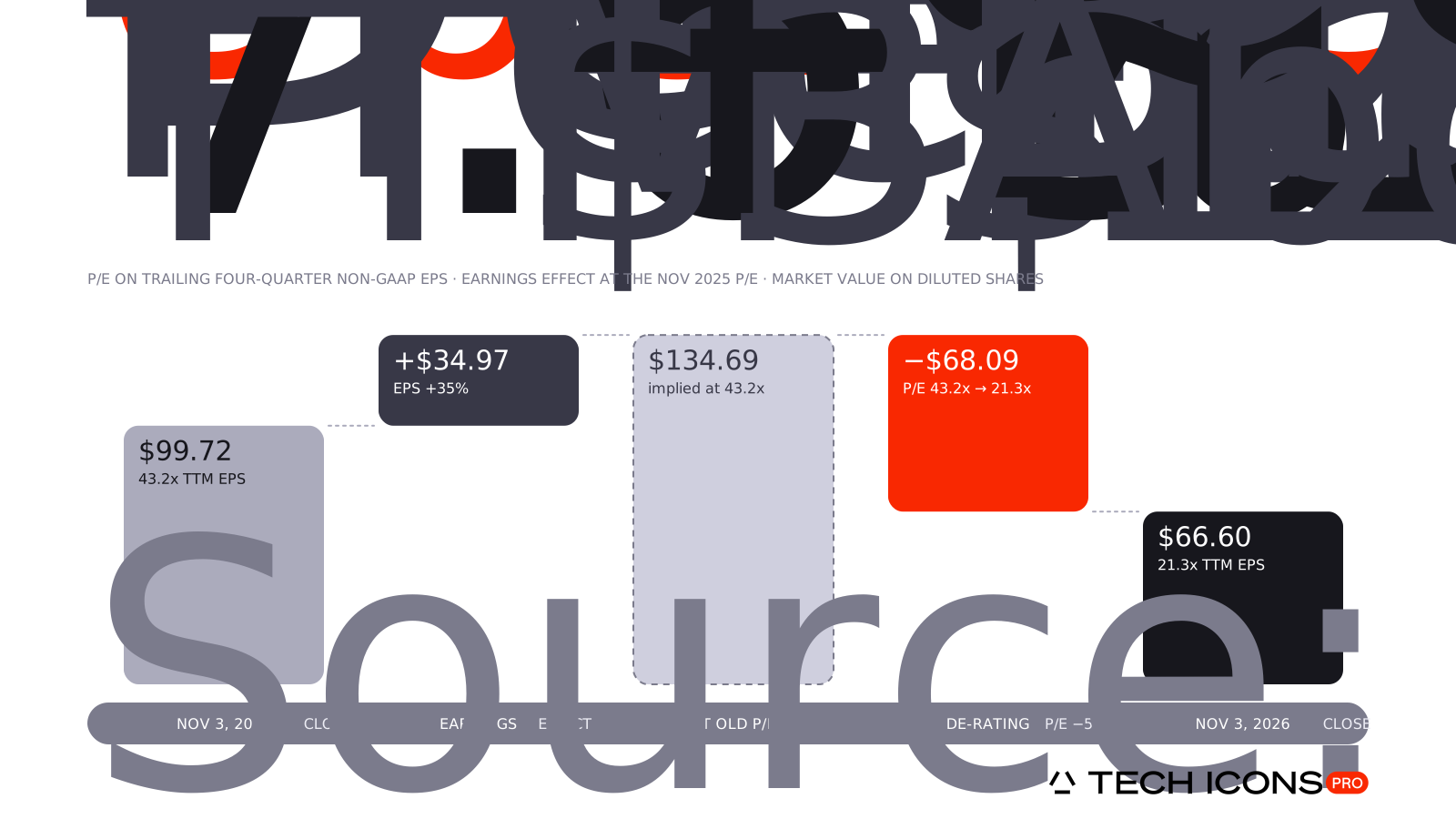
Uber’s third quarter answered the question investors usually ask of it and raised a harder one. Demand is still compounding: gross bookings rose 20% to $59.8 billion in the three months to September 30, the fifth consecutive quarter above 20%. A record 215 million people used the platform each month, up 14%, and they used it more often, averaging a record 6.3 trips a month. Trips reached 4.1 billion, and non-GAAP earnings per share rose 35% to $0.88, the top of the company’s own range.
The harder question concerns the other side of the marketplace. Uber’s 10.8 million drivers and couriers took home well over $25 billion in the quarter, yet in several international markets there were simply not enough of them. Chief Executive Dara Khosrowshahi said elevated fuel prices and tighter driver availability left Mobility growth 1 to 2 percentage points below internal expectations. For a company that spent a decade proving it could find riders, the binding limit is increasingly the supply of people willing to drive them, and what it costs to keep them on the road.

Reading the Revenue Gap
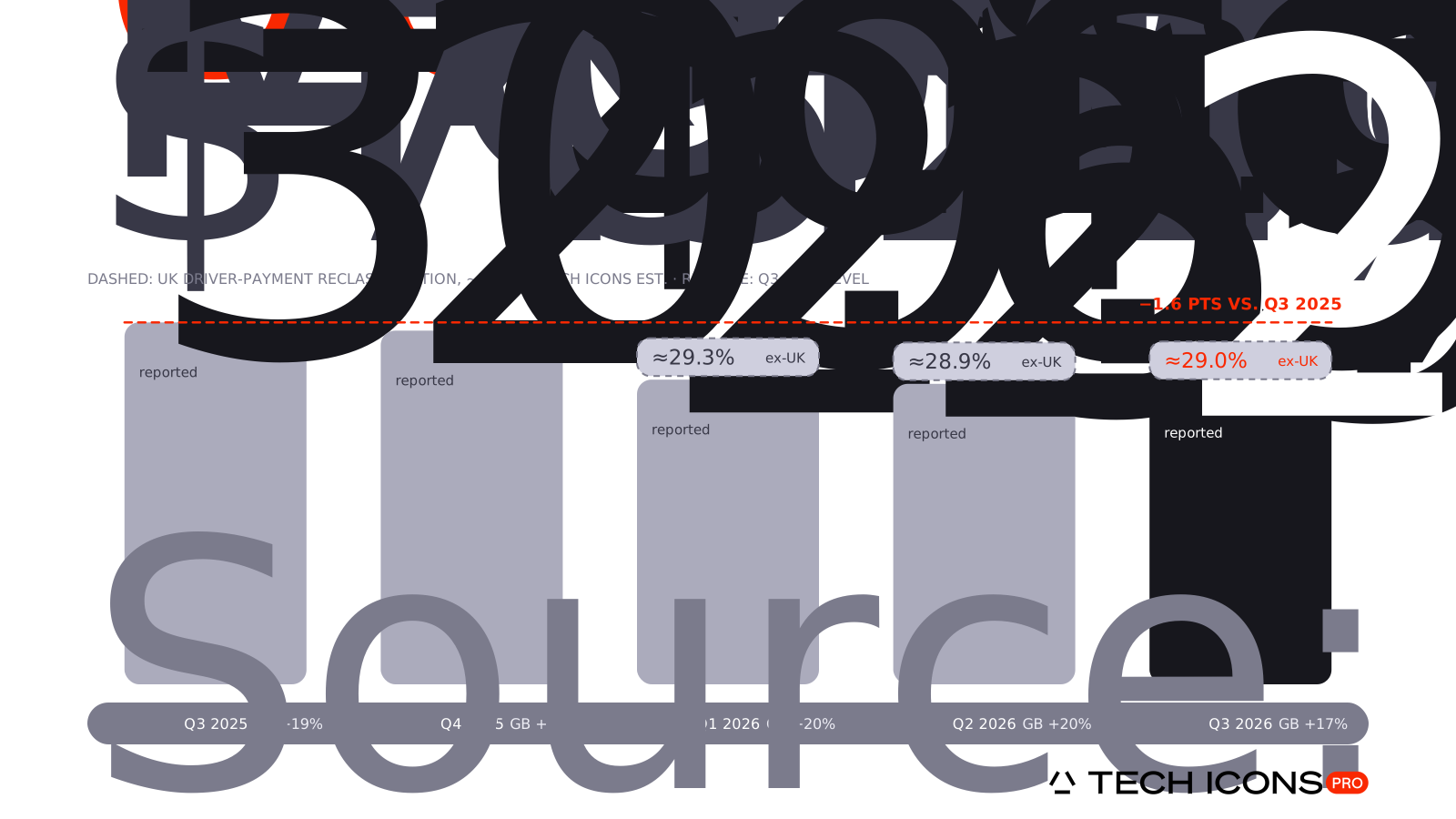
Revenue grew only 10% to $14.8 billion, half the pace of bookings, and Mobility revenue fell 2% even as Mobility bookings rose 17% in constant currency. On its face, that is the kind of divergence that unsettles a model. The prepared remarks explain most of it as accounting. A business model change in the UK moved driver payments from cost of revenue to contra-revenue, removing $1.1 billion of reported revenue, roughly 8 points of growth, and about 350 basis points from Mobility’s revenue margin, which now stands at 25.5% against 30.6% a year ago. Management says the shift has no effect on underlying economics and expects a similar impact in the fourth quarter. Even adjusted for the change, Mobility’s take rate is roughly 1.6 points below last year’s level, a decline that higher segment margins have so far absorbed.
Segment profit is the better guide, and it is unambiguous. Mobility operating income rose 27% to $2.36 billion, a record 8.0% of bookings against 7.4% a year earlier. Bookings per trip increased, but Chief Financial Officer Balaji Krishnamurthy attributed the rise to mix rather than like-for-like pricing: a tilt toward the U.S., toward Delivery, and toward premium rides and grocery. Uber is not raising fares to manufacture growth. On a GAAP basis, operating income rose 30% to $1.4 billion, while net income of $512 million reflected a $476 million loss on equity stakes, set against a year-ago figure inflated by a $4.9 billion tax benefit.
Where Supply Ran Short
The slowdown was largely international and specific. In India, driver growth lagged demand. Brazil remained undersupplied, though conditions improved modestly from the second quarter. Canada, affected by tighter immigration flows, is described as meaningfully undersupplied. The conflict in the Middle East subtracted 75 basis points from Mobility bookings growth, and Uber assumes 100 basis points in the fourth quarter as escalation coincides with peak travel. Total trip growth slowed 2 points from the second quarter, with supply constraints and the anniversary of the Trendyol Go acquisition contributing roughly equally.
The U.S. held up far better, helped by insurance reform, with trip growth in California accelerating. Uber is responding with targeted spending on driver acquisition, retention and reactivation, reports improvement in October, and expects fourth-quarter Mobility growth broadly consistent with the third. Its product strategy is designed to widen the funnel at both ends. Wait & Save, which trades a longer pickup for a lower fare, passed an $8 billion annualized bookings run rate and doubled year over year; the premium portfolio grew nearly 35%; and Uber for Business accelerated to almost 50%. A broader mix of trips raises driver utilization, which is ultimately the cheapest form of supply.
Delivery Carries the Momentum
Delivery was the cleaner story. Bookings rose 23%, with organic growth accelerating, and segment operating income rose 30% to $1.06 billion, lifting the margin to 3.7% of bookings from 3.5%. Profit was essentially flat against the second quarter, a sign that management is reinvesting rather than harvesting. Grocery and retail bookings grew about 40%, helped by a nationwide Costco partnership that has already made the retailer one of Uber’s largest merchants, and merchant spending on advertising and offers passed a $10 billion annualized run rate. Uber One now has roughly 55 million members, who account for more than half of combined Mobility and Delivery bookings.
Freight accelerated for a third straight quarter, with bookings up 35%, though it still lost $33 million. The acquisition record offers its own evidence. Trendyol Go, bought for about $700 million when it generated $2 billion in annual bookings, now runs above $4 billion annualized, with margins up 250 basis points. With Delivery Hero and ezCater awaiting approval, Uber said that apart from autonomy it expects minimal to no further M&A through at least 2027, a useful commitment for shareholders wary of an acquisitive phase.
Autonomy Moves From Promise to Proof
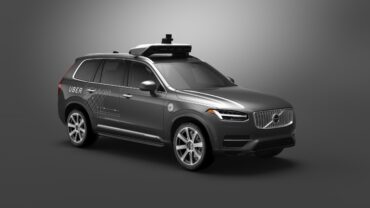
Uber expects about 700 fully driverless vehicles on its network by year-end and more than 2,000 by the end of 2027, split roughly evenly between the U.S. and international markets. Zoox is due to launch in Las Vegas this month, with Motional moving to driverless operation soon after; Nuro and Lucid plan a fully driverless Bay Area launch in the first quarter of 2027; and the UAE alone should host nearly 200 driverless cars by December. The company will concentrate capital on fewer partners and is building financing structures that bring outside money into fleets. The urgency is real: Waymo, the most advanced U.S. operator, has told Uber it will offer rides through its own app in Austin and Atlanta from January 2028.
Uber’s argument rests on utilization. It says U.S. autonomous partners on its network complete about 30% more trips per vehicle per day than first-party deployments, and that a 30% increase in paid trips cuts fixed cost per trip by roughly 23%, enough to cover Uber’s fee and still raise fleet profit. In mature autonomous markets, the ride-hailing category has grown 7 points faster than the rest of the country. The thesis is coherent. Its proof will come in unit economics over the next two years, not in vehicle counts that remain small beside four billion quarterly trips.
The Balance Sheet and the Market’s Verdict
Cash generation remains the foundation. Trailing free cash flow reached a record $10.4 billion, though a roughly $1.5 billion UK VAT payment will weigh on the fourth quarter. Uber bought back $750 million of stock, cutting the diluted share count about 3%, and retains roughly $15 billion of authorization. It issued its first euro bond, €4.5 billion of senior notes, and a €4 billion term loan reduced commitments under the €14 billion Delivery Hero bridge, with gross leverage expected to stay below two times. For the fourth quarter, Uber guided to bookings of $63.25 billion to $65.25 billion and non-GAAP EPS of $0.95 to $0.99, growth of 34% to 39% that nonetheless trailed the $1.06 consensus compiled by LSEG.
The market had braced for a demanding verdict. Shares closed Tuesday at $66.60, about 18% lower this year and near a 52-week low, and slipped close to 2% before the open as the outlook drew attention away from the quarter. The departure of President Jill Hazelbaker for OpenAI, announced the day before, added to a year of executive turnover. Yet the numbers describe a business growing earnings at more than 30% while widening margins, and a stock priced as though autonomy will erode its franchise. Uber’s task is to show that driver scarcity is a cost it can manage and that driverless fleets are supply it can monetize. On this evidence, the first is underway and the second has only just begun.