- Earnings Report
- EV
- Global Auto Market
- Luxury Automotive
Ferrari Lifts 2026 Guidance Again as Fewer Cars Earn More Profit
9 minute read
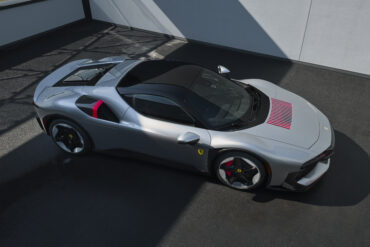
The F80 and personalization lifted Ferrari’s third-quarter profit 13% on lower shipments, but a guidance raise that merely met consensus left investors measured in their response.
Key Takeaways
- Net revenues rose 7% to €1.896 billion and operating profit 12% to €563 million, widening the EBIT margin to 29.7% even as Ferrari shipped 33 fewer cars than a year earlier.
- Ferrari raised its 2026 targets for the second time this year, to about €7.65 billion in revenue, at least €3 billion in adjusted EBITDA and adjusted EPS of at least €9.85.
- Milan shares fell 4.75% minutes after the release, as the EPS floor sat a cent below consensus, then turned higher within the hour as industrial free cash flow rose 43%.
Selling Better, Not More
By one measure, Ferrari’s third quarter was a contraction. The company shipped 3,368 cars in the three months to September 30, 33 fewer than a year earlier. Almost every other line moved the other way. Net revenues rose 7% to €1.896 billion, or 10% at constant currency. Operating profit climbed 12% to €563 million, and the EBIT margin widened by 130 basis points to 29.7%. Net profit increased 13% to €431 million, and diluted earnings per share reached €2.44, up from €2.14. Few manufacturers in any industry can report lower volume and double-digit profit growth in the same quarter. At Maranello, it has become the expected result.
The figures beat expectations by a modest margin. Analysts polled by LSEG had forecast EPS of €2.37 on revenue of €1.89 billion, and EBITDA of €753 million topped the €739 million consensus in a Reuters poll. The more revealing number sits beneath the headline. At constant exchange rates, EBIT would have risen 23%, nearly double the reported pace, with a weaker dollar and yen absorbing much of the gain even after hedging. The quarter’s EBITDA margin of 39.7% already exceeds the full-year floor the company has just set. Stripped of currency effects, the business is accelerating.

The Economics of the Order Book
Product mix did most of the work, and two forces shaped it. The first was the F80, Ferrari’s limited-series hypercar, whose shipments the company described as on plan and a principal driver of mix. The second was personalization, the bespoke paint, materials and trim that clients add to cars already priced at the top of the market, led this quarter by the 296 Speciale family. Revenue from cars and spare parts rose 7% to €1,586 million. Chief Executive Benedetto Vigna said the order book now reaches into 2028, with two more launches still to come before year end.
Personalization deserves particular attention because it has now beaten the company’s own planning twice. In July, Ferrari raised guidance because personalization was running ahead of its assumptions. In November, it did so again for the same reason. That pattern says something about the plan Ferrari set at the start of the year, which evidently left room to spare. It also says something about the clientele, whose appetite for individual specification has proved less cyclical than many investors assumed. Outside the cars, sponsorship, commercial and brand revenue rose 4% to €220 million, held back by lower Formula 1 commercial income tied to the team’s prior-year ranking. Engine supply to rival teams lifted other revenue 18% to €90 million.
The Cost of Renewal
The quarter also carried the cost of a range in transition. The 849 Testarossa and 296 Speciale Aperta are ramping up, first deliveries of the 849 Testarossa Spider began, and the Amalfi, 12Cilindri Spider and Purosangue shipped in greater numbers. At the other end of the cycle, the Roma Spider, the 296 GTS and the SF90 XX family were retired. Expensed research and development rose to €251 million from €222 million, and selling, general and administrative costs increased to €173 million from €160 million. Depreciation also climbed as new models entered production. Margins widened regardless, which is the clearest available evidence of pricing power.
The regional picture was steadier, with one exception. Shipments to Europe, the Middle East and Africa rose by 38 units to 1,487, the Americas added five to 1,050, and the rest of Asia-Pacific gained 29 to 688. Mainland China, Hong Kong and Taiwan fell to 143 from 248, a decline of roughly 42% that leaves the region at just over 4% of quarterly shipments. Because Ferrari allocates cars against waiting lists rather than dealer targets, it can redirect supply without discounting. The Americas offer the more instructive signal. European vehicles entering the United States carry a 15% import duty, yet American shipments held level with last year in the quarter. Across the first nine months, total shipments fell by 318 cars to 10,170, reflecting earlier softness in the Americas and Greater China.

A Raise the Market Had Already Counted
Ferrari now expects 2026 net revenues of about €7.65 billion, up from €7.60 billion. It expects adjusted EBITDA of at least €3.00 billion, at a margin of at least 39.2%, and adjusted EBIT of at least €2.285 billion. Adjusted diluted EPS should be at least €9.85, compared with €9.68 previously. The industrial free cash flow target moves to up to €1.65 billion from at least €1.55 billion. The company attributed the upgrade to stronger personalization, smaller currency headwinds and an assumed second place in the Formula 1 championship. It added that the outlook reflects what it can currently see of the Middle East crisis.
The market’s first reading was cool. Results arrived at 12:30 p.m. Milan time with trading under way, and within minutes the shares fell to €341.90, 4.75% below Monday’s close of €358.95. The arithmetic explains the reflex: the new EPS floor sat a cent below the €9.86 consensus. For a company valued as richly as Ferrari, guidance that only matches expectations reads as a mild disappointment. RBC Capital Markets analyst Tom Narayan noted that some investors had been hoping for “a bigger guidance raise.” The selling proved brief. By 1:14 p.m. the stock traded at €362, up 0.85% against a declining FTSE MIB, and by 1:50 p.m. it was 2.48% higher. U.S.-listed shares, which closed Monday at $403.09, also turned higher before the New York open.

Cash, Capital and the 2030 Question
Cash generation was the quarter’s most persuasive line. Industrial free cash flow rose 43% to €567 million against a restated prior-year figure, bringing the nine-month total to €1,496 million. Ferrari moved from net industrial debt of €131 million at the end of June to net industrial cash of €219 million at September 30, after returning €173 million through buybacks in the period. Between October 1 and October 30, it repurchased a further 176,262 shares for €61.5 million under the third tranche of a roughly €3.5 billion program that runs to 2030.
That horizon frames the larger debate. In October 2025, a plan targeting about €9 billion of revenue and at least €3.6 billion of EBITDA by 2030 sent Ferrari’s Milan shares down 15.4%, their worst session since listing. Measured from this year’s upgraded base, those targets now imply annual growth of roughly 4% in revenue and just under 5% in EBITDA, a pace Ferrari has seldom failed to beat. The next test is the Luce, the €550,000 all-electric four-door unveiled in Rome in May. First deliveries are due by year end, and U.S. cars, priced from $560,800, follow in 2027. At roughly 32 times forward earnings, the shares already price in Ferrari’s consistency. This quarter confirmed that consistency, but it gave the market no reason yet to pay more for it.