- Automotive Industry
- Earnings Season
- Hybrid Vehicles
Ferrari Misses Q3 Estimates, Reaffirms Full-Year Guidance
7 minute read
The luxury automaker reports lower than expected quarterly revenue and earnings per share while maintaining strong operating margins and its electrification strategy.
Key Takeaways
- Ferrari misses Q3 earnings expectations: The luxury automaker reports EPS of 2.14 euros versus consensus of 2.41 euros, with revenue reaching 1.77 billion euros compared to projected 1.98 billion euros.
- Operating margin remains robust at 28.4%: Despite earnings miss, operating profit rises 7.6% year-over-year to 503 million euros, demonstrating continued pricing power with average vehicle prices exceeding 480,000 euros.
- Full-year guidance reaffirmed: Ferrari maintains its revised 2025 outlook of at least 7.1 billion euros in revenue and 8.80 euros EPS, with 43% of Q3 deliveries now hybrid vehicles as electrification strategy accelerates.
Introduction
Ferrari delivers mixed third-quarter results that underscore both the challenges and strengths of the luxury automotive manufacturer’s business model. The Italian sports car maker posts earnings per share of 2.14 euros, falling short of the 2.41-euro analyst consensus, while revenue of 1.77 billion euros also trails expectations of 1.98 billion euros.
The earnings miss comes despite net revenues climbing 7.4% year-over-year, driven by Ferrari’s continued pricing power and strategic product mix management. The company maintains its recently revised full-year outlook, signaling confidence in its ability to navigate supply chain constraints and rising costs while preserving the exclusivity that defines its brand positioning.
Key Developments
Ferrari reports net profit of 382 million euros for the quarter, with operating profit reaching 503 million euros, representing a 7.6% increase from the prior year. The operating margin stands at 28.4%, while EBITDA grows 5% to 670 million euros with a margin of 37.9%.
Shipments total 3,401 units for the quarter, remaining flat year-over-year as the company maintains its strategy of keeping supply below demand to protect pricing power. The delivery mix shows 57% internal combustion engine vehicles and 43% hybrids, reflecting Ferrari’s transition toward electrification.
Industrial free cash flow generates 365 million euros for the quarter, while net industrial debt remains modest at 116 million euros as of September 30, 2025. Cars and spare parts constitute 86% of total revenues, demonstrating the core business strength.

Market Impact
Ferrari shares respond positively in after-hours trading following the earnings release and reaffirmed guidance. The market reaction suggests investors prioritize the company’s maintained outlook and strong margins over the near-term earnings miss.
The flat shipment numbers draw attention from market observers as a potential signal of demand plateauing. However, Ferrari’s business model explicitly prioritizes margin expansion over volume growth, maintaining exclusivity as a cornerstone of its brand strategy.
The company sold 13,752 vehicles in 2024 at an average price exceeding 480,000 euros, with over 70% of sales going to repeat clients. This customer loyalty reinforces Ferrari’s competitive moat in the ultra-luxury automotive segment.
Strategic Insights
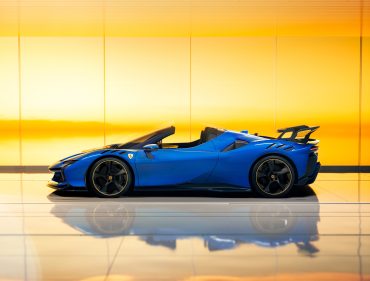
Ferrari’s aggressive push into hybrid and electric vehicles positions the company at the forefront of luxury automotive electrification. The 43% hybrid share of Q3 deliveries marks a significant milestone in the transition strategy, with new models including the 296 GTS hybrid and the upcoming Ferrari Elettrica electric vehicle.
Recent product launches support this strategic direction, including the Purosangue, Ferrari’s first SUV, the 12Cilindri family, and the Roma Spider. These additions expand Ferrari’s addressable market while maintaining the brand’s performance heritage and exclusivity positioning.
The company’s ability to command pricing power remains a defining competitive advantage. Average vehicle prices exceeding 480,000 euros demonstrate that Ferrari’s clientele accepts premium positioning even as the company introduces new technologies and vehicle categories.
Expert Opinions and Data
CEO Benedetto Vigna expresses confidence in Ferrari’s strategic direction, stating, “We continue to advance with conviction and strong visibility on our development path. At our Capital Markets Day, we have defined a clear trajectory in the long-term interests of our brand, setting the floor for sustainable growth toward 2030.”
Vigna further emphasizes brand resilience amid macroeconomic headwinds. “Despite a challenging macroeconomic environment, our brand continues to demonstrate resilience and appeal. We remain committed to delivering exceptional products and experiences for our discerning clientele,” he notes.
For full-year 2025, Ferrari maintains guidance of at least 7.1 billion euros in revenue, below the analyst consensus of 8.19 billion euros. Projected earnings per share of at least 8.80 euros also trail the 8.97-euro consensus estimate, though the company continues share buyback programs to support shareholder value.
Conclusion
Ferrari’s third-quarter performance illustrates the company’s ability to maintain profitability and strategic momentum despite missing near-term earnings expectations. The 28.4% operating margin and 7.6% profit growth demonstrate continued execution on pricing power and operational efficiency.
The accelerating electrification strategy positions Ferrari to lead luxury automotive transformation while preserving the exclusivity and performance characteristics that define its brand. With reaffirmed full-year guidance and strong cash generation, the company maintains a clear trajectory toward its 2030 growth objectives despite ongoing macroeconomic uncertainties.