- CPUs
- Earnings Report
- GPU Cloud
- Hyperscalers
AMD Sets a $17 Billion Bar as Data Center Sales Nearly Double
9 minute read
Record revenue of $13.4 billion topped guidance, but a fourth-quarter forecast roughly $700 million above consensus is what reframed the debate over AMD’s place in AI infrastructure.
Key Takeaways
- Data Center revenue rose 97% to a record $8.5 billion, close to two-thirds of company sales, while segment operating margin widened to about 34% from 25% a year earlier.
- AMD guided fourth-quarter revenue to about $17 billion, implying 27% sequential growth, even as non-GAAP gross margin eases to 55%, likely reflecting the mix shift toward Helios rack systems.
- Shares climbed about 6% after hours following a steep pre-earnings selloff, though free cash flow of $554 million, down from $1.53 billion a year earlier, warrants close attention.
The Number That Mattered
Advanced Micro Devices delivered the quarter investors had been told to expect, then gave them a reason to look beyond it. Third-quarter revenue reached a record $13.4 billion, up 45% from a year earlier. That was above the $13.3 billion ceiling of the range management set in August. Non-GAAP earnings per share rose 74% to $2.09, against a consensus near $1.95. GAAP net income doubled to $2.4 billion, or $1.46 per diluted share. Chair and CEO Lisa Su said revenue came in “exceeding the high end of our guidance.” AMD says that so often now that the market has largely stopped rewarding it.
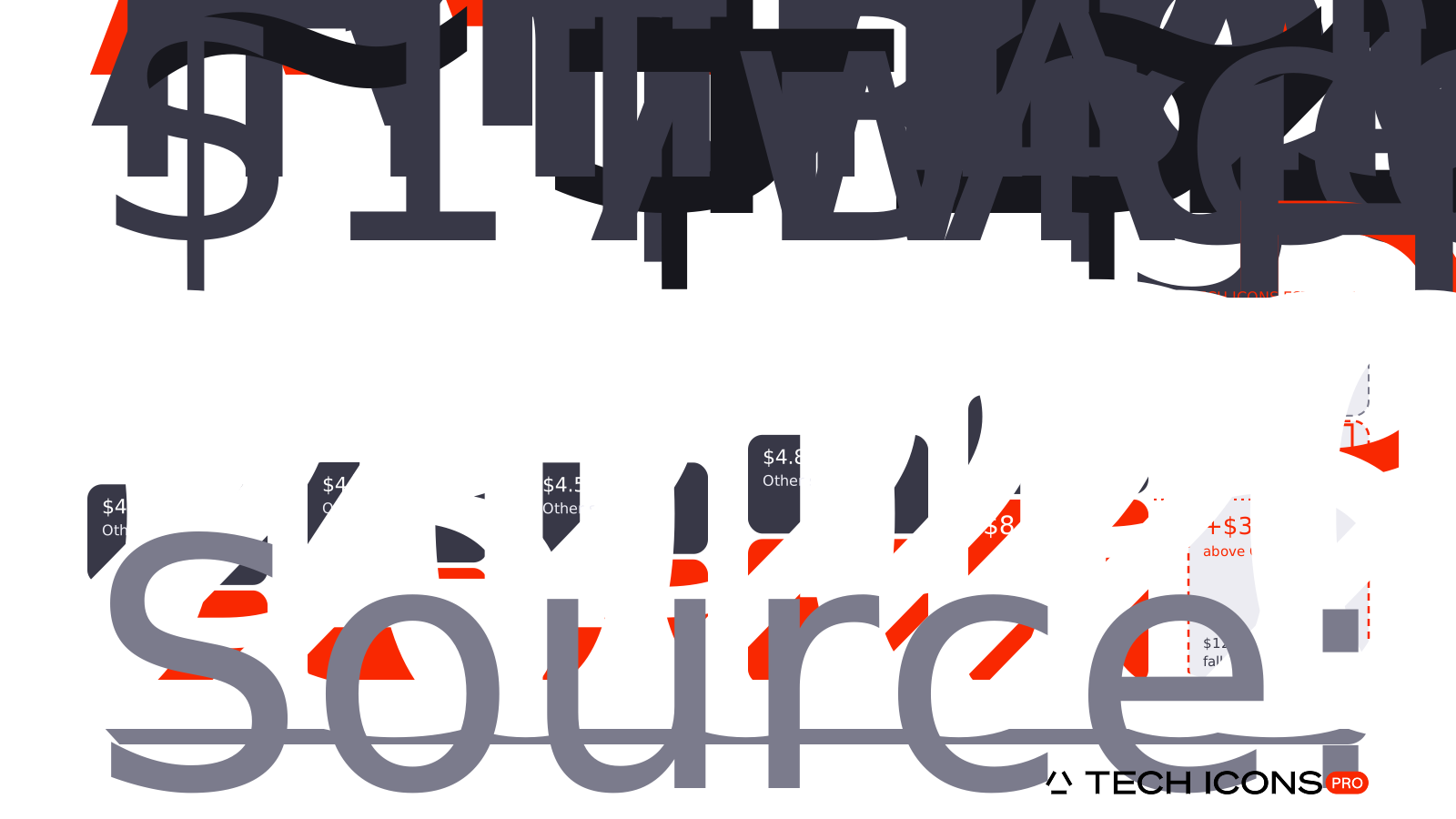
The fourth-quarter outlook is what moved the debate. AMD guided revenue to approximately $17 billion, plus or minus 3%, against a Street average of roughly $16.3 billion. At the midpoint, that implies sequential growth of about 27% and a year-over-year increase near 65% from the $10.3 billion reported a year earlier. The figure carries weight because recent history has taught investors to discount AMD’s beats. The stock fell after two of its three prior reports even though each one cleared estimates. The most recent came in August, when a guide above consensus still fell short of what the more ambitious models required. This time the forward number did what the trailing one could not.
A Company Remade by the Data Center
The mix of the quarter explains management’s confidence. Data Center revenue rose 97% to $8.5 billion, driven by EPYC server processors and the first contribution from Instinct MI450 Series GPUs. The segment now generates about 64% of company revenue, up from 58% three months earlier, and produced $2.9 billion of operating income. Its operating margin widened to roughly 34%, from 31% in the second quarter and 25% a year ago. That trend may be the most telling line in the release. Each additional dollar of AI and server revenue is arriving with more profit attached than the last, even as AMD spends heavily on systems, software and networking. Through nine months, the segment has generated $21.0 billion in sales, nearly double the same period of 2025.
Outside the data center, the picture is less flattering. Client and Gaming revenue fell 8% to $3.7 billion. Gaming dropped 40% to $773 million on lower semi-custom and graphics sales as the console cycle ages, which left the client PC business at roughly $2.9 billion. The weakness is not unique to AMD. Intel warned last week that rising memory prices were eroding PC demand, and its shares then had their worst session since the 1970s. Embedded was a quieter bright spot. It grew 29% to $1.1 billion on aerospace and defense, automotive, communications and industrial demand, with an operating margin near 41%. Measured by profit per dollar of sales, it is now the most lucrative part of the portfolio.
Where the Margin Pressure Begins
Profitability held up well in the quarter itself. Non-GAAP gross margin was 56%, in line with guidance. Non-GAAP operating margin widened to 29% from 24% a year earlier as operating income rose 75% to $3.9 billion. GAAP operating expenses fell to 33% of revenue from 38%. For two years, research and development spending grew faster than many shareholders would have liked. Revenue is now growing fast enough to absorb that investment rather than eroding profit.
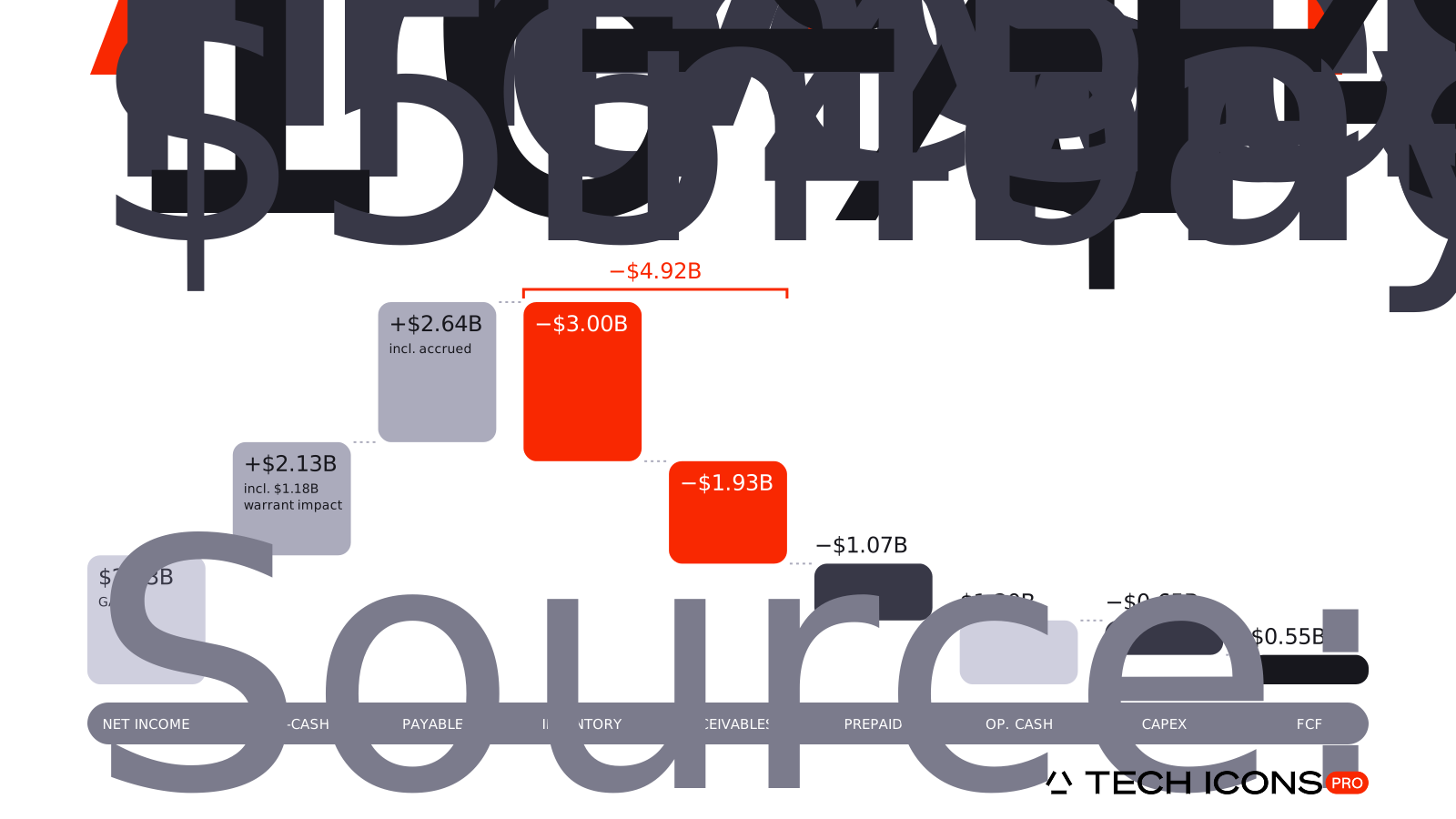
The outlook brings the first visible cost of AMD’s strategy. Management expects non-GAAP gross margin of about 55% in the fourth quarter, a point lower even as revenue climbs by more than a quarter. The likeliest explanation is mix. Helios racks combine GPUs, CPUs, networking and integration into a single sale, and complete systems tend to earn lower gross margins than standalone server processors. Investors will accept that trade-off if operating leverage keeps building, but cash flow deserves closer scrutiny. Free cash flow fell to $554 million, from $1.56 billion in the second quarter and $1.53 billion a year earlier. Inventory and receivables absorbed $4.9 billion of cash in the quarter, and higher payables covered only about half of it. The 10-Q, not yet filed, should show how much of that build is temporary, ahead of the rack ramp, and how much is the lasting working capital cost of selling systems instead of chips.
Owning More of the Stack
AMD’s recent dealmaking points the same way as its product line, toward a larger share of each system it sells. In late September it agreed to acquire World Labs, the spatial intelligence company founded by Fei-Fei Li. The all-stock deal is valued at about $8.2 billion, AMD’s second-largest after Xilinx, and Li is set to join as executive vice president and chief scientist. In August, AMD agreed to buy Taalas, a Toronto startup that designs inference silicon around individual AI models, on undisclosed terms. Both deals remain subject to closing conditions. The rationale is coherent. Chip roadmaps are fixed years before the workloads they serve, and a company that understands how models are evolving can design for them sooner.
Customer adoption is widening at the same time. On October 27, AMD said Helios racks are now running at Meta. In February, Meta agreed to deploy up to six gigawatts of Instinct GPUs and received warrants for up to 160 million AMD shares, tied to shipment and other milestones. Together with OpenAI’s matching warrant, the two agreements could add 320 million shares, about 19% of today’s diluted count, if every milestone is met. Earlier in October, the company introduced Helion, a separate Open Compute Project rack design for agentic AI, distinct from the Helios GPU racks. It comes in CPU-only and combined CPU-GPU configurations, with partner systems due this month. In Europe, EuroHPC selected Instinct MI430X GPUs and sixth-generation EPYC processors for its LUMI-AI supercomputer. Each announcement is modest on its own. Taken together, they show customers treating AMD as a platform supplier, not merely a second source.

What Investors Are Now Paying For
The market’s first verdict was favorable but measured. AMD shares closed Tuesday’s session at $483.90, up 3.65%, and rose about 6% to roughly $515 in early after-hours trading. The rebound follows a bruising stretch. The stock fell nearly 11% on Friday and entered the report almost 30% below its early-October record. Options had priced a move of roughly 9% to 11%, so the early reaction reads as relief, not a revaluation.
That distinction matters because the valuation already rests on next year. Pre-report consensus for 2027 revenue of about $89 billion implies growth of roughly 70% over a 2026 total that the new guidance puts near $52 billion. Management has said it expects Data Center revenue to more than double in 2027. Getting there requires Helios volumes at OpenAI, Meta, Microsoft and others to arrive on schedule. It also depends on high-bandwidth memory, which CFO Jean Hu has described as being in tight supply. Tuesday’s guidance answers the question of near-term demand. Whether gigawatt-scale commitments turn into revenue at the margins investors are paying for will only be known over the next several quarters.