- Broadband
- Mobile
- Wireless Spectrum
SpaceX Enlists Qualcomm to Build the Ground Network Starlink Lacks
9 minute read
Qualcomm will supply the radio silicon for a nationwide Starlink Mobile network, giving SpaceX a route around AT&T, Verizon and T-Mobile and Qualcomm its biggest network win since 3G.
Key Takeaways
- Qualcomm will provide distributed-unit and radio-unit chips and RAN software for a macro 5G network SpaceX plans to begin deploying in 2027 across tens of thousands of US cell sites.
- The agreement gives physical form to SpaceX’s spectrum purchases from EchoStar and Grain Management, after AT&T, Verizon and T-Mobile all declined to grant Starlink wholesale network access.
- For Qualcomm, which reports results tonight as Apple modem revenue falls and memory costs bite, the contract brings a national-scale reference customer in a market led by Ericsson and Nokia.
The Network Beneath the Satellites
SpaceX has spent the past year gathering what a wireless carrier needs: spectrum, satellites, a paying customer base and a capacity to raise capital that few companies can match. On Wednesday it added the piece that turns those assets into a network. Qualcomm will supply the chips and radio access network software for a nationwide terrestrial 5G build. The deal covers the distributed units and radio units that sit at every cell site, drawn from Qualcomm’s Dragonwing infrastructure line. Neither company disclosed financial terms.
Its scale sets this deal apart from the many partnerships Starlink announces. Durga Malladi, who oversees technology planning, edge solutions and data centers at Qualcomm, described a macro network spanning “tens of thousands of sites.” He said deployment would begin in 2027 and accelerate from there, and called it Qualcomm’s largest network contract since the 3G era. Qualcomm will not deliver a turnkey system. SpaceX is expected to write the higher-layer software and core network itself, as Vietnam’s Viettel has done, which keeps the architecture inside a company that has always preferred building to buying.
Spectrum Without Steel
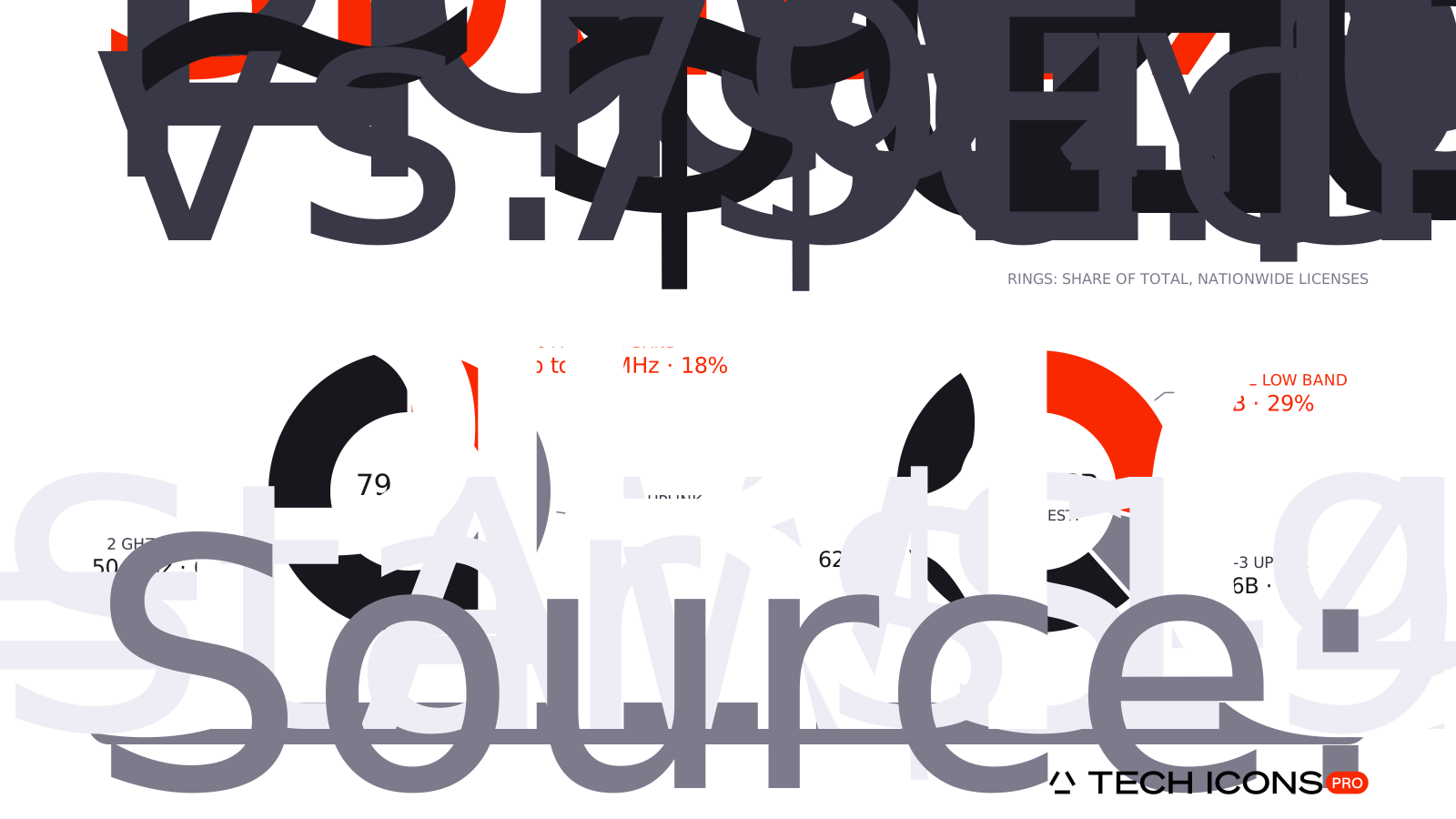
The contract resolves a tension that has hung over Starlink Mobile since September 2025, when SpaceX agreed to pay about $17 billion for EchoStar’s AWS-4 and H-block licenses. Satellites can blanket a continent, but they struggle to reach a phone inside an office tower or a subway car. SpaceX addressed that limitation on October 8 by agreeing to buy Grain Management’s nationwide 800 MHz portfolio: up to 14 MHz of paired low-band spectrum suited to indoor coverage. The company’s third-quarter release expects that deal to close in the first half of 2027, and The Wall Street Journal has put the price near $8 billion. Two weeks later, Bloomberg reported that SpaceX was seeking access to at least 80,000 US cell sites, a footprint on par with any of the three incumbents.
Each step narrowed the alternatives. On SpaceX’s second-quarter call in August, President Gwynne Shotwell still spoke of femtocells mounted beside Starlink dishes and added as demand required, a lighter and cheaper model than a macro grid. Since then, according to The Washington Post, AT&T, Verizon and T-Mobile have each turned down SpaceX’s requests for wholesale access. SpaceX has opened talks with EchoStar over Boost Mobile, whose service runs on capacity leased from two of those same carriers. Spectrum without towers and radios has limited value, and a network built on Qualcomm silicon is the one path that needs no rival’s permission.
A Rare Infrastructure Win for Qualcomm
For Qualcomm, the news arrives on a demanding day. After the market closes it reports results for its fiscal fourth quarter, July through September, having guided to revenue of $9.7 billion to $10.5 billion and non-GAAP earnings of $2.05 to $2.25 a share. Its handset business faces two pressures at once. Apple is moving to in-house modems, which management expects to roughly halve Apple-related product revenue this quarter, and a memory shortage has slowed Android shipments. Diversification is working: automotive revenue reached a record $1.6 billion in the fiscal third quarter, up 61%. It has not yet made up for the weakness in phones.
Cellular infrastructure has been a small line in that mix, built on open RAN deployments with operators such as Viettel and NTT Docomo. A national build for a well-funded new carrier gives Qualcomm a reference customer at a scale it has never had in network equipment, a market long dominated by Ericsson and Nokia. It also strengthens a technical argument. Qualcomm favors running radio workloads on CPUs rather than the Nvidia GPUs at the center of Nokia’s strategy, and Malladi says SpaceX agrees. Qualcomm pairs that with dense massive MIMO radios: 64 transmit and receive elements in bands down to 2 GHz, with a roadmap to 128 or 256. The aim is to get more capacity from SpaceX’s roughly 80 MHz of spectrum, about a fifth of what T-Mobile holds.

What the Market Has Already Priced
Investors began pricing a terrestrial build well before Qualcomm was named. SBA Communications rose as much as 9% on the Bloomberg tower report and closed 3.6% higher, and Crown Castle gained about 30% over the month to early November on hopes of a new tenant. AT&T, Verizon and T-Mobile fell roughly 6% in extended trading after the Grain agreement was announced, and Verizon closed 10% lower the next day. AST SpaceMobile, Starlink’s closest rival in satellite-to-phone service, dropped 11% on November 2 to a 16-month low as the Boost talks surfaced. The pattern is consistent: tower owners moved higher, while incumbents and challengers moved lower.
Both companies come to this moment on uncertain footing. Qualcomm closed at $164.43 on November 3, about 37% below its May high of $259.92, after a chip selloff set off by Intel’s weak outlook. Options were pricing a move of roughly 9.6% after tonight’s report, so investors will judge the SpaceX contract through the earnings rather than on its own. SpaceX, which priced its IPO at $135 in June, fell about 4.5% before Wednesday’s open. Democratic gains in the midterm elections had raised questions about congressional scrutiny of its government business. A clear market verdict on the agreement itself will have to wait for Thursday’s trading.

The Cost of Becoming a Carrier
Capital is the binding constraint. SpaceX spent $19.6 billion on capital expenditure in the third quarter, most of it on AI compute, and has guided to $35 billion to $40 billion for the fourth, backed by a $40 billion lease of GPUs arranged by Apollo. A macro network on tens of thousands of leased sites is a different kind of commitment. Tower rents, backhaul and field operations grow with geography rather than with software. The last attempt at a fourth national network offers little comfort: EchoStar spent years building Dish’s cloud-native 5G system before selling its key spectrum to AT&T and to SpaceX itself.
Still, SpaceX brings advantages no earlier entrant had. It earned $4.4 billion of net income on $14.6 billion of revenue in the third quarter. Starlink Connectivity contributed $5.2 billion, and 13.6 million consumers already pay for the service. Much remains unsettled, including FCC approval of the Grain transfer, binding tower leases and the higher-layer software SpaceX must write itself. The shape of the effort is now clear. Qualcomm gains a flagship customer in a market where it has been a minor supplier. The incumbents face a threat SpaceX has long described on earnings calls and has now begun to specify, down to the silicon.