Ahead of Consensus.
Intelligence across tech and capital markets, for investors, policymakers, and business leaders.
9 minute read
For twenty-four years, SpaceX kept its books to itself. Elon Musk built the company on private capital and government contracts, disclosing what he chose to disclose and to whom he chose to disclose it. That era ended on August 4, when SpaceX filed its first quarterly report as a Nasdaq-listed company and let the broader market see, for the first time, the arithmetic behind the rockets and the satellites. The numbers were striking. Revenue for the quarter ended June 30 reached $7.8 billion, up 92 percent from $4.1 billion a year earlier and comfortably ahead of the roughly $6.9 billion analysts had modeled. The net loss narrowed to $541 million from $1.0 billion, a nine-cent-per-share shortfall against a projected twenty-six cents. Adjusted EBITDA nearly tripled, to $3.5 billion.
Beneath that headline sat a number investors found harder to celebrate. Capital expenditure climbed more than sixfold year over year, to $18.4 billion, well past the $13.2 billion FactSet had projected, with $15.8 billion of it committed to artificial intelligence infrastructure alone. Shares fell as much as 8 percent in after-hours trading once the figures appeared, a reflex that has become familiar this earnings season. Alphabet, Meta, Microsoft and Amazon each faced a version of the same reception in recent weeks: strong revenue, expanding investment, and a market no longer willing to take the spending on faith. SpaceX, four years into its AI ambitions and seven weeks into public life, met the same test on its very first attempt.
If any part of the business earned its premium, it was Connectivity. Revenue climbed 66 percent year over year and 32 percent from the prior quarter, to $4.3 billion, while operating income rose 79 percent, to $1.7 billion, and segment Adjusted EBITDA reached $2.6 billion. Starlink subscribers doubled over twelve months to 12 million, gaining 1.7 million in the quarter alone. Average revenue per user, though, held flat at $66 a month and remains well below the $85 recorded a year earlier, evidence that Starlink’s growth is increasingly coming from lower-cost residential and international plans rather than its original premium customer base.
The more consequential growth sat in enterprise and government revenue, which rose 108 percent year over year to $1.8 billion. SpaceX signed American Airlines during the quarter and activated service for Southwest, Virgin Atlantic, Iberia and Aer Lingus, while striking Starlink Mobile partnerships with SoftBank, NTT Docomo and Spark New Zealand. Washington proved just as generous: SpaceX secured more than $6 billion in multi-year Starshield contracts, largely from two Space Force awards for orbital communications and sensing. In May, the FCC cleared SpaceX’s roughly $17 billion acquisition of 65 megahertz of spectrum from EchoStar, a transaction that gives Starlink the dedicated bandwidth it needs to connect ordinary smartphones directly to satellites, no dish and no carrier required.
The Space segment, the business SpaceX was founded to run, now functions largely as the vehicle financing Starship. Revenue rose 29 percent year over year and 55 percent sequentially, to $962 million, yet the operating loss widened to $542 million from $369 million as research and development spending accelerated. SpaceX completed 38 launches during the quarter and 78 over the first half of the year, though customer missions fell to 17 from 21 a year earlier, crowded out by the company’s own Starlink deployment schedule. Management’s stated ambition, cutting the cost of reaching orbit by more than 99 percent, remains unproven at scale, but it is the assumption on which much of the rest of the company’s valuation quietly rests.
Artificial intelligence, absorbed into SpaceX through its merger with xAI, is the segment showing the clearest signs of turning a corner. Revenue rose 247 percent year over year, to $2.6 billion, and the operating loss narrowed to $1.3 billion from $2.5 billion in the first quarter, enough to deliver the unit’s first positive Adjusted EBITDA, at $1.1 billion. The quarter brought $14.1 billion in new cloud services agreements and steady growth in Grok and X subscriptions. SpaceX also confirmed its $60 billion all-stock acquisition of Anysphere, maker of the Cursor coding tool, expected to close next quarter, and released Grok 4.5 in July on a 1.5 trillion-parameter model, as compute capacity expanded to 1.4 gigawatts from 1.0 gigawatt in the first quarter.
SpaceX enters this new chapter with a balance sheet unrecognizable from a year ago. Its initial public offering closed June 15, with 638.9 million Class A shares raising net proceeds of roughly $85.7 billion. Trading had opened June 12 at $150 a share against a $135 offer price, closing the first day at $160.95, a 19 percent gain that pushed the implied market value above $2 trillion. Weeks later, SpaceX priced a $25 billion inaugural bond offering across five tranches maturing between 2031 and 2056, at a weighted average rate of 5.855 percent. Cash, cash equivalents and marketable securities stood near $100 billion at quarter’s end. Musk retains roughly 82 percent of voting power, a concentration Senator Elizabeth Warren cited in a June 9 letter urging SEC Chair Paul Atkins to delay the offering altogether.
That capital has not translated into a stable share price. SPCX had already fallen to $104.83 on July 28, more than half its June 16 peak of $225.64 and below its own offer price, before the earnings release extended the decline into the after-hours session. The timing carries its own consequence: the earnings date triggered the company’s first lock-up release, opening August 6 and allowing insiders to sell up to 20 percent of restricted holdings, roughly 911.5 million shares. Investors are left to weigh genuine operating progress against a widening supply of stock and a governance structure that leaves its founder answerable to almost no one.
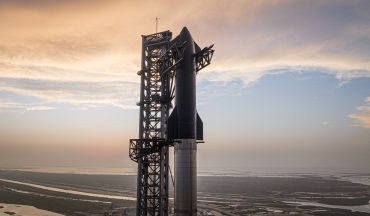
On the earnings call, executives said SpaceX expects to reach $100 billion in annualized revenue by year’s end and see a non-zero chance of $1 trillion in revenue by 2029, an ambitious marker for a company that generated $12.5 billion across the first six months of the year. Starship’s July flight test offered partial evidence in favor. The vehicle deployed twenty production Starlink V3 satellites, relit a Raptor engine in space, and completed what SpaceX called its softest splashdown to date, with the heat shield still intact. Its Super Heavy booster, however, suffered a hard splashdown after only ten of thirteen engines relit for the landing burn, a detail SpaceX’s own release did not dwell on, and a reminder that full reusability remains an open question.
Read together, the quarter recasts SpaceX as three companies growing at three different speeds: a satellite network approaching genuine maturity, a launch business still subsidizing an unfinished bet on reusability, and a young AI division expanding faster than it can yet afford. That growth is now funded increasingly by public equity and debt rather than cash the businesses generate themselves, layered atop governance questions that were raised before the stock ever priced. Whether SPCX reclaims its opening-day valuation will depend less on any single quarter’s revenue beat than on whether Starship’s economics, and AI’s margins, eventually catch up to the capital already committed.