
- Augmented Reality
- Digital Advertising
- Earnings Report
- Social Platforms
Snap Earns $56 Million as Subscriptions Outrun Its Ad Business
9 minute read
Revenue rose 14% while costs barely moved, which gave Snap $56 million in net income. Weak advertising growth and a miss on daily users still sent the shares down about 11% after hours.
Key Takeaways
- Total costs rose less than 1% while revenue grew by $215 million. About 93% of that gain reached adjusted EBITDA, which more than doubled to $383 million on a 22% margin.
- Advertising grew only 4% as brand budgets and consumer goods spending softened. Revenue led by subscriptions rose 84%, with more than 30 million paying users across three products.
- In 2027, monthly users will replace daily users as Snap’s main audience metric, and regional daily figures will go. The change comes as North American daily users fall 6%.
The Profit Was Built, Not Found
For most of its life as a public company, Snap has been asked to prove that its audience could be turned into earnings. In the third quarter it supplied an answer, though not quite the one investors had in mind. Revenue rose 14% to $1.722 billion, inside the $1.70 billion to $1.74 billion range management had set in August, and the company reported net income of $56 million against a $104 million loss a year earlier. Adjusted EBITDA reached $383 million, a 22% margin compared with 12%, and operating income of $77 million replaced a $128 million operating loss.
The expense line made the quarter by refusing to follow revenue. Total costs and expenses rose to $1.646 billion from $1.635 billion, less than 1% higher, so nearly all of the $215 million in added revenue reached the bottom of the income statement. Management put the flow-through at about 93% on the earnings call. Cost of revenue fell to $649 million, lifting gross margin to roughly 62% from 55%. Full-time headcount stood at 4,540, down 13%, after an April restructuring that removed about 1,000 roles and targeted more than $500 million in annualized savings. Free cash flow rose to $164 million from $93 million. This profit was assembled through discipline, and it should be valued that way: real, repeatable for a while, and limited in how far it can run.
Where the Growth Actually Came From
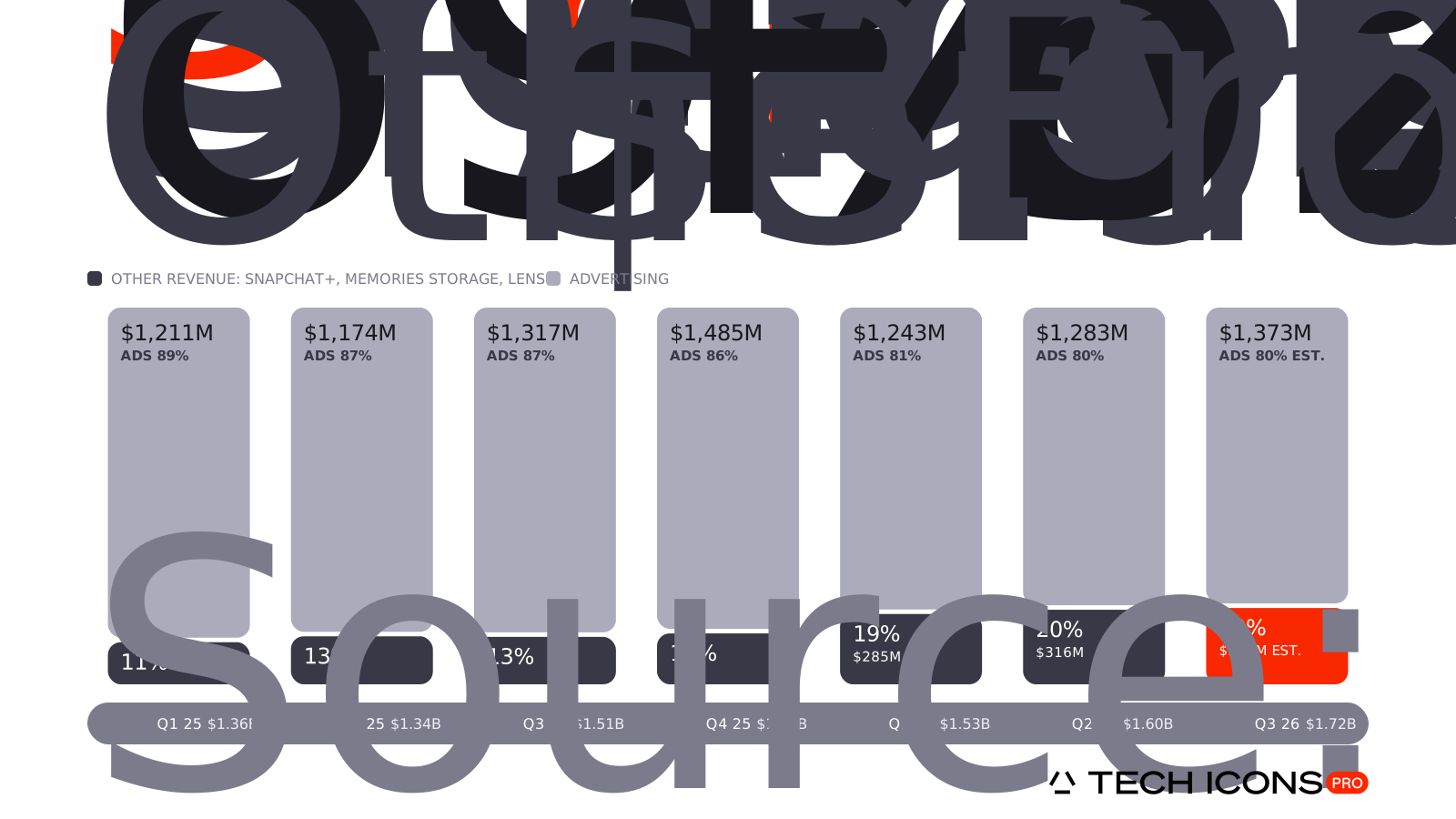
Advertising, which still makes up the great majority of sales, grew just 4%. Other revenue, led by Snapchat+, Memories Storage and Lens+, rose 84%, and paid subscribers passed 30 million, up from 24 million at the end of 2025. On those growth rates, advertising supplied only about a quarter of the quarter’s revenue gain, and non-advertising revenue now accounts for roughly a fifth of sales. Snap’s growth now comes mainly from a business other than the one its valuation is built on.
Within advertising, direct-response formats grew while brand spending declined. Chief Commercial Officer Ronan Harris pointed to weaker outlays from consumer packaged goods companies, and Chief Executive Evan Spiegel conceded that advertising growth “remains below our ambitions.” Newer ad formats are helping at the edges: Sponsored Snaps revenue rose 56% from the second quarter. The regional figures sharpen the picture. North American revenue rose 13% to $1.014 billion even as daily users there fell 6% to 92 million, because revenue per user climbed 20% to $11.07. Snap is earning more from a smaller audience in its richest market. That works until the audience shrinks faster than pricing can rise.
The Quiet Retirement of the Daily User
Daily active users rose 4% to 495 million, short of the 499 million analysts expected, while monthly users reached 977 million. From its first-quarter 2027 filing, Snap will make global monthly active users its primary audience metric. It will also stop reporting regional daily users and regional revenue per user. The company said it no longer considers daily users the best primary measure of long-term value. The new monthly count will cover activity in the last 30 days of each quarter and include Apple Watch users. Snap estimates the change would have moved the third-quarter figure by less than 1%.
The case for the change is a serious one. Snap has deliberately cut its spending on user growth marketing, and its investor letter argues that daily engagement has held steady as a share of monthly use. A subscription business is also better described by how many people it reaches in a month than by how many open the app each day. Yet the timing is hard to overlook. The switch comes as daily users decline in North America and Europe and growth concentrates in the Rest of World region, where revenue per user is $1.13. Dropping the regional daily figures closes the clearest window investors have had on that imbalance. Management now has to show by other means that engagement is holding where it matters most.

Why a Better Quarter Met a Lower Price
The market did not wait for that evidence. The shares rose 5.9% to $5.92 during Wednesday’s session, then fell about 11% to around $5.25 in extended trading. Revenue of $1.72 billion trailed the $1.73 billion LSEG consensus and the user count disappointed. Those misses outweighed adjusted EBITDA that came in comfortably above the $337 million StreetAccount estimate. The selling hit a stock already down roughly a third year to date and sitting in the lower half of its 52-week range of $3.81 to $9.13.
Guidance was firmer than the reaction suggests. Snap expects fourth-quarter revenue of $1.950 billion to $1.985 billion, implying growth of roughly 14% to 16% on last year’s $1.716 billion. It expects adjusted EBITDA of $490 million to $525 million, against $358 million a year earlier and a $498 million consensus. It also narrowed its full-year infrastructure cost outlook to $1.65 billion to $1.66 billion. The market’s judgment was about where the money comes from, not how much there is. Margins are rising on subscriptions and cost cuts, while the advertising business that still produces most of the revenue grows in the low single digits. The average analyst target of $7.44, compiled by S&P Global, says the Street still sees value. The after-hours price says it wants proof first.
Specs, Settlements and the Test Ahead
Snap’s longest-dated bet is hardware. Specs, its standalone augmented reality glasses, were unveiled on June 16 at $2,195 with a $200 refundable deposit. Shipping is planned this fall in the United States, the United Kingdom and France. The business sits in Specs Inc., a wholly owned subsidiary. Management said fourth-quarter guidance includes Specs investment paced against “product, ecosystem, and economic milestones.” That is the language of a company that remembers how its earlier hardware efforts ended, and it wants investors to know the spending will be controlled.
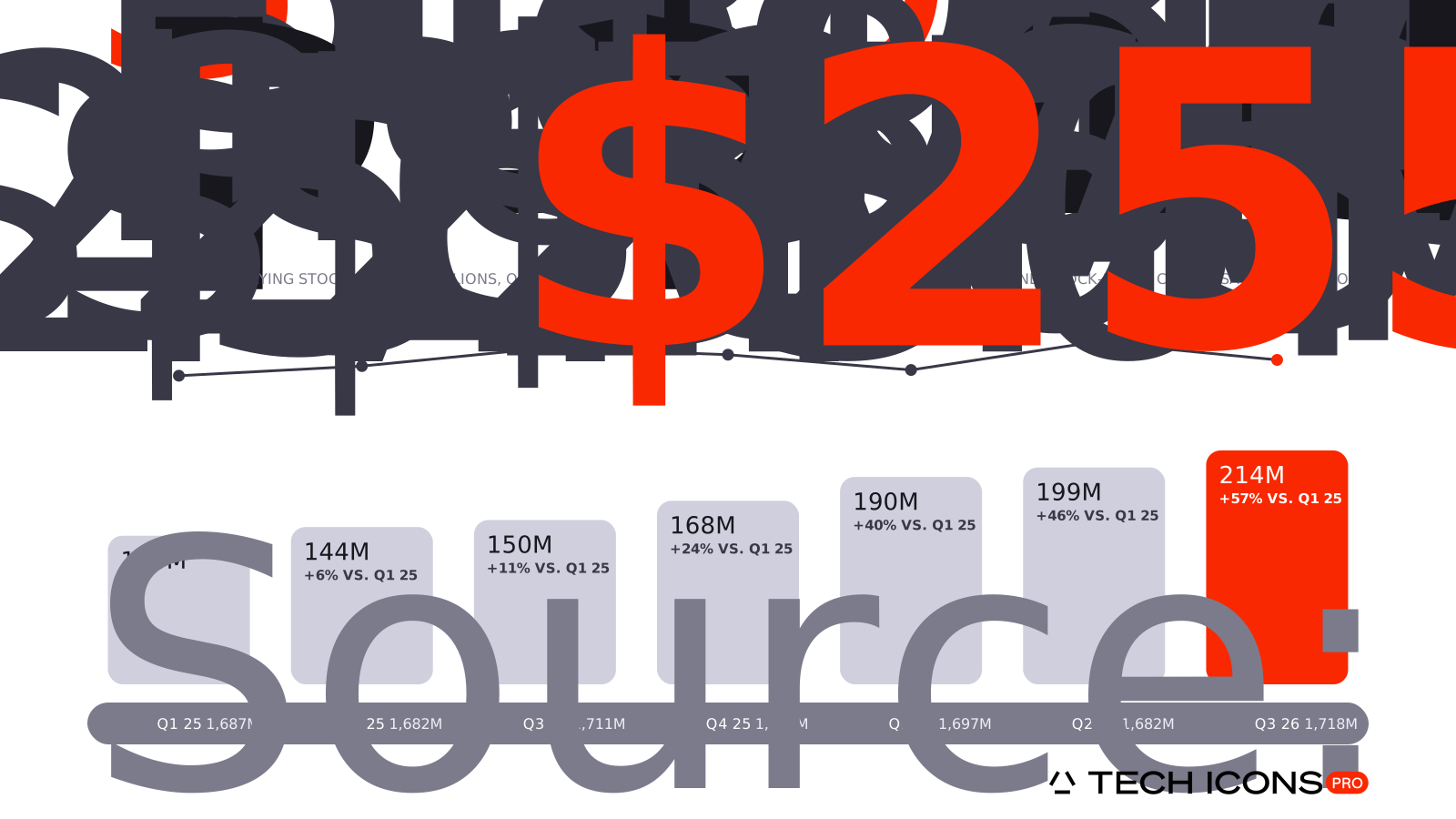
Two other developments narrow the range of outcomes. The $400 million Perplexity search partnership announced a year ago was terminated in May and removed from guidance, ending a high-margin revenue line before it scaled. On November 2, two days before opening statements, Snap settled the Los Angeles youth-harm bellwether case brought by two teenage plaintiffs, on confidential terms. The settlement kept Snap from facing its first jury in that litigation. Meanwhile, common shares outstanding rose to 1,718 million from 1,711 million despite buybacks this year. Spiegel’s stated aim of higher free cash flow per share depends on holding down stock compensation as well as costs. Snap has now shown it can make money. The harder test, and the one the market is pricing, is whether it can grow advertising among the users who pay the most.