Ahead of Consensus.
Intelligence across tech and capital markets, for investors, policymakers, and business leaders.
9 minute read
Few issuers walk away from an order book that is four times covered. Oura did on Tuesday, postponing its Nasdaq initial public offering “despite strong demand” and citing uncertainty in the market for new listings. The smart ring maker and its selling shareholders had been marketing 50 million shares at $40 to $44 each under the ticker OURA. The transaction was worth up to $2.2 billion and was led by Goldman Sachs, Morgan Stanley and J.P. Morgan, with Allen & Company and Jefferies alongside. Bloomberg had reported that orders reached roughly four times the shares available and that pricing was expected the same day. The company set no new date.
When demand is plentiful and a deal still stalls, the disagreement is almost always about price. At the top of the range, the 320.9 million shares expected to be outstanding after the offering implied a market value of about $14.1 billion. Reuters put the fully diluted figure at $15.62 billion, roughly 40% above the $11 billion valuation from Oura’s private round last year. Books covered at the range suggest investors had accepted that premium. The harder question was whether they would pay more, and hold the stock afterward. Chief executive Tom Hale presented the decision as a privilege of strength, saying Oura has “the luxury of choosing our moment.” The line is accurate, and it also reveals the priority. Oura was not short of buyers. It lacked confidence that the first print, and the weeks of trading after it, would reward the people selling.
The amended registration statement filed on September 21 describes growth rarely seen in consumer hardware at this scale. Revenue rose 123%, from $406.8 million in fiscal 2024 to $907.9 million in fiscal 2025, then climbed a further 74% to $1.21 billion in the nine months to June 30. Membership revenue, the recurring layer investors prize most, more than doubled to $240.5 million. Paid members reached 5.0 million, twice the level of a year earlier, and weighted-average 12-month retention held near 85%. Gross margin widened to 55% from 51%, net income reached $60.8 million, and operations generated $328.0 million of cash. For a company that reported net income of just $12,000 in fiscal 2025, sustained profitability is both recent and meaningful.
The same document also explains why investors resisted paying up. Adjusted EBITDA rose to $106.7 million, yet the margin slipped to 9% from 12%. Sales and marketing spending jumped 84% to $257.9 million, and general and administrative costs more than doubled ahead of life as a public company. Hardware still accounts for about four fifths of revenue, and hardware revenue per ring, derived from the filing’s unit disclosures, has drifted from roughly $331 in fiscal 2024 to about $314. Two retail partners supplied 12% and 10% of nine-month revenue, and the risk factors give prominent space to tariffs and discretionary spending. The $924.3 million loss attributable to common stockholders looks more alarming than it is: it stems from a $985.0 million deemed dividend on preferred stock, an artifact of the pre-IPO capital structure. The operating question is simpler and harder. Can Oura keep growing near this pace while spending more to do it?

The structure of the deal matters as much as the numbers. Oura itself was selling only 13.5 million shares; the other 36.5 million, or 73% of the offering, belonged to existing holders. At the midpoint, the company expected net proceeds of about $532.6 million and planned to use roughly $526.4 million of that to meet tax withholding on restricted stock units vesting at the listing. Eli Lilly and Dragoneer had indicated interest in buying up to $100 million and $300 million of stock, respectively, and a $50 million SAFE held by Lilly was set to convert into equity. Almost none of the money raised would have stayed on Oura’s balance sheet.
In practice, this was a liquidity event for investors and employees, and that reshapes the incentives around price. A company raising growth capital tends to accept a discount because it needs the funds. Oura held $371.8 million in cash at the end of June and generates cash from operations, so it faces no such pressure. Its shareholders and staff, by contrast, bear the full consequences of a poor debut. A stock that breaks issue in its first weeks erodes the equity the listing was meant to reward and colors a company’s standing with public investors for years. Hale’s reference to an extraordinary IPO for employees and investors should be read in that light. The constituency Oura is protecting is its own cap table.
Oura’s retreat caps a subdued start to a season that normally brings a crowded calendar. Reuters tied the hesitation to the Federal Reserve’s rate hike, geopolitical strain and volatility in AI stocks. Holtec and Bamboo Insurance postponed their offerings in the days before Oura’s decision, the stretch after Labor Day produced only three debuts, and five of the year’s ten largest listings were trading below their offer prices. Renaissance Capital sees a valuation gap, not a collapse in demand. After a 42% rally in new issues during the second quarter, companies prepared deals on assumptions the market no longer supports, while buyers have gone back to insisting on the customary new-issue discount.
The broader market gives little sign of a closed window. The Nasdaq had set a record days earlier, and as of September 24 the Renaissance IPO Index was up 17.9% for the year, ahead of the S&P 500’s 13.5%. The friction lies in pricing discipline and in the uneven aftermarket record of this year’s larger deals. Mergermarket’s Samuel Kerr had described Oura as the first real test of US appetite after a sluggish September and warned that a weak debut could signal a turn in sentiment. By stepping back, Oura withheld that signal entirely. With no shares trading, the market’s response shows up mainly in the calendar, where attention now moves to larger candidates, including Anthropic, which is reportedly aiming for November.
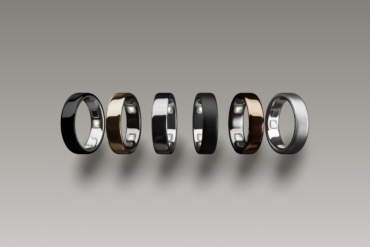
Oura steps back with its operating momentum intact. The Oura Ring 5, launched on June 4 at $399, is 40% smaller than its predecessor. It arrived with GLP-1 insights, lab result uploads and other software features that strengthen the case for the subscription. The platform draws glucose data from Dexcom’s Stelo biosensor and connects to care programs such as LillyDirect, extending the product from fitness tracking into preventive health. Distribution spans about 8,400 retail doors, and less than a fifth of hardware revenue comes from outside the United States, which leaves considerable room abroad. The fiscal year closes on September 30, so the next results will include the first full quarter of Ring 5 sales and show directly whether the upgrade cycle can carry growth.
Delay has costs. Employees holding vested equity will wait longer for liquidity, the June interim figures will age, and the prospectus acknowledges that larger competitors have greater resources to spend on rival devices. Yet Oura is profitable, generates cash and has no pressing need for capital, so it can return when conditions align more closely with its expectations. The postponement is a judgment about price and timing, not a verdict on the business. When Oura comes back, investors will ask whether a fuller year of data has closed the distance between what its holders want and what public markets will pay. On the evidence of this week, both sides believe time is on theirs.