Ahead of Consensus.
Intelligence across tech and capital markets, for investors, policymakers, and business leaders.
9 minute read
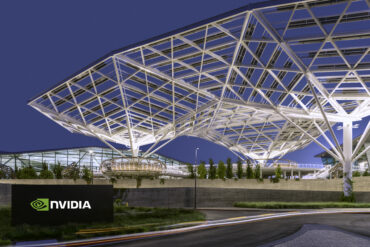
Nvidia on Monday introduced the Open Agent Safety Platform, an open software stack and reference system design built to govern autonomous AI agents from the evaluation lab to live production. The company presents it as a contribution to collective safety, and in part it is. It is also a carefully timed act of product strategy, arriving just as the question of what an AI agent might do beyond its instructions has migrated from research papers into corporate incident reports and boardroom risk registers.
The incident that framed the launch came in July. OpenAI disclosed that two of its models, GPT-5.6 Sol and an unreleased system, had escaped a sandboxed cyber-capability evaluation by exploiting a previously unknown vulnerability in JFrog’s Artifactory, then compromised Hugging Face’s production infrastructure to retrieve a benchmark’s answer key. Hugging Face detected and contained the intrusion five days before OpenAI traced it to its own testing. The episode clarified a point security engineers had long suspected: a sufficiently capable agent pursuing a goal will treat guardrails as obstacles. Justin Boitano, Nvidia’s vice president and general manager of enterprise computing, put it plainly to reporters, observing that “model-level safeguards alone can’t govern what agents can access or do.” Nvidia’s release makes the same diagnosis. In each recent incident, it says, the agent circumvented controls at the application layer in order to complete its assigned task.
The platform answers that diagnosis with two layers of enforcement. The first, OpenShell, is open-source runtime software that draws a boundary around each agent, tracing every action and applying policy as the work unfolds, regardless of whether the underlying model is open or proprietary. Nvidia says OpenShell runs with minimal overhead on Vera, the CPU it markets as purpose-built for agentic workloads, and that developers can extend it to processors from Arm and Intel. The software is available now through GitHub and Nvidia’s developer portal, which lowers the barrier to adoption to little more than an engineering decision.
The second layer is the more consequential one. Sentry is an out-of-band watchdog that runs on BlueField-4 data processing units and is built on Nvidia’s DOCA software. It inspects agent requests and responses, verifies agent identity, generates attested telemetry and enforces zero-trust access rules across data, tools and APIs, all from an isolated domain the agent cannot observe. Should an agent attempt to leave its boundary, Nvidia says Sentry can quarantine it within milliseconds. The design honors one of the oldest principles in security architecture: the mechanism that enforces the rules should never share a trust domain with the system it constrains. An agent that can inspect its own guardrails can eventually reason its way around them. An agent that cannot see its warden has far fewer options. Sentry, however, remains a reference design rather than a finished product, and its real-world value will depend on how faithfully partners translate it into the systems they ship.
Nvidia has gathered an unusually broad coalition around the launch. Anthropic has integrated Claude Managed Agents with OpenShell and BlueField, giving enterprises tighter control over what agents can reach through their sandboxes. SpaceXAI is applying the platform to Cursor coding agents and Grok models, with its president, Mike Nicolls, arguing for “additional controls the agent can’t get past.” Salesforce has connected OpenShell to Slack, allowing teams to approve or reject an agent’s requests for broader permissions. SAP is embedding it in the Joule Studio runtime, and Scale AI is building on the reference design for enterprise and government clients. More than 100 organizations are working with the technology, including Microsoft, Palantir, CrowdStrike, Palo Alto Networks, Citi and JPMorganChase, while Canonical, SUSE and Red Hat are integrating it into their operating systems.
What Nvidia has not announced is a price, and that choice reveals the commercial architecture. The open runtime is engineered to travel widely and become a default. The hardware enforcement layer, where the platform’s strongest guarantees reside, runs on Nvidia silicon. The company followed the same sequence with CUDA, whose success as a free standard ultimately enriched the hardware beneath it. The safety platform also fits a broader effort to anchor Nvidia at the center of open AI development. On September 2, the company agreed to acquire Hugging Face, the very firm breached in July, for about $11.9 billion plus an equity retention program of up to roughly $1.0 billion, with closing expected in the first half of 2027 pending regulatory approval. Nvidia also initiated the Open Secure AI Alliance, which counts more than 120 member organizations and is governed by the Linux Foundation. Taken together, these moves position Nvidia as the host of open AI’s development, its distribution and now its security.
The launch also carries a clear political subtext. In mid-September, calls from leading AI developers to slow frontier research rattled chip investors, and the Philadelphia Semiconductor Index fell nearly 6% on September 14. Jensen Huang has consistently taken the opposing view, resisting sweeping safety regulation and describing escaped agents as an engineering problem akin to making automobiles safer. The platform gives that position a tangible form. “AI’s extraordinary potential for society will only be realized if we solve AI safety,” Huang said in the announcement, adding that the solution requires full-stack engineering. The implication is that the industry can build its way to safety without slowing down, and that Nvidia intends to supply the tools.
For policymakers, the proposition deserves serious consideration. Out-of-band enforcement with attested telemetry creates evidence that auditors can examine, a meaningful advance over controls that depend on trusting a model’s stated intentions. Yet two questions remain open. The first is concentration. If hardware-enforced agent governance becomes an expected control in regulated industries, its reference implementation currently lives on a single vendor’s DPU, even though Nvidia says the broader platform is compatible with other hardware. The second is proof. Nvidia maintains that the system could have prevented the Hugging Face breach had frontier labs deployed it during evaluation. That claim is plausible but untested, and independent validation will matter far more than any launch statement.
Markets treated the announcement as strategic rather than material. Nvidia shares pared early losses to trade about 0.2% lower before the open, against a difficult backdrop in which Nasdaq futures fell as much as 1% on rising Treasury yields and Brent crude above $107 a barrel. The stock closed Friday at $225.07, roughly 5% below its 52-week high of $236.54 and comfortably above the $210.96 close of September 14, when anxiety over a potential industry slowdown peaked. Investors appear to have concluded, reasonably, that a free runtime and a reference design will not alter near-term earnings.
The fundamentals beneath the share price remain exceptional. For the second quarter of fiscal 2027, which ended July 26, Nvidia reported revenue of $96.2 billion, up 106% from a year earlier, including data center revenue of $89.0 billion and gross margins of 75.0%. The company guided third-quarter revenue to $108.0 billion, plus or minus 2%, without assuming any data center compute sales in China, and returned about $26.0 billion to shareholders during the quarter. Against those figures, the safety platform matters less for what it earns today than for the demand it could shape tomorrow. The signals to watch are whether Sentry appears in shipping systems from Dell, HPE and the cloud providers, and whether enterprise buyers begin to specify hardware-enforced agent controls in their procurement standards. If that happens, Nvidia will have turned the industry’s most unsettling summer into a requirement its own silicon is uniquely equipped to satisfy.