Ahead of Consensus.
Intelligence across tech and capital markets, for investors, policymakers, and business leaders.
9 minute read
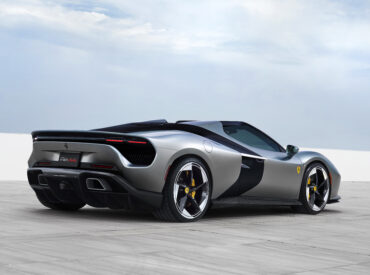
Ferrari does not grow the way other automakers grow. It does not chase volume, and it rarely surprises anyone by missing a number it has already promised. What it did on July 30, when it reported second quarter results and raised full year guidance for the third time this year, was something more interesting than a beat. It offered fresh evidence that a business built almost entirely on restraint can still find new ways to expand.
Net revenue for the three months ended June 30 reached 1,938 million euros, up 8 percent from a year earlier and 11 percent once currency movements are removed, according to the company’s preliminary results filed with the U.S. Securities and Exchange Commission. Operating profit rose 10 percent to 605 million euros, lifting the margin to 31.2 percent. Net profit climbed 9 percent to 463 million euros, and diluted earnings per share reached 2.62 euros, up from 2.38 euros a year ago. Against consensus estimates compiled by LSEG, which had penciled in revenue near 1.88 billion euros and earnings of 2.50 euros a share, Ferrari cleared both marks with room to spare.
The more revealing number sits beneath the headline. Ferrari shipped 3,366 cars in the quarter, down from 3,494 a year earlier, a decline of nearly 4 percent. Fewer cars left Maranello, and yet the company made more money doing it. Revenue from cars and spare parts rose 8 percent to 1,629 million euros, meaning the amount Ferrari extracted from each vehicle climbed by a wider margin than the price tags alone would suggest. This is the mechanism that has defined Ferrari’s public life since its 2015 listing, and it continues to work because the company treats volume as a design constraint rather than a growth lever.
The changeover now underway, in which the 296 GTS, the Roma Spider and the SF90 XX family are being phased out in favor of the 12Cilindri lineup, the Purosangue and the newly ramping Amalfi and 849 Testarossa, has trimmed unit counts on purpose. What replaces that lost volume is personalization spending, the bespoke options and finishes that Ferrari’s wealthiest clients treat less as upgrades than as expected participation. EBITDA reached 755 million euros, a margin of 39.0 percent, helped along by the F80 hypercar’s mix contribution and by racing income that included fees for renting engines to rival Formula 1 teams. The effective tax rate fell to 23.0 percent, largely on the strength of Italy’s new Patent Box regime, which did some of the work that operations alone did not.
Behind the consolidated shipment figure lies a geography that deserves more attention than it usually receives. EMEA deliveries rose by 210 units to 1,856, comfortably offsetting weakness elsewhere. The Americas fell by 206 units to 787, Greater China dropped 89 units to 185, and the rest of Asia Pacific slipped 43 units to 538. Ferrari has said its guidance for the remainder of the year assumes current visibility into the Middle East conflict holds, a reminder that even a manufacturer this insulated from mass market cycles still has to route cars around geopolitical friction. A China market cooling at the same moment Ferrari is launching its most expensive new products in years is a pattern worth watching rather than dismissing.
The balance sheet tells its own story of the quarter. Ferrari moved from a net industrial cash position of 388 million euros at the end of the first quarter to net industrial debt of 131 million euros at the end of the second, a swing of roughly half a billion euros attributed entirely to shareholder returns: a dividend distribution of 599 million euros tied to April’s annual meeting, and share repurchases of 209 million euros during the quarter. Industrial free cash flow of 276 million euros, up 39 percent from a year earlier, comfortably covered the business but not the scale of what went back to investors. Separately, on July 16, Ferrari cancelled more than 16.6 million common shares and 6.7 million special voting shares held in treasury, permanently trimming the share count against which future earnings will be measured.
The clearest signal Ferrari sent investors was the timing of its guidance revision as much as its substance. Full year revenue guidance moved to approximately 7.60 billion euros, up from 7.50 billion euros, against 7.15 billion euros actually delivered in 2025. Adjusted EBITDA guidance rose to at least 2.97 billion euros, adjusted operating profit to at least 2.26 billion euros, adjusted diluted earnings per share to at least 9.68 euros, and industrial free cash flow to at least 1.55 billion euros.
RBC Capital Markets analyst Tom Narayan noted that Ferrari typically waits until the third quarter to revise guidance upward, and read the early move as a vote of confidence in demand through year end rather than a company simply banking a strong first half. That reading matters because Ferrari’s guidance has historically proven conservative rather than aspirational, which means an early raise carries more information than the round numbers alone suggest.
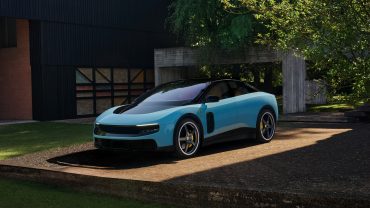
The results arrived one day after the Financial Times reported that Ferrari had already sold out its entire 2026 allocation of the Luce, its first fully electric model, within roughly two months of its late May debut. The run, just under 500 units priced from around 550,000 euros, was driven largely by demand out of China. That commercial outcome sits oddly alongside the car’s reception at launch, when much of the enthusiast press turned on its styling and Luca di Montezemolo, a former chairman of the company, publicly suggested Ferrari remove its own badge from the vehicle. The stock fell roughly 6 percent in Milan in the days after the reveal. Buyers, it turns out, disagreed with the critics, and the day’s trading was difficult to read cleanly as a result, with early gains in both New York and Milan competing against commentary describing the session as profit taking after a run driven by the Luce news itself.
None of this changes the trajectory Ferrari set out at its October 2025 Capital Markets Day, when management reaffirmed a 2030 revenue target near 9 billion euros and EBITDA of at least 3.6 billion euros, while cutting its electric vehicle ambitions to 20 percent of the model lineup from an earlier 40 percent target, a decision that sent the stock down 15 percent in a single session at the time. The Luce’s early commercial reception does not erase the caution behind that decision, but it does suggest Ferrari’s slower, scarcity led approach to electrification is finding buyers even in a car much of the public claimed to dislike on sight. For a stock that trades at a premium to nearly every peer in the industry, the second quarter offered a simple confirmation: fewer cars, higher prices and deeper personalization remain a formula that still works, however unfashionable it may look from the outside.