- Cloud Security
- Cybersecurity
- Enterprise Software
Cloudflare Accelerates to 39% as AI Agent Traffic Tests Its Margins
9 minute read
Third-quarter revenue rose 39% to $782.5 million and 2026 guidance climbed for a third time, yet a slipping gross margin shows the machines driving growth are also raising the bill.
Key Takeaways
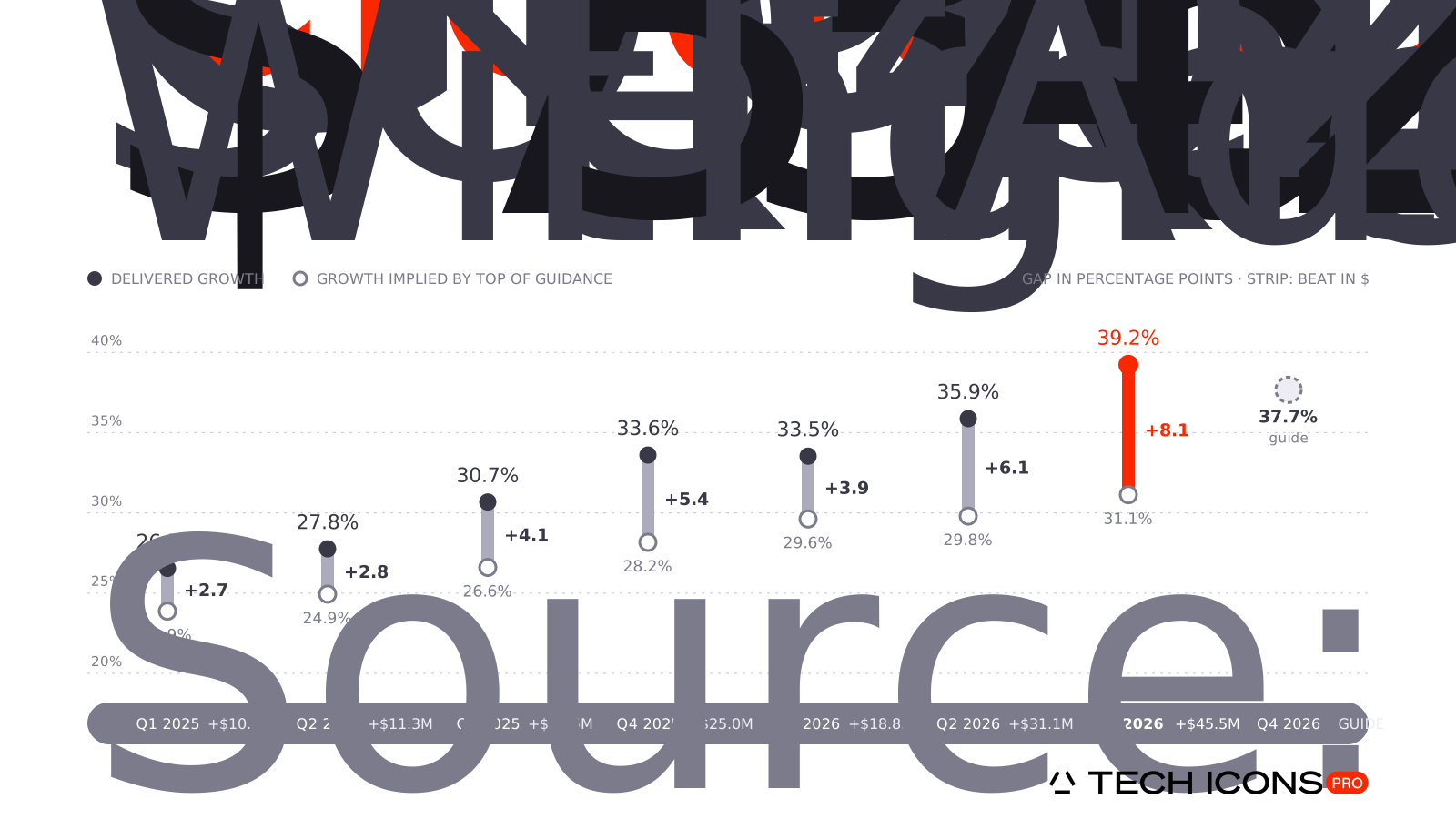
- Revenue of $782.5 million beat the top of Cloudflare’s own guidance by $45.5 million, and growth quickened for a second straight quarter, from 34% in Q1 to 36% in Q2 and 39% in Q3.
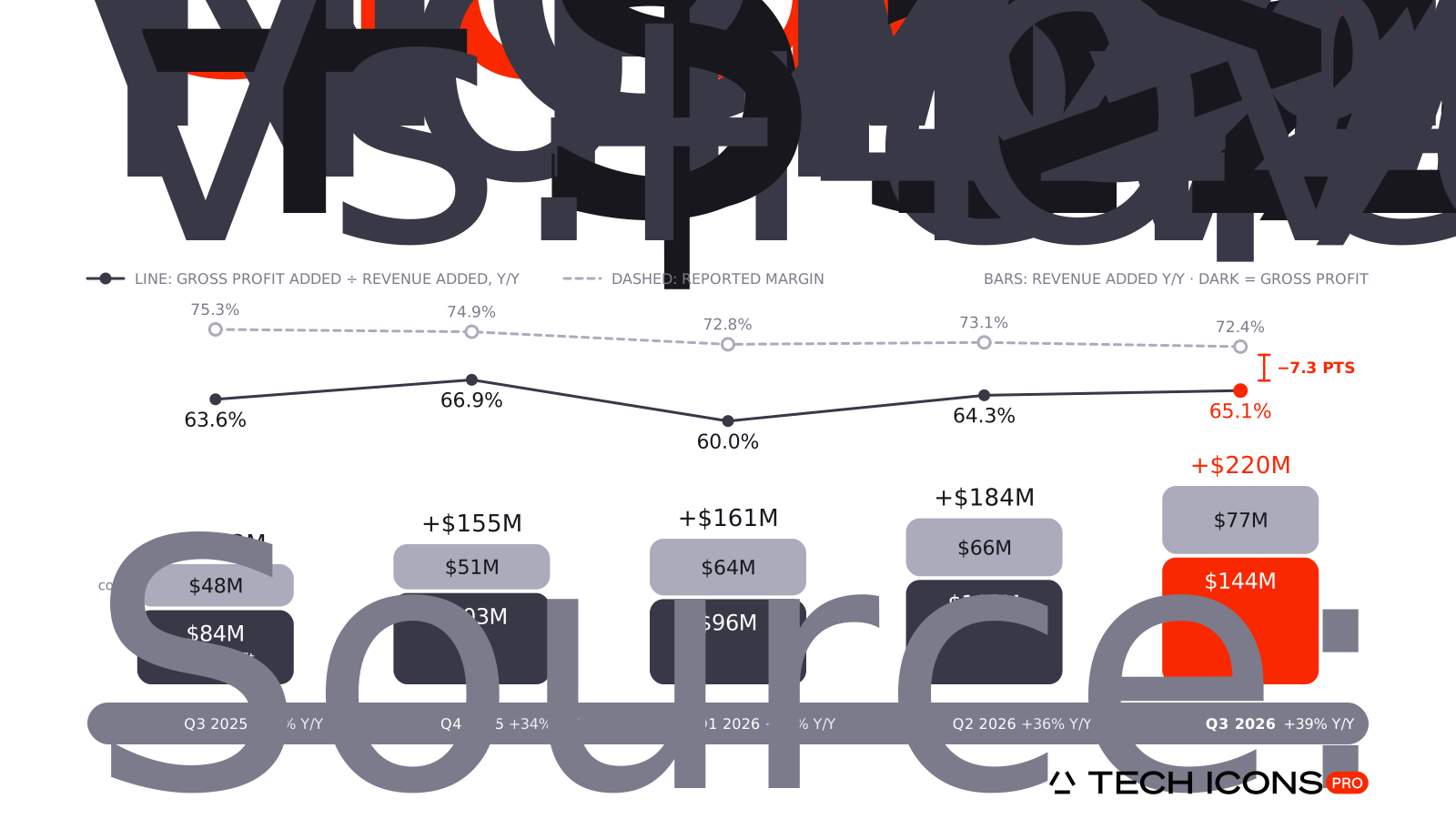
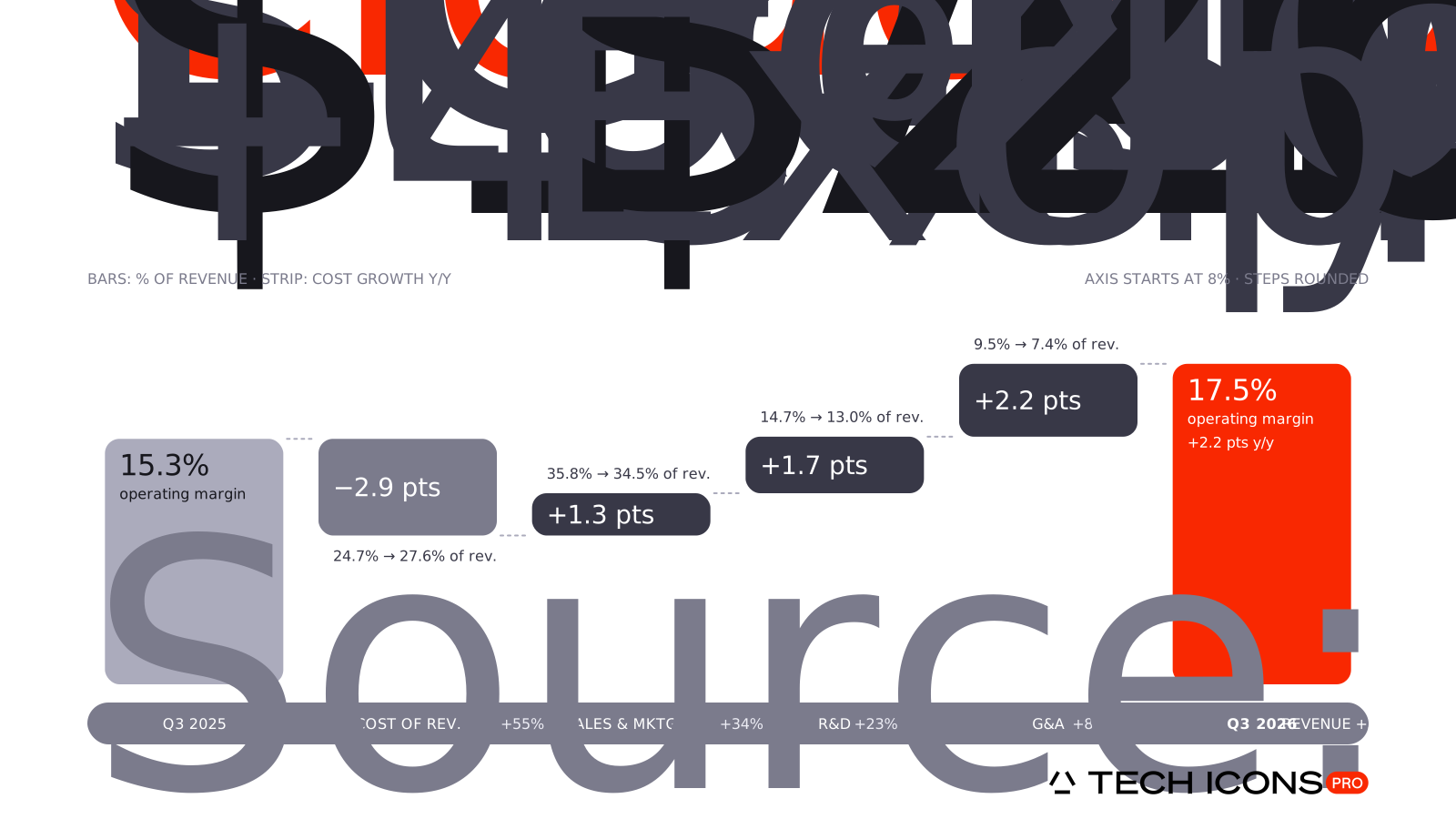
- Non-GAAP operating margin widened to 17.5%, but gross margin fell to 72.4% from 75.3% as non-GAAP cost of revenue rose 55%, driven by fast-growing, lower-margin AI agent traffic.
- The shares closed down 9.6% at $241.07 before the report, then jumped about 17% after hours as Cloudflare lifted full-year revenue guidance to $2.963 billion to $2.964 billion.
The Acceleration Few Had Modeled
Cloudflare came into its third-quarter report with its stock down more than a third from an October peak and an outlook that pointed to slower growth. It left with the strongest quarter in its history. Revenue rose 39% to $782.5 million in the three months to September, from $562.0 million a year earlier, and finished $45.5 million above the top of the range management set in August. Matthew Prince, the chief executive, called it “Cloudflare’s best quarter ever,” adding that the company has passed $3 billion in annualized revenue and is growing at its fastest rate in nearly four years.
The August guidance had implied growth of about 31%, a retreat from 36% in the second quarter. Instead the curve bent upward again. Revenue rose $86.4 million in a single quarter, against $56.3 million in the one before. Current remaining performance obligations, the contracted revenue due within a year, grew 37%, which places the acceleration on signed commitments and not on a passing burst of usage. Quarterly sales now equal about 70% of Akamai’s, an incumbent that grew second-quarter revenue 5% to $1.10 billion. More contracts now run on consumption and pool-of-funds terms, which management says are harder to forecast and which help explain the size of the beats.
Machines Make Expensive Customers
The strain sits one line below revenue. Non-GAAP gross margin fell to 72.4% from 75.3% a year earlier and from 73.1% in the second quarter, even though management had signaled in August that it expected the margin to stabilize near those levels. Non-GAAP cost of revenue climbed 55% to $215.9 million, outrunning revenue growth by 16 percentage points. On the call, finance chief Thomas Seifert noted that the margin still sits inside Cloudflare’s long-term target range of 70% to 77%. For a company valued on software-like economics, the lower half of that band is where the debate now lives.
The cause lies in the composition of the traffic. In October, Cloudflare said daily requests from AI agents on its network had grown more than 1,700% in a year, and that this year, for the first time, more than half of internet traffic was not human. Developer products, the fastest-growing part of the platform, carry thinner margins than the established security and delivery services, and agent traffic consumes capacity before it is fully monetized. Capital spending points the same way. Operating cash flow of $215.4 million less free cash flow of $82.1 million implies roughly $133 million of network and capitalized software investment, up about 45% from a year earlier, while the free cash flow margin narrowed to 10% from 13%.
Leverage Bought With Headcount
Below gross profit, the picture inverts. Non-GAAP operating income rose to $137.1 million, a 17.5% margin against 15.3% a year earlier, and about $7 million above the top of guidance. Roughly 23 cents of every additional revenue dollar over the past year reached non-GAAP operating profit. Non-GAAP earnings per share climbed 41% to $0.38, ahead of the $0.34 the company had guided. Part of that leverage traces to May 7, when Cloudflare announced plans to cut about 20% of its workforce, more than 1,100 roles, as it moves to what it calls an “agentic AI-first operating model.” Prince framed the cut as a reallocation rather than a retreat. Headcount ended September at about 4,700, and he expects it to surpass the roughly 5,500 employed before the layoffs, with new roles weighted toward engineers. Some of this year’s leverage is therefore likely to prove transitional.
GAAP results carry the price of that transition. The operating loss widened to $67.9 million from $37.5 million, and the net loss to $34.1 million from $1.3 million. Restructuring and other charges, a line that includes the plan, came to $11.0 million in the quarter and $161.7 million over nine months, compared with the $140 million to $150 million first estimated for the plan alone. The balance sheet was rebuilt in parallel. In August, Cloudflare sold $2.5 billion of 0% convertible notes due 2031 and retired notes that came due, ending September with $5.13 billion in cash and securities against $4.44 billion of noncurrent convertible debt.
Laying Track for the Agentic Internet
The product agenda has followed the traffic. In May, Cloudflare and Anthropic launched Cloudflare Environments for Claude Managed Agents, which lets Claude agents run code and reach private data through Cloudflare’s network and Workers platform. In June, Cloudflare acquired VoidZero, maker of the Vite JavaScript toolchain, which logs more than 130 million weekly downloads. By October 20, more than 10 million developers were building on the platform, up from 7.4 million a quarter earlier, on a network spanning more than 340 cities and 590 terabits per second of external capacity. The logic is straightforward. Developers who build with Cloudflare’s tools tend to deploy on its network, and every agent their applications set loose becomes traffic Cloudflare can secure and bill.
On results day, the company also changed who leads its sales effort. Christian Smith, chief revenue officer at Splunk through its sale to Cisco, becomes President of Revenue, succeeding Mark Anderson, who retires from his full-time role at the end of 2026. Anderson was hired in 2024 to take Cloudflare toward $5 billion in annual recurring revenue, a target the current growth rate now brings into view. Smith inherits a sales engine in rare form. Prince reported the fastest growth in annual contract value in the company’s history and its best quota attainment in more than five years. Cloudflare ended September with about 5,000 customers paying more than $100,000 a year, up 25%, and they generated 75% of revenue, while dollar-based net retention rose to 122% from 120% in June.
A Market That Pays for Acceleration
The outlook carries the larger message. Cloudflare expects fourth-quarter revenue of $845 million to $846 million, about 38% growth and nearly $50 million above the S&P Global consensus of $795.9 million, with non-GAAP operating income of $156 million to $157 million and earnings of $0.43 per share. Full-year revenue guidance now stands at $2.963 billion to $2.964 billion, up from $2.864 billion to $2.870 billion in August and $2.785 billion to $2.795 billion in February. Three increases have lifted implied growth to about 37%, from the 28% to 29% projected at the start of the year. Full-year non-GAAP earnings guidance rose to $1.35 per share from $1.25 to $1.26. Prince also restated the ambition to move from a “Rule of 40” to a “Rule of 50,” the sum of revenue growth and free cash flow margin; the third quarter came to just under 50.
The share price traced the same tension within a single day. The stock closed down 9.6% at $241.07 before the report, as investors trimmed richly valued AI and software names, then rose about 17% in extended trading once the numbers landed. In May, the same company beat on revenue and lost about 24% in a session because investors fixed on margins and layoffs. The contrast is instructive: this market pays first for acceleration and only then for efficiency. The figure that matters most over the coming quarters is gross margin. If agent traffic converts into paid workloads faster than it adds cost, this quarter will be remembered as an investment phase, not the moment the model changed.