- Cloud
- Enterprise Software
- SaaS
Atlassian Beats on Every Line, Then Pays for a Cautious ARR Guide
9 minute read
Cloud revenue grew 31% and margins widened sharply, but a subscription outlook implying flat annual additions sent shares down about 18% after a rally that had nearly doubled the stock.
Key Takeaways
- Revenue rose 24% to $1.77 billion, cloud sales grew 31%, and non-GAAP operating margin reached 32%, while free cash flow of $463 million was roughly four times the year-earlier figure.
- The 18.5% subscription ARR target implies about $1.22 billion of net new ARR in fiscal 2027, essentially flat with last year, which is why ARR growth is guided down from 23%.
- Data Center grew 5% against a guided decline, but Atlassian still expects a 16% fall this year as the product nears its 2029 retirement and timing effects from fiscal 2026 reverse.
A Quarter Without a Weak Line
Atlassian began fiscal 2027 with the kind of quarter that usually ends a debate. Revenue for the three months to September rose 24% to $1.77 billion, according to the earnings release filed with the SEC. That cleared the company’s own guidance of $1.705 billion to $1.715 billion and a consensus near $1.71 billion. Cloud revenue grew 31% to $1.30 billion, two points faster than management had projected in August. Marketplace and other revenue rose 27%, more than double the guided pace. Adjusted earnings of $1.65 a share compared with $1.04 a year earlier and an S&P Global consensus of $1.43.
Profit moved further still. Non-GAAP operating margin reached 32%, up from 23% a year earlier and well ahead of the 28.5% target, while GAAP operating income of $189 million replaced a $96 million loss. Net income of $91 million made this the second straight quarter of GAAP profit for a company long judged on its adjusted figures. Free cash flow of $463 million, a 26% margin, was roughly four times the year-earlier figure. Remaining performance obligations rose 44% to $4.75 billion, so large customers are still signing up for years at a time, even though the balance eased slightly from the $4.82 billion reported in June.
The Number That Moved the Stock
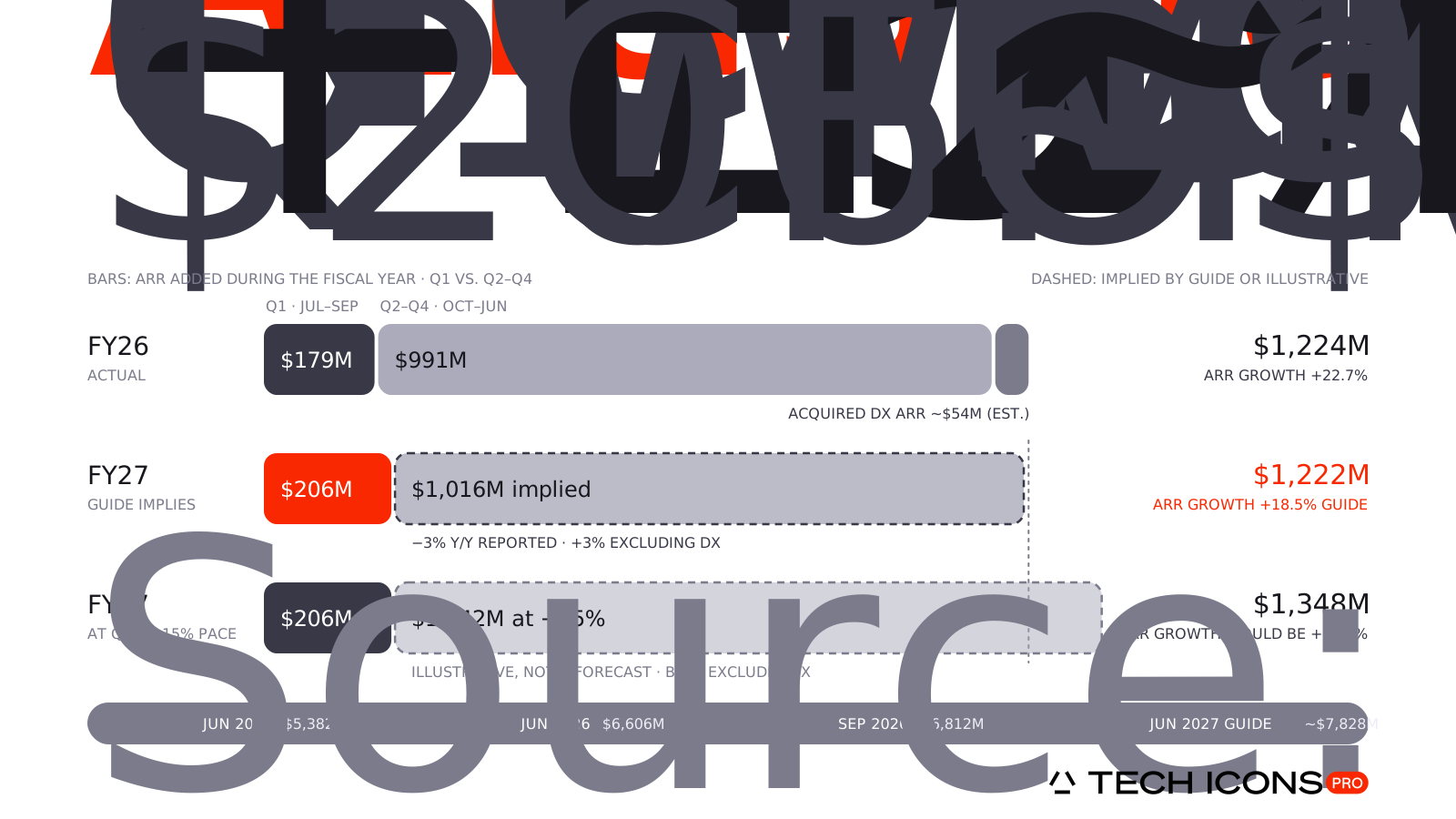
None of it held the share price. Atlassian closed Thursday’s regular session at $183.29 and fell about 18% in extended trading to roughly $150. That wiped out around $8 billion of market value. The trigger was subscription ARR, the metric management has asked investors to treat as the clearest read on the business. Atlassian raised its fiscal 2027 target only to about 18.5% from 18%, after first-quarter growth of 23% to $6.81 billion. On the $6.61 billion base at the end of fiscal 2026, the target implies roughly $1.22 billion of net new ARR, almost exactly what the company added last year. The slowdown is arithmetic: a larger base absorbing a flat level of additions. That is a modest assumption for a company telling customers that AI is widening its market.
The revenue outlook tells a similar story. Raising full-year growth to about 13.75% from 13% adds roughly $49 million. That is less than the $62 million by which the first quarter beat the midpoint of guidance. The implied outlook for the remaining nine months therefore slipped slightly, to growth of about 11%. Second-quarter guidance of $1.825 billion to $1.835 billion, about 15% growth, sits only marginally above the roughly $1.82 billion consensus. Positioning made the reaction worse. The stock had nearly doubled between the August report and late October, peaking at $229.96 on October 22. Brokers including Oppenheimer and Cantor Fitzgerald raised targets into the print.
Data Center’s Long Goodbye
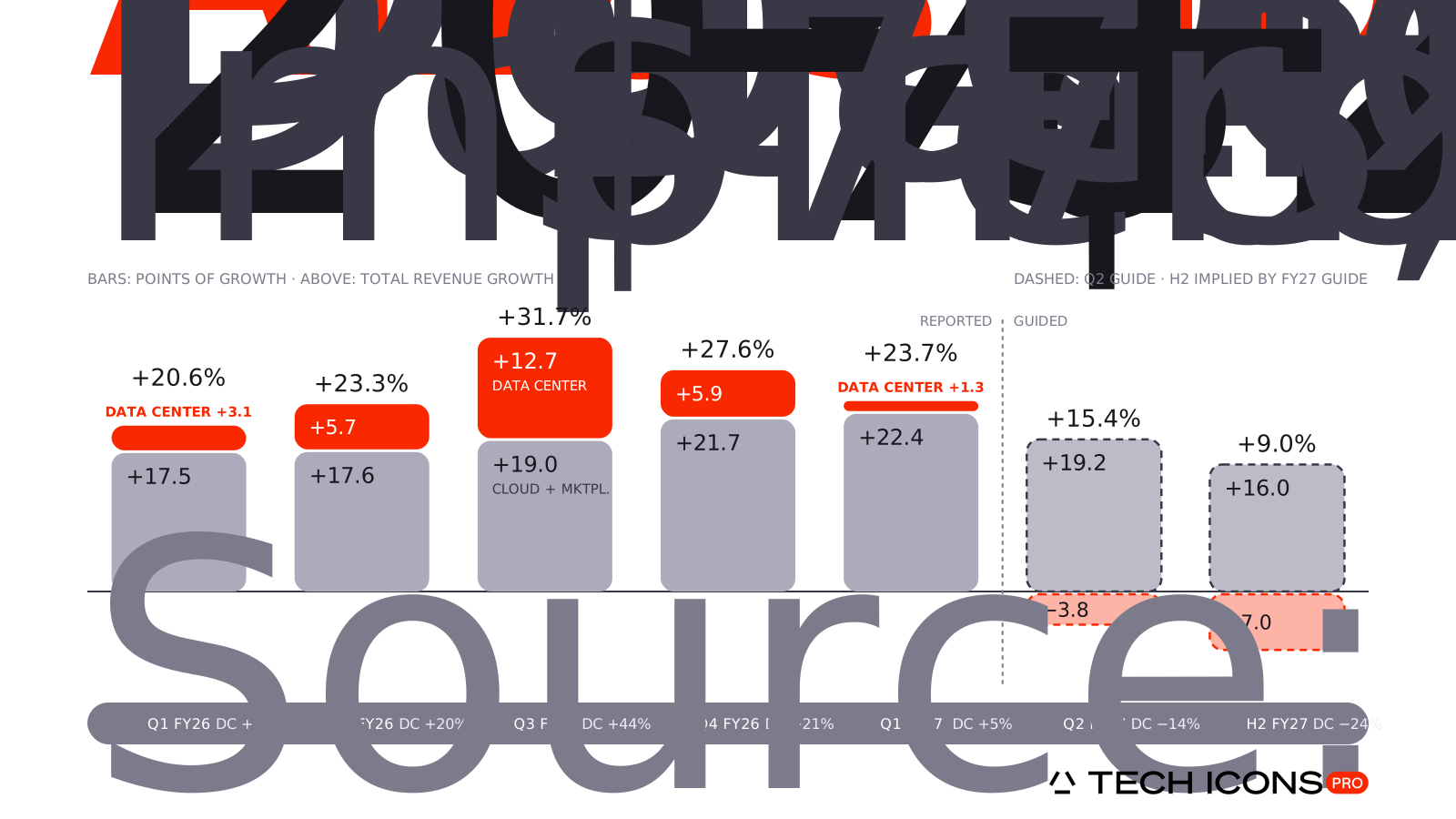
Much of the distortion in Atlassian’s reported growth traces to Data Center, the self-managed product line it will retire on March 28, 2029. Sales to new customers ended in March 2026, and existing customers can renew only until March 2028, according to partner Eficode. The end-of-life announcement in September 2025 pulled purchases forward and brought forward upfront term-license revenue under ASC 606, inflating fiscal 2026, as the fourth-quarter shareholder letter explained. Those comparisons now run in reverse. Data Center revenue grew about 5% to $391 million in the quarter against a guided 4% decline. Atlassian still expects a 14% fall in the second quarter and 16% for the full year, only slightly better than the 17% decline it forecast in August.
Chief Financial Officer James Chuong told analysts that about $33 million of the Data Center beat came from revenue-recognition timing, which is why the full beat did not flow into annual guidance. He credited strong retention among the largest and most complex customers, helped by cloud roadmap commitments such as IL5 and FedRAMP High authorization. Atlassian plans to submit for those by July 2028 and January 2029. Hybrid contracts, in which large customers split deployments without paying twice, also shifted some revenue from cloud to Data Center. The economics of migration remain the foundation of the long-term case. Customers that move raise their spend about 1.75 times within three years. Migrations added mid-to-high single digits to cloud growth in the quarter, and net revenue retention is well above 120%. KeyBanc’s partner checks in October pointed to a heavier migration push in the second half of the fiscal year.
Agents Arrive, Pricing Lags
Atlassian’s broader argument rests on the Teamwork Graph, the data layer linking work items, documents, people and code across its products. Chief Executive Mike Cannon-Brookes declared that “enterprise AI has hit an inflection point,” and that the advantage now belongs to platforms where people and agents share context. At Team ’26 Europe in Amsterdam in October, the company introduced its Agentic Multiplayer Protocol. It gives AI agents their own identities, owners and audit trails inside Atlassian’s products. The company also rebuilt its MCP Server, which now serves more than 2 million monthly users and handles over 15 million tool calls a day. An expanded partnership with OpenAI connects ChatGPT and Codex to the Teamwork Graph and brings OpenAI models into Rovo, Atlassian’s AI assistant.
Adoption is broad. More than 87% of enterprise cloud customers use Rovo, and Teamwork Collection customers have grown sevenfold to more than 3,000. The Service Collection has passed $1 billion in ARR across more than 70,000 customers and is growing above 30%. Pricing is the open question. Within the past year the shares fell as low as $56.01 as analysts weighed competition from AI. Atlassian’s answer has been that agents deepen engagement with its platform rather than bypass it. The MCP traffic supports that claim, but revenue trails usage. Management indicated that usage-based pricing will not contribute meaningfully in fiscal 2027, leaving seat expansion and collection upgrades to carry monetization for now.
Margins, Buybacks and the Year Ahead
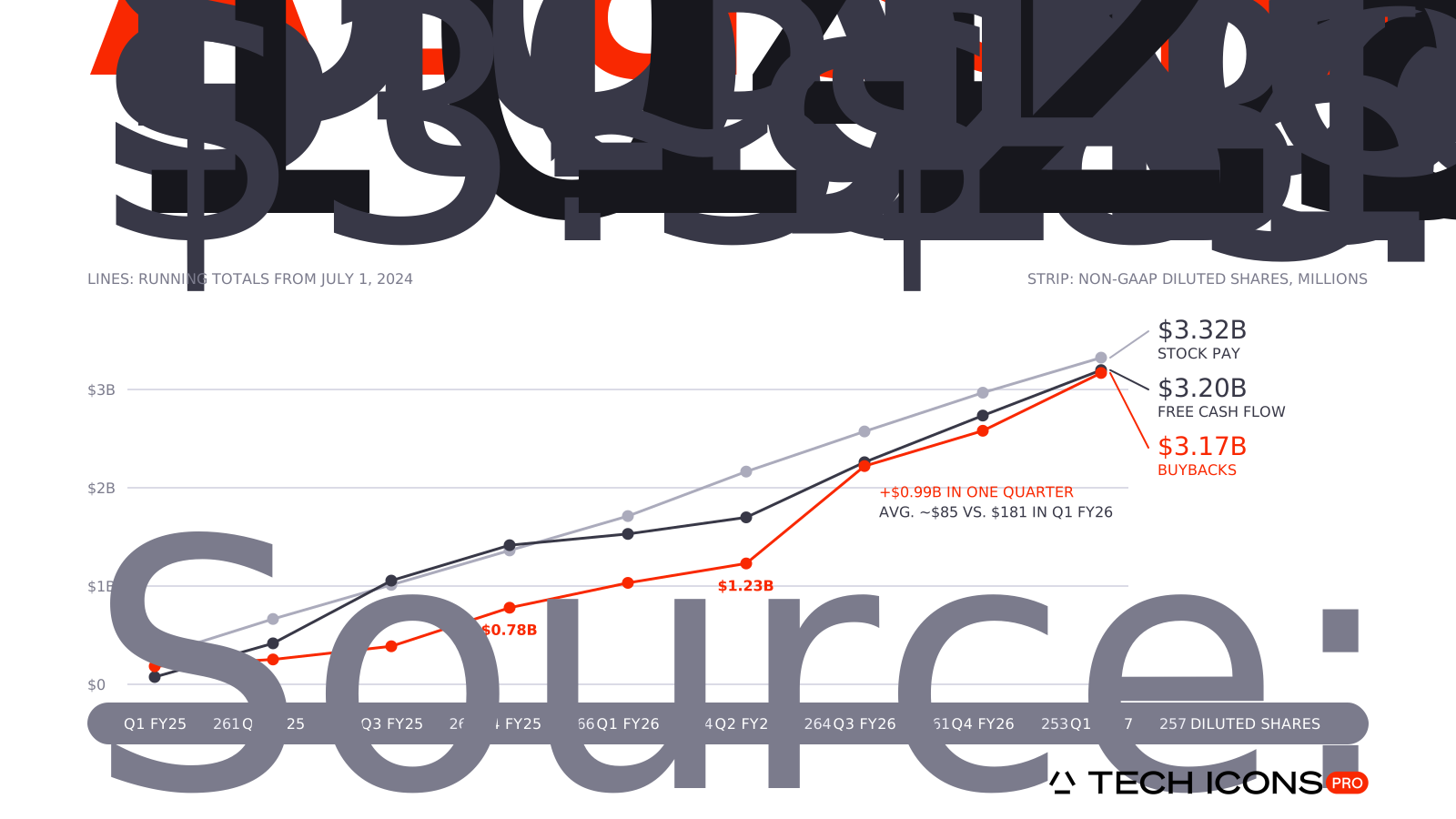
The financial profile has changed decisively in twelve months. GAAP operating margin reached 11%, against negative 7% a year earlier. Atlassian bought back $588 million of Class A stock in the quarter, more than double the $253 million a year before. It ended September with $1.12 billion of cash against $990 million of long-term debt. Full-year operating margin targets rose to about 5% on a GAAP basis and 25.5% on a non-GAAP basis. After a 32% first quarter, that implies a non-GAAP margin near 23% for the remaining nine months as spending on AI and enterprise sales continues, starting with a 26% target for the second quarter.
Investors now hold two readings of the same guidance. The first notes that management called its August targets prudent, citing macroeconomic and geopolitical uncertainty and the lapping of the DX acquisition. On this reading, Atlassian has simply guided low again, having outrun its targets throughout fiscal 2026. Management also expects total revenue growth to pick up again in fiscal 2028 as Data Center comparisons ease. The second reading holds that a flat outlook for net new ARR, issued at what the chief executive calls an inflection point for enterprise AI, reveals more about near-term demand than any single quarter can. The next three reports will decide between them on three measures: the pace of ARR additions in the second half, the timing of large migrations, and whether usage by AI agents begins to show up in bookings. For now, the guide has outweighed the quarter.