- Apple Intelligence
- Consumer Tech
- Foldable iPhone
- Magnificent 7
Apple's First Fold, and a New Chief Executive's First Costly Test
12 minute read
John Ternus’s debut keynote paired a foldable iPhone with steeper Pro pricing and a wider price reset, leaving investors to judge whether the strategy protects margin or tests loyalty.
Key Takeaways
- iPhone Duo starts at $1,999, below Wall Street’s fears, while the iPhone 18 Pro and Pro Max both rose $100, to $1,199 and $1,299, and older Pro models were discontinued.
- Fiscal third quarter revenue reached $109.4 billion, up sixteen percent, but two points of the 50.1 percent gross margin came from one time tariff refunds, not core demand.
- Shares closed down just 0.28 percent on launch day, a muted response that mirrors Apple’s historical pattern of gains in the sixty days following most iPhone reveals since 2007.
A New Chief Takes the Stage
Eight days into the job, John Ternus stood on the stage at Apple Park and did something Tim Cook never did in fifteen years running the company: he opened a phone like a book. The device, called iPhone Duo, answers a foldable category that Samsung has occupied largely unchallenged since 2019, and it was the unmistakable centerpiece of a product event that also delivered updated iPhone 18 Pro handsets, two new Apple Watches, and a refreshed AirPods line. Beneath the spectacle sat a more consequential story: pricing, and what it reveals about margin discipline as Apple’s new chief executive inherits a company facing rising component costs and a stock market unwilling to extend much benefit of the doubt. Every phrase Ternus chose on stage was being read by two audiences at once, consumers deciding whether to spend two thousand dollars on a folding screen, and shareholders deciding whether his first major decision as chief executive amounted to confidence or overreach.
Ternus, formerly Apple’s senior vice president of hardware engineering, became chief executive on September 1, succeeding Cook, who moved into the newly created role of executive chairman. The transition, approved by Apple’s board on April 17 and announced publicly three days later, closed out the longest tenure of any Apple chief executive besides its founder. Under Cook, the company’s market value rose from roughly $350 billion in 2011 to more than $4.6 trillion by the time he handed over the corner office. Apple’s own language leaned into the moment: Ternus called iPhone Duo the most transformational change to iPhone since the original, a line that reads as much like a mission statement for his tenure as a product tagline.
Five Years Behind, Arriving on Time
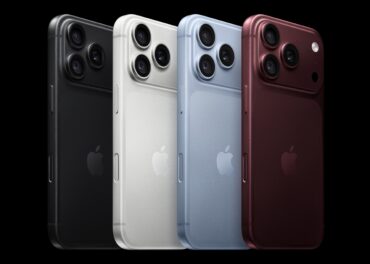
The device itself is careful engineering rather than a radical gesture. Opened, its 7.6 inch inner display is the largest ever fitted to an iPhone; closed, the 5.4 inch outer screen still delivers ninety percent of the usable area of the standard iPhone 18 Pro. A titanium chassis, an IP68 dust and water rating, and a hinge built from more than a hundred components address durability concerns that have followed folding phones since the category’s early, crease prone years. It runs the same A20 Pro chip, Apple’s first built on a two nanometer process, as the standard Pro models, and forgoes Face ID entirely for Touch ID built into the side button, a concession the folding chassis apparently still required.
The competitive backdrop matters as much as the specifications. Samsung shipped its first Galaxy Fold in 2019 and has iterated through several generations since; Huawei and Motorola have their own folding lines already established across Asian markets. Apple’s decision to enter five years later, priced roughly in line with rival flagship folds rather than at a premium to them, suggests an attempt to validate the category for the mainstream rather than to redefine it. It is a familiar posture for the company: let others pioneer, then arrive with enough polish and scale to take the profit that pioneering rarely captures.
The Cost of Ambition
Pricing was the more consequential decision. iPhone Duo starts at $1,999 for 256 gigabytes and rises to $3,199 for two terabytes, the most expensive iPhone Apple has ever sold, and yet notably below much of what Wall Street had modeled over the summer. Apple appears to have chosen volume over margin at the top of its range, a bet that will only be tested once sell through data arrives. Bloomberg Intelligence raised its first year unit forecast for the device to roughly fourteen million following the announcement, while Deepwater Asset Management’s Gene Munster doubled his estimate of the foldable’s share of fiscal 2027 iPhone revenue, from five to ten percent.
Restraint at the top of the range was paired with less restraint elsewhere. The iPhone 18 Pro and Pro Max both rose $100 over their predecessors, to $1,199 and $1,299, even as Apple discontinued the iPhone 17 Pro and Pro Max outright and quietly raised prices on the iPhone 16, iPhone 17, iPhone Air, and iPhone 17e, with the entry level 17e alone climbing to $699 from its $599 launch price a year earlier. None of this happened in isolation. Apple had already raised prices across its Mac and iPad lines earlier in 2026, tied to a global memory and storage cost spike, and September 9 reads less like a single product event than the latest chapter in a year long repricing of the entire Apple catalogue. The signal to investors is unambiguous: Apple is willing to trade a measure of customer goodwill on its older models for average selling price growth across the portfolio it still sells.

What the Ledger Shows
The company’s own numbers explain the pressure. Fiscal third quarter revenue, reported to the Securities and Exchange Commission for the period ended June 27, came to $109.4 billion, up sixteen percent year over year, with iPhone sales alone climbing roughly twenty two percent to $54.3 billion. Gross margin reached 50.1 percent, though roughly two points of that reflected one time tariff refunds rather than underlying operating leverage, a detail management disclosed in its own filing and one worth stripping out before extrapolating forward. Diluted earnings per share came to $2.02, itself lifted eleven cents by the same refunds. Read closely, the filing suggests this cycle’s margin strength is partly an accounting event rather than a pure demand story, which sharpens the question of whether the autumn’s higher prices can do the underlying work instead.
Not everything got more expensive, and the exceptions are instructive. Apple Watch Ultra 4 held its $799 price for a fourth consecutive generation despite a new S11 chip and an overhauled health sensing system, and the entry level AirPods 5 brought active noise cancellation to Apple’s cheapest earbuds for the first time, at an unchanged $129, a feature previously reserved for a $179 tier. The pattern across the full range looks less like uniform inflation than a deliberate split: protect or sweeten the entry price points that widen the ecosystem, and take the increase from the premium tiers and the new category where demand is least sensitive to price. There is a regulatory footnote worth noting for policymakers as well. Siri AI, the reworked assistant central to Apple’s pitch for iPhone Duo, will not be available at launch in the European Union, a carryover of the friction Apple has faced under the bloc’s digital competition rules over the past two years. Apple also softened the sticker shock at home with financing, leasing iPhone Duo through a Klarna backed program for as little as $57.99 a month, an acknowledgment that cost, not desire, is the more likely obstacle to adoption.
The Market’s Reply
Investors took the event in stride rather than in celebration. Apple shares had already shed roughly $120 billion of value in a single session on September 4, as investors weighed a rich valuation, the stock traded above thirty six times trailing earnings, against event uncertainty, and closed at $315.34 on launch day itself, down a modest 0.28 percent, before ticking higher after hours. That muted reaction sits comfortably within Apple’s own seasonal pattern: Bank of America has documented gains in the sixty days following an iPhone reveal in the large majority of cycles dating back to 2007, treating the reveal itself as a moment for investors to sell strength rather than deliver a verdict on the product.
Sell side opinion split along familiar lines. Jefferies downgraded Apple to Underperform, cutting its target to $263.66 on supply chain checks suggesting a separate, more ambitious all glass iPhone planned for 2027 had been canceled, a signal, in its analyst’s reading, of strain beneath the pricing confidence. Morningstar moved the other way, lifting its fair value estimate to $290 largely on the strength of the new pricing tiers it had just added to its model. What the market is really pricing is not whether Apple can design a credible foldable, reviewers who handled iPhone Duo were largely won over, but whether Ternus can hold Apple’s pricing architecture together as costs rise. His first keynote answered the design question convincingly; the margin question will not be settled until the December quarter delivers its numbers.