- Apple Intelligence
- Consumer Tech
- Privacy
- WWDC
Apple WWDC26: Siri AI Leads Apple’s Privacy-First Strategy
13 minute read
At Tim Cook’s final WWDC keynote, Apple unveiled a rebuilt Siri and deeper intelligence across its platforms — a disciplined play on trust, integration, and the long-term value of the installed base.
Key Takeaways
- Apple’s rebuilt Siri AI draws on personal context across apps while keeping data on-device — a structural privacy advantage that competitors relying on cloud-first architectures cannot easily replicate.
- Shares fell 1.89% on the day in a classic post-event reversal, but analyst framing of WWDC26 as a credibility milestone rather than a disappointment suggests the longer read is about execution and fall adoption.
- The expansion of Core AI for developers, faster system performance, and tightened family controls deepens ecosystem switching costs without requiring users to adopt an entirely new behavioral paradigm.
The End of One Era, the Shape of the Next
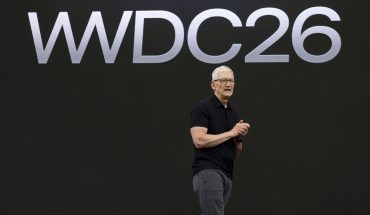
Tim Cook will deliver his final WWDC keynote as chief executive this June, before transitioning to executive chairman in September and handing operational control to John Ternus. That succession was present as subtext throughout WWDC26 — not in anything said from the stage, but in the character of what Apple chose to present. There were no sweeping promises about redefining the nature of intelligence. There was no attempt to claim supremacy in a field still defined by weekly reversals of fortune. What Apple offered instead was something considerably more difficult to produce and, over time, more valuable to own: a coherent, technically grounded, privacy-anchored vision of personal AI, threaded through platforms that serve more than two billion active devices.
The market registered its familiar impatience. Shares climbed in early trading before closing down 1.89 percent at $301.54, the reflexive unwind of a stock that had priced in strong expectations ahead of the event. That reaction deserves to be set aside when reading the strategic substance. Morgan Stanley and other prominent firms framed WWDC26 not as a disappointment but as a credibility milestone — a necessary step toward re-rating Apple’s AI positioning after a period of well-documented delays and skeptical headlines. On that narrower question, the event delivered.
What Cook leaves behind is a product philosophy fully committed to the idea that artificial intelligence, to be genuinely useful in daily life, must be personal, contextual, and trusted. What Ternus inherits is the execution obligation that follows from that commitment. The autumn software release cycle will be the first real measure of whether the vision holds under real-world conditions.
Siri Rebuilt: The Privacy Wager at the Core
The most significant announcement of WWDC26 was not a device, a price point, or a headline partnership. It was an architectural decision: Apple has rebuilt Siri from the ground up, and in doing so has staked its AI credibility on a design philosophy that most of the industry has not chosen to follow.
Siri AI, powered by the next generation of Apple Intelligence and Apple Foundation Models — incorporating elements developed in collaboration with Google’s Gemini program — now operates with genuine personal context. It draws on a user’s Messages, Mail, Photos, calendar, and on-screen content to answer questions, initiate actions across applications, and carry multi-turn conversations grounded in the user’s own information. A dedicated Siri app allows conversation history to be revisited, synced privately through iCloud. Real-time web knowledge is available for queries that extend beyond personal data.
The contrast with the original Siri is categorical, not incremental. The contrast with competitors is structural. Apple’s rebuilt assistant is not designed to be the most capable general-purpose AI, nor the most fluent conversationalist. It is designed to know you — specifically, verifiably, and without transmitting that knowledge beyond your device or Apple’s auditable Private Cloud Compute infrastructure. The company has committed to external verifiability of those safeguards, a pledge that carries real accountability weight and distinguishes this architecture from cloud-first alternatives where data handling is, at best, a policy document.
The incorporation of Google-derived model components merits a clear-eyed reading. It is not a concession; it is a division of labor that reflects sound strategic judgment. Foundational model training at scale demands a concentration of research investment that Apple has historically not prioritized. By importing capacity at the model layer while retaining full ownership of integration, orchestration, user data handling, and the privacy guarantees that sit on top, Apple preserves every element of the stack that actually differentiates its product. The result is a hybrid architecture — on-device inference where computation allows, Private Cloud Compute for heavier tasks, selective partnership for foundational scale — that no purely cloud-dependent competitor can easily replicate, and no purely on-device approach can yet match in capability.
Intelligence as Infrastructure
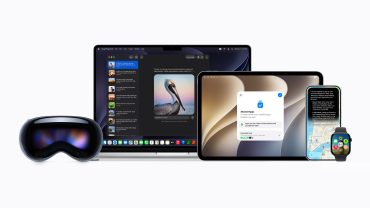
The breadth of Apple Intelligence’s expansion across iOS 27, iPadOS 27, macOS 27, watchOS 27, visionOS 27, and tvOS 27 makes the underlying design principle legible: this is intelligence embedded into existing workflows, not presented as a separate destination that users must consciously navigate to.
In Photos, Spatial Reframing enables perspective and composition adjustments after capture, backed by generative fill that maintains scene coherence; an Extend tool expands image boundaries intelligently; and a rebuilt Clean Up now incorporates SynthID watermarking for provenance verification. Safari gains automatic tab grouping by topic, natural-language extension generation, and page-change notifications. The Passwords app navigates to sites and upgrades weak or compromised credentials in a single action. Image Playground supports photorealistic generation with iterative editing via description or touch. Messages and Mail offer context-aware reply suggestions calibrated to each user’s writing style. The Phone app surfaces confirmation codes and relevant prior messages during live calls, entirely on-device. Calendar accepts plain-language event creation. Shortcuts assembles automations from natural-English instructions.
Individually, none of these capabilities is a standalone technological statement. Considered together, they describe a substantial redefinition of what a mobile operating system does on its user’s behalf — not as an opt-in AI experience, but as the default texture of how the platform behaves. That ambient quality, intelligence as infrastructure rather than as feature, is arguably the more demanding design problem. It is also the one most directly tied to durable retention and the compounding difficulty of switching away from a platform that has learned how you work.
Performance improvements reinforce the underlying message. Application launches on iPhone and iPad are up to 30 percent faster; photo loading after capture is 70 percent faster; AirDrop transfers are 80 percent faster. These are engineering benchmarks, not narrative claims, and they matter because AI capabilities that run slowly or drain batteries do not get used. The decision to extend base OS support to iPhone 11 while gating the full Apple Intelligence feature set to newer silicon is a carefully calibrated balance: broad accessibility for the installed base, with a clear and functional incentive structure for hardware refresh among users who want the complete experience.
The Developer Bet and the Family Advantage
The introduction of Core AI gives developers a native framework for integrating on-device models directly into third-party applications, lowered further by updates to Xcode 27, SwiftUI, and Xcode Cloud. The practical significance is straightforward: if Apple’s privacy-respecting AI infrastructure becomes the default substrate for third-party intelligent features, the ecosystem compounds in a direction that is structurally difficult for platforms without equivalent on-device capability to match. App Store economics depend on developer engagement; developer engagement follows tools that reduce friction and expand what is possible. Core AI is an attempt to direct that energy within Apple’s privacy and performance boundaries rather than toward external AI APIs that create dependency and data exposure Apple cannot govern.
The expansion of parental controls and child safety features is, in competitive terms, undervalued. New child account setup applies age-appropriate protections system-wide from the outset, with parental approval required for new contacts and automatic interventions for explicit or violent content. Time allowances are now configurable by app category — Entertainment, Games, Social — with expert-informed daily recommendations and time-of-day scheduling. Screen Time has been redesigned for faster, clearer insight at a glance.
These additions arrive as regulatory pressure and public concern about children’s digital experiences intensifies across every major market Apple operates in. The ability to embed safety as a default system property, rather than an optional configuration buried in settings, is both a product advantage and a regulatory positioning argument. Families choosing between ecosystems increasingly weigh these controls as primary criteria. Apple’s implementation, at the operating system level rather than the application level, is one that rivals building on top of third-party platforms cannot structurally match.
The Inheritance Ternus Receives
WWDC26 is the most complete articulation yet of the product logic that John Ternus will carry forward. His background is in hardware engineering — Apple Silicon architecture, device design, the manufacturing precision that defines the company’s physical products — and the software strategy now fully committed to is one that cannot be meaningfully separated from the hardware layer beneath it.
On-device inference at the performance levels Siri AI requires, Private Cloud Compute infrastructure that can credibly claim verifiable privacy guarantees, the silicon headroom that makes 30 percent faster application launches possible while simultaneously running large language model queries: none of this is software running on commodity hardware. It is the accumulated product of a decade of vertical integration decisions, made at significant capital cost, that now constitute the foundation Apple’s AI positioning is built on. That foundation is genuinely difficult to replicate, and it is what gives the privacy-first architecture its competitive durability rather than its being merely a philosophical preference.
The challenges ahead are real and should not be minimized. EU regulatory constraints under the Digital Markets Act will limit full iOS and iPadOS access to Siri AI in one of Apple’s most important markets at launch. China remains pending regulatory clearance. The fall rollout carries execution risk after prior delays eroded some of the credibility WWDC26 has worked to restore. Competition in conversational AI is intense, and Apple’s more bounded design will not win side-by-side capability demonstrations against less constrained alternatives.
What it will win, over time, is the trust of users who have grown wary of what their data purchases. Adoption curves for Siri AI, engagement with the new Photos and Safari capabilities, developer uptake of Core AI, and hardware refresh rates among users seeking the full intelligence feature set will provide the real evidence. The strategic logic is sound. The architecture is coherent. The execution, beginning this autumn, is what the investment case now depends on.