
Ahead of Consensus.
Intelligence across tech and capital markets, for investors, policymakers, and business leaders.
9 minute read

Airbus opened 2026 with results that demand careful reading. On the surface, the numbers disappoint: consolidated revenues fell 7% year-on-year to €12.7 billion, adjusted EBIT halved to €300 million, and free cash flow before customer financing swung to a negative €2.5 billion. Beneath those figures, however, sits a rather different narrative — one of record order momentum, a defence division firing at full capacity, and a management team that has neither flinched at its full-year targets nor revised the production trajectory it has spent years constructing.
For investors who understand the aerospace sector’s peculiar financial rhythms, the Q1 report is less a warning sign than a marker of where Airbus stands on a long industrial curve. The friction between ambition and execution has not disappeared, but it has not deepened either. That distinction matters enormously when the asset in question carries a backlog equivalent to nearly a decade of current production.
Commercial aircraft activities, which generated €8.4 billion in Q1 revenues — down 11% from the prior year — remain the group’s dominant segment and its most immediate source of pressure. The 114 commercial jets delivered in the quarter compares unfavourably with 136 in Q1 2025, and the gap flows directly from a constraint that Airbus can identify precisely but resolve only partially: Pratt & Whitney engine availability on the A320neo family.
The geared turbofan programme has been a recurring disruption across the industry. For Airbus, which has positioned the A320neo family as its commercial centrepiece, the dependency is consequential. Aircraft completed but awaiting engines accumulate as inventory rather than revenue, creating the working-capital drag visible in the cash flow statement. The €2.5 billion outflow reflects this build-up, and management has been explicit that the pattern should reverse as deliveries accelerate in the second half.
A weaker US dollar compounded the revenue decline. Airbus prices its aircraft in dollars but reports in euros, and with the currency moving against the company during the quarter, the translation effect on both revenues and hedge rates added an unfavourable overlay to already constrained delivery volumes. These are real costs, but they are also well-understood risks that the company’s hedging programme is designed to manage over a multi-year horizon.
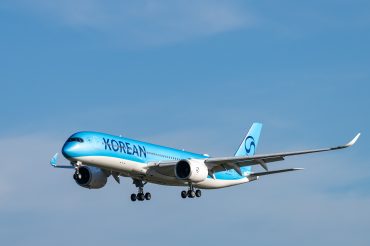
If the delivery numbers represent the short-term friction, the order intake represents the structural signal. Gross commercial orders reached 408 units in Q1, with net orders of 398 after cancellations — a 95% surge over Q1 2025. The commercial backlog now stands at 9,037 aircraft.
That figure warrants reflection. At current production rates, Airbus cannot satisfy existing demand for approximately nine years. Airlines are not ordering cautiously or hedging their commitments; they are placing firm orders across the A220, A320 family, and A350 programmes with the full knowledge that delivery slots stretch deep into the next decade. This is not speculative positioning but operational necessity driven by sustained passenger traffic growth, fleet replacement cycles, and the structural undersupply that has characterised the commercial aircraft market since the pandemic.
The A320neo family and A350 remain the twin pillars of that backlog, and Airbus’s production targets for both reflect measured confidence rather than optimism. The A320 family is expected to stabilise at 75 aircraft per month post-2027, subject to the Pratt & Whitney timeline, while the A350 targets rate 12 by 2028. These are not aspirational figures; they are the industrial commitments against which supplier contracts, workforce planning, and capital expenditure have been calibrated.
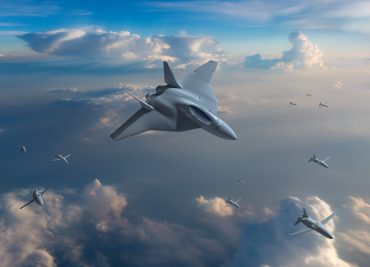
The quarter’s most substantive positive came from a segment that, for much of Airbus’s corporate history, played a supporting role to the commercial flagship. Defence and Space revenues rose 7% to €2.8 billion, while adjusted EBIT climbed 69% to €130 million. Order intake nearly doubled to €5.0 billion, driven by Air Power programmes that reflect both European rearmament and the export ambitions of a portfolio with genuine global relevance.
This is a meaningful shift in the group’s financial architecture. Defence and Space is no longer a diversification footnote; it is becoming a material contributor to profitability and, critically, a counter-cyclical buffer when commercial deliveries falter. The 69% EBIT growth in a single quarter reflects successful programme execution and scale in key platforms, and the order intake signals that the pipeline is deepening rather than plateauing.
The geopolitical context is not incidental to this performance. European governments have accelerated defence spending commitments, and Airbus, as the continent’s primary aerospace and defence integrator, is structurally positioned to absorb that demand. The trajectory suggests the division’s contribution to group earnings will continue to expand.
Chief Executive Guillaume Faury delivered a notably measured assessment, acknowledging the operating environment’s complexity without retreating from the full-year framework. Airbus maintained its 2026 targets: approximately 870 commercial deliveries, €7.5 billion in adjusted EBIT, and €4.5 billion in free cash flow before customer financing.
Holding guidance after a weak first quarter carries its own message. It signals that management views the delivery shortfall as a timing issue rather than a structural deterioration, and that the second-half acceleration required to meet the annual targets is credible within the current supply-chain trajectory. Investors appeared to accept that framing: shares edged higher following the release, a modest but meaningful response given the softness of the headline numbers.
The company’s net cash position of €9.8 billion at quarter-end, while down from year-end 2025, provides substantial liquidity for simultaneous ramp-up investments and the ongoing integration of former Spirit AeroSystems work packages. R&D expenditure rose 8% to €730 million, directed at next-generation technologies and defence portfolio development, reinforcing the long investment horizon that defines the aerospace sector’s competitive logic.
Airbus’s Q1 results are a precise illustration of the mismatch between quarterly reporting cycles and aerospace’s industrial timescales. The company absorbed delivery headwinds from external constraints, currency movements, and integration costs, yet its order book deepened, its defence division outperformed, and its full-year framework remained intact.
The competitive landscape adds further context. Boeing’s reported edge in Q1 deliveries will draw comparisons, but the gap between the two manufacturers reflects fundamentally different circumstances. Boeing remains in recovery mode, working through production and regulatory constraints that have materially damaged its order pipeline and customer relationships. Airbus, by contrast, is managing the growing pains of a company operating at industrial scale with demand that structurally exceeds its current capacity. These are not equivalent situations, and the distinction is not lost on airlines placing orders deep into the next decade.
The test that matters is the second half. Engine supply, production discipline, and widebody delivery cadence will determine whether 2026 closes as the year Airbus demonstrated operational resilience or the year that execution gaps began to compound. The current evidence, read carefully, favours the former.