
Ahead of Consensus.
Intelligence across tech and capital markets, for investors, policymakers, and business leaders.
9 minute read
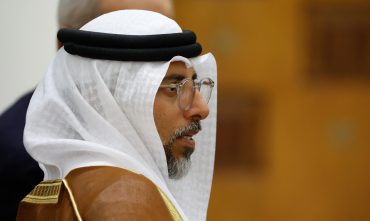
When the United Arab Emirates announced its withdrawal from OPEC and the wider OPEC+ alliance on Tuesday, effective May 1, the move registered as a headline shock. It should not have been a surprise. For years, Abu Dhabi’s ambitions have sat in quiet but deepening tension with the logic of collective restraint. The departure of a founding-era member with genuine production flexibility is not a rupture born of a single dispute; it is the formalisation of a divergence that has been accumulating since at least 2021, when Emirati negotiators clashed publicly with Riyadh over production baselines. The cartel is now materially smaller, and the architecture it has maintained since the 1960s is one step closer to a structural reckoning.
The UAE joined what was then a nascent organisation in 1967. Across five decades, it weathered the political turbulence of the Arab oil embargo, the price wars of the 1980s, the emergence of shale, and the chaotic demand destruction of the pandemic. That resilience made OPEC’s institutional continuity seem almost self-reinforcing. Tuesday’s announcement is a reminder that institutional loyalty has limits, and that those limits are ultimately defined by economics.
At the core of Abu Dhabi’s grievance is a straightforward mismatch between capacity and permitted output. Abu Dhabi National Oil Company has pursued one of the most ambitious upstream expansion programmes in the industry, committing $150 billion through 2030 and advancing its 5 million barrels per day target to 2027 from an earlier 2030 deadline. Fields such as Upper Zakum, developed in partnership with ExxonMobil and Inpex, illustrate the tangible progress behind those numbers. Capacity has been approaching 4.8 million barrels per day; actual production under OPEC+ quotas has frequently been held closer to 3 million.
That gap represents deferred revenue on a scale that becomes increasingly difficult to defend politically. The UAE is not a country in fiscal distress, but it is a country in active economic transformation, financing a post-hydrocarbon future while the hydrocarbon window remains open. Leaving barrels in the ground to support a collective price floor, when that floor primarily benefits producers with less diversification and more urgent fiscal needs, is a trade-off Abu Dhabi has clearly decided no longer makes strategic sense.
The official framing from the state news agency WAM emphasised forward momentum: the decision reflects the UAE’s “long-term strategic and economic vision and evolving energy profile,” along with a commitment to reliable global supply. The language is diplomatically calibrated, but the substance is unambiguous. ADNOC intends to produce closer to its technical capacity, and it no longer requires the cartel’s permission to do so.
The announcement arrives in conditions that are anything but stable. The 2026 Iran conflict has produced the largest oil supply disruption on record, according to the International Energy Agency, with somewhere between 7.5 and 9 million barrels per day shut in across affected Gulf producers at the height of the crisis. Brent crude surged sharply in March. Prices have remained elevated and volatile into April, disrupting supply chains, feeding inflationary pressures in consuming economies, and delivering windfall revenues to producers able to maintain output.
For the UAE, the Hormuz crisis was operationally painful but strategically clarifying. ADNOC managed offshore curtailments, leaned on bypass pipeline infrastructure, and navigated storage constraints. The experience reinforced, rather than softened, Abu Dhabi’s conviction that external production ceilings serve interests other than its own. When infrastructure is at risk and logistics are uncertain, the last thing a producer wants is a self-imposed ceiling on recovery volumes.
For global markets, the timing introduces a new variable into an already complex picture. In the near term, Hormuz constraints limit how quickly the UAE can actually increase volumes. But traders are not pricing the present; they are pricing the trajectory. The prospect of significant additional UAE barrels entering the market as the crisis recedes is now a structural feature of the supply outlook, not a contingency.
No country is more directly affected by the UAE’s exit than Saudi Arabia. Riyadh has built its influence over two decades around a single proposition: that the kingdom’s willingness to act as swing producer, absorbing market imbalances through disciplined output management, creates collective value for all members. That proposition requires participants who share the underlying logic. The UAE’s departure signals that Abu Dhabi no longer does.
The historical parallels are instructive but imperfect. Qatar’s exit in 2019 was quiet and consequential, but Qatar is primarily a gas producer whose LNG franchise sits entirely outside OPEC’s remit. Angola’s departure in 2024 reflected a country with limited capacity and marginal influence. The UAE is neither. It holds genuine spare capacity, operates sophisticated offshore infrastructure, and commands international partnerships that give it market access independent of any collective arrangement. Its absence leaves OPEC with less of everything that makes a cartel function: volume flexibility, credibility, and the implied threat of coordinated response to market conditions.
Whether other members draw conclusions from Abu Dhabi’s decision will depend on their own fiscal positions and capacity outlooks. Kuwait and Iraq, both with expansion ambitions, will be watching closely. Russia’s alignment with OPEC+ has always been transactional rather than institutional; the fragmentation of the original membership reinforces its negotiating latitude. The Saudi-led core retains significant combined output, but its ability to credibly set market expectations has narrowed.
The deeper significance of Tuesday’s announcement is not what it means for OPEC’s next ministerial meeting, or even for near-term prices. It is what it suggests about the medium-term structure of the global oil market. OPEC’s practical authority has rested on the participation of producers with both the capacity and the willingness to coordinate. Each departure erodes one or both conditions. The organisation adapts, as it has before. But it adapts from a position of diminished influence each time.
For senior investors and policymakers, the emerging picture is one of greater price volatility, more fractured producer incentives, and an accelerating shift toward bilateral and market-based oil relationships over collective governance. That is not necessarily bad for consumers, and it may be neutral for some producers. For the architecture that has shaped global energy since the 1970s, it is quietly transformative.