- Artificial Intelligence
- Chip Stocks
- Earnings Season
S&P 500 Reaches New Historic High on Strongest Earnings in Years
11 minute read
Semiconductor giants AMD and Intel have posted blowout results, lifting U.S. equities to fresh peaks and putting the sector on course for a trillion-dollar year as Nvidia’s May report looms.
Key Takeaways
- The S&P 500 closed at a record 7,365.12 on May 6, with blended Q1 earnings growth of 27.1% — the strongest quarterly expansion since late 2021 — providing durable fundamental support for the advance.
- AMD reported $10.3 billion in Q1 revenue, up 38% year-on-year, while Intel’s shares surged 114% in April alone; together, they have repositioned the semiconductor sector as the market’s most consequential earnings story.
- Nvidia’s May 20 results, with consensus revenue estimates of $78–80 billion, represent the defining near-term test of whether AI-driven semiconductor demand can sustain record equity valuations into the second half.
A Rally With Something to Prove
Markets have been here before: indices at record levels, sentiment elevated, and a technology sector once again leading the charge. What distinguishes the spring 2026 advance from prior episodes of multiple expansion is the quality of evidence behind it. When the S&P 500 closed at 7,365.12 on May 6, extending gains from its April breach of the 7,000 threshold, it did so not on the back of loosening financial conditions alone, but on the strength of corporate results that have, quarter after quarter, exceeded even the most optimistic projections.
With roughly two-thirds of S&P 500 constituents having reported, the blended year-over-year earnings growth rate for the first quarter stands at 27.1 percent — the sharpest quarterly expansion since the fourth quarter of 2021. Companies have beaten consensus estimates by an average of more than 20 percent, a ratio well above historical norms. Revenue growth has followed suit, removing the concern that margin engineering rather than genuine demand was doing the heavy lifting. For institutional observers, this distinction matters enormously. Earnings quality, not just earnings magnitude, is the foundation on which sustained re-ratings are built.
The Semiconductor Ascent
No sector has concentrated this earnings power more visibly, or more consequentially for broader market direction, than semiconductors. Global chip sales reached $298.5 billion in the first quarter of 2026, placing the industry on a credible trajectory to surpass $1 trillion for the full year. That figure, which would have seemed aspirational as recently as two years ago, now commands attention as a structural signal rather than a cyclical anomaly. Artificial intelligence infrastructure investment, sustained data-center expansion, and a broadening recovery across traditional computing end markets have converged to produce an environment in which demand is outpacing even revised-upward supply projections.
AMD’s first-quarter results crystallised the opportunity with particular clarity. Revenue of $10.3 billion, up 38 percent year-on-year, reflected not merely the benefit of an accommodating cycle but genuine competitive repositioning. Data-centre revenue climbed to $5.8 billion, driven by EPYC server processors and Instinct AI accelerators, confirming that AMD’s share gains against established incumbents are translating into durable financial results rather than fleeting design wins. Non-GAAP earnings per share of $1.37 prompted a 16 percent single-session share price gain — a reaction calibrated to the scale of the beat, not a market prone to indiscriminate enthusiasm.
Intel’s Remarkable Return
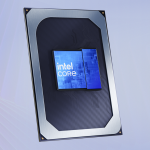
Intel’s story carries a different weight. For years, the company’s narrative was defined by manufacturing missteps, share losses in both consumer and enterprise computing, and a foundry ambition that attracted scepticism in roughly equal measure to capital commitment. The first-quarter results, and the 114 percent share price surge across April that accompanied them, suggest that investor reassessment has moved from tentative to emphatic. Market capitalisation briefly surpassed $470 billion as participants priced in a recovery that, if sustained, would represent one of the more significant corporate rehabilitations in the semiconductor industry’s history.
The drivers are recognisable but worth examining precisely. Renewed relevance in CPU architecture for AI-adjacent workloads, reported design wins that had previously appeared out of reach, and a foundry services pipeline that is beginning to attract serious third-party interest have collectively restored Intel to a position of strategic relevance. Whether the April rally proves durable will depend on execution across multiple product cycles simultaneously — a challenge that has historically separated Intel’s ambitions from its delivery. For now, the market has chosen to reward the trajectory.

Breadth as a Signal of Health
What gives the current semiconductor advance credibility beyond the headline names is its breadth. onsemi reported first-quarter revenue of $1.513 billion with non-GAAP earnings per share of $0.64, citing data-centre and AI demand as primary contributors. Micron, Western Digital, and SiTime have each posted results that exceeded expectations and, crucially, raised forward guidance — a signal that management teams across the supply chain are seeing demand visibility extend beyond the immediate quarter. The Philadelphia Semiconductor Index has materially outperformed the broader market year-to-date, a development that reflects sectoral conviction rather than concentration in two or three names.
Apple’s fiscal second-quarter results offered a complementary perspective. Revenue of $111.2 billion, up 17 percent, with iPhone sales reaching a March-quarter record and Services achieving an all-time high, demonstrated how silicon capability — in Apple’s case, proprietary and deeply integrated — amplifies competitive advantage across an expanding installed base. The results reinforced a broader thesis: in an economy increasingly organised around computation and connectivity, hardware companies that control their most critical components command structural pricing power.
Policy, Macro, and the Fed’s Balancing Act
The Federal Reserve’s decision to hold the federal funds rate at 3.50 to 3.75 percent following its April 29 meeting — the third consecutive pause — has provided a stable backdrop without becoming a primary driver of the rally. Dissent within the committee reached its highest level since 1992, reflecting genuine disagreement about where inflation and growth risks are most acute. Markets have interpreted this posture as sufficiently supportive without reading it as a signal of imminent easing. Easing oil prices, following a period of geopolitically induced volatility in energy markets, have removed one potential source of inflationary pressure, lending further coherence to the current risk environment.
The macro picture, in other words, is neither a tailwind nor a headwind of the first order. The equity market’s ascent is primarily earnings-driven, which is precisely the condition long-term investors would wish for at record valuations.
The Nvidia Inflection Point
The coming weeks will be defined, to a degree unusual even for a company of Nvidia’s stature, by a single earnings release. The company is scheduled to report first-quarter fiscal 2027 results on May 20, covering the period ended April 26. Consensus revenue expectations sit at $78 to $80 billion — a figure that reflects not optimism but the accumulated weight of data-centre procurement announcements, cloud hyperscaler capital expenditure guidance, and supply-chain intelligence from across the semiconductor ecosystem. For a company whose results have consistently exceeded even elevated expectations, the question is no longer whether Nvidia will beat the quarter; it is whether forward guidance will sustain the investment thesis that AI infrastructure spending remains in an expansionary phase rather than approaching saturation.
The answer will carry implications far beyond Nvidia’s share price. Given the company’s position as the effective barometer for AI-driven capital expenditure, its guidance will calibrate expectations for AMD, for data-centre operators, for memory manufacturers, and, by extension, for the broader market’s assessment of technology valuations.
Where Confidence Is Earned
Forward estimates for full-year 2026 S&P 500 earnings have been revised higher, now pointing to growth in the low-to-mid 20 percent range. Semiconductor analysts project continued double-digit expansion into 2027, underpinned by secular AI investment and a cyclical recovery in consumer and industrial end markets. Balance sheets across the sector are strong, capital return programmes are active, and pricing power in AI-adjacent segments remains intact.
None of this eliminates the risks inherent in elevated valuations. A guidance miss from Nvidia, an unexpected deterioration in enterprise spending, or renewed geopolitical disruption could test conviction quickly. What has changed, however, is the evidential basis on which that confidence rests. This is not a market pricing in possibility; it is a market pricing in delivery. The distinction is significant, and as long as earnings continue to justify the multiple, the case for sustained performance remains intact.