- Mobility & Transportation
- Mobility Tech
Waymo Expands Arizona Factory to Build Thousands of Self-Driving Cars Annually
4 minute read
Arizona Factory Expansion Sets Stage for Waymo’s National Robotaxi Rollout Targeting 10 Cities by 2025
Key Facts
- Waymo is expanding its Mesa, Arizona facility to produce tens of thousands of autonomous vehicles annually, with plans to double production by 2026
- The company currently manages 250,000 paid trips weekly across four markets, targeting 1.5 million weekly rides and $2 billion in annual revenue
- Waymo plans to operate in 10 cities by end of 2025, covering 40% of the U.S. market, including new launches in Atlanta, Miami, and Washington, D.C.
Introduction
Waymo’s autonomous vehicle ambitions are accelerating with the expansion of its Mesa, Arizona manufacturing facility, marking a significant shift in the company’s production capabilities and market presence. The self-driving division of Alphabet is positioning itself for dramatic growth across major U.S. cities, backed by strategic partnerships and technological advancement.
Key Developments
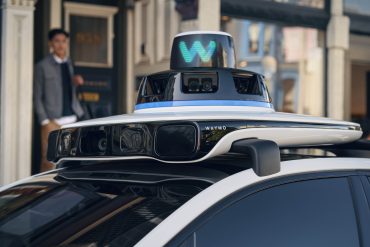
The new 239,000-square-foot Mesa facility represents a major upgrade from Waymo’s previous Detroit operations. Working with Canadian manufacturer Magna, Waymo is retrofitting 2,000 Jaguar I-PACEs into autonomous taxis, investing approximately $100,000 per vehicle. The facility will also produce affordable models including Hyundai Ioniq 5s and Zeekr vans.
In Phoenix, the operational efficiency is remarkable – newly manufactured vehicles can begin passenger service within 30 minutes of leaving the factory. This rapid deployment capability demonstrates the maturity of Waymo’s autonomous driving system.
Market Impact
Waymo’s expansion strategy targets key metropolitan areas, with established operations in Phoenix, San Francisco, Los Angeles, and Austin. The company’s presence in Phoenix now spans 315 square miles, showcasing the scalability of its service. The planned expansion to Atlanta, Miami, and Washington, D.C. within 18 months signals aggressive market growth.
The competitive landscape is evolving rapidly. While GM’s Cruise has retreated to focus on driver assistance technology, Tesla plans to launch its robotaxi service in Austin. Companies like Motional, Zoox, and Baidu maintain active development programs, each with distinct technological approaches.
Strategic Insights
Waymo’s partnership with Toyota, announced through a preliminary agreement, suggests potential expansion into personally owned vehicles. This move could open new revenue streams beyond the robotaxi business model. The company’s comprehensive sensor suite, including LiDAR technology, differentiates it from competitors like Tesla, which relies on a vision-only approach.
Expert Opinions and Data
Alphabet CEO Sundar Pichai’s recent earnings call comments reflect growing investor interest in Waymo’s progress. The company reports a 98% rider satisfaction rate, supporting its focus on safety and reliability. Governor Katie Hobbs has endorsed the Mesa facility expansion, highlighting its positive impact on Arizona’s tech economy.
Conclusion
Waymo’s manufacturing expansion and market growth strategy position the company as a leader in autonomous vehicle deployment. The combination of increased production capacity, strategic partnerships, and proven operational success in existing markets demonstrates the company’s commitment to scaling autonomous vehicle technology across the United States.
For more information, visit the Quartz article.