- Autonomous Vehicles
- Earnings Report
- Energy Storage
- EV
Tesla's Record Quarter Reveals the Cost of Its Next Bet
9 minute read
Record deliveries pushed Tesla’s revenue past $28 billion, but the loss of regulatory credits and surging investment in artificial intelligence left profitability at its thinnest in years.
Key Takeaways
- Revenue climbed 26 percent to a record $28.24 billion as deliveries hit an all-time high, pushing trailing twelve-month sales above $100 billion for the first time in Tesla’s history.
- Operating margin fell to 1.4 percent from 4.1 percent as regulatory credits collapsed and spending on artificial intelligence and research rose sharply, eroding underlying profitability.
- Capital spending surged 142 percent to $5.79 billion, pushing free cash flow negative for the first time in a year, even as Tesla held its full-year capital budget above $25 billion.
A Record Quarter, Read Two Ways
Tesla’s second quarter arrived with a set of numbers that resist a single verdict. Revenue reached $28.24 billion, up 26 percent from a year earlier and well clear of the roughly $26.4 billion Wall Street had modeled. Deliveries hit 480,126 vehicles, a record for any second quarter and far above the consensus estimate near 406,600. Production, at 451,758 units, trailed deliveries, a detail that suggests Tesla drew down inventory rather than building it, typically a sign of firm demand rather than one of struggling to move cars off the lot.
The composition of that growth matters as much as its size. Automotive revenue rose 23 percent to $20.52 billion. Energy generation and storage revenue grew 13 percent to $3.14 billion, aided by 13.5 gigawatt-hours of storage deployments, up more than 40 percent year over year. Services and other revenue, the segment built around software, repairs, and used-car sales, jumped 50 percent to $4.58 billion and posted record gross profit and record gross margin, the clearest evidence in the report that Tesla’s business is diversifying beyond the sale of a vehicle. Together, these figures pushed trailing twelve-month revenue above $100 billion for the first time in the company’s history, a threshold Tesla’s own management chose to lead with in its shareholder update.
Set against that top-line strength, the earnings miss that followed felt almost incongruous. Non-GAAP earnings per share came in at $0.33, an 18 percent decline from a year ago and well short of the roughly $0.53 analysts expected. Shares, which had already closed the regular session down 1.3 percent at $374.01, extended their slide after hours, falling roughly 3 percent initially and deepening to about 5 percent as the earnings call unfolded. The market, in other words, looked past the record and focused on what sat beneath it.
The Vanishing Cushion of Regulatory Credits
What sat beneath it was a margin story with a clear and traceable cause. Total GAAP gross margin was 16.8 percent, down only 41 basis points from 17.2 percent a year earlier, a figure that understates how much changed within it. Regulatory credit revenue, which had quietly supported Tesla’s automotive margins for the better part of two years, fell to $146 million from $439 million, a decline of 67 percent. The mechanism behind that collapse is political rather than operational. The federal EV tax credit of $7,500 expired at the end of September 2025, and a subsequent change in federal law eliminated the financial penalties automakers faced for missing fuel economy standards, removing the very incentive that had once pushed Tesla’s rivals to buy its credits. Automotive gross margin came in at 16.9 percent, or 16.3 percent excluding those credits, and Chief Financial Officer Vaibhav Taneja told investors on the earnings call that margin, stripped of credits, had actually slipped sequentially, to roughly 16 percent from 19 percent in the first quarter.
Operating expenses rose 47 percent to $4.35 billion, driven by spending on artificial intelligence infrastructure and research, stock-based compensation tied partly to the 2025 CEO performance award, higher general and administrative costs, and litigation expenses. Operating income fell 57 percent to $398 million, compressing operating margin to 1.4 percent from 4.1 percent. Adjusted EBITDA margin slid to 11.6 percent from 15.1 percent. GAAP net income of $1.11 billion, down 5 percent, was flattered by a $1.005 billion unrealized gain on Tesla’s SpaceX equity stake, a figure the company excluded from its non-GAAP results. Without it, the underlying earnings picture, a non-GAAP net income of $1.15 billion, down 17 percent, told the more honest story of the quarter.
The Price of the Pivot
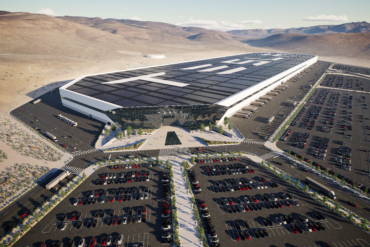
Nowhere is Tesla’s changing identity more visible than in its cash flow statement. Capital expenditure surged 142 percent to $5.79 billion from $2.39 billion a year earlier, outrunning an 85 percent rise in operating cash flow to $4.70 billion and pushing free cash flow to a deficit of $1.09 billion, a reversal from the $1.44 billion surplus generated just one quarter earlier. Cash and short-term investments ended the period at $43.52 billion, down $1.2 billion sequentially. None of this appears to have been unplanned. Management pointed to a buildout of AI compute capacity, including a new training cluster in Texas that doubled Tesla’s onsite compute in the first half of the year, alongside continued investment in its Austin semiconductor plant, battery cell and cathode material production, and lithium refining. On the call, Elon Musk described 2026 as the company’s heaviest year of capital investment yet, and Taneja reaffirmed full-year capex guidance above $25 billion, a figure already raised once this year from an earlier $20 billion plan. The Supercharger network, meanwhile, grew by more than 2,400 stalls, a 17 percent increase that stands out as one of the few capital outlays in the quarter with an immediate and measurable commercial payoff.
The scale of that ramp becomes clearer against Tesla’s own recent history. Full-year capital expenditure was $6.5 billion in 2021, rising steadily to $7.2 billion in 2022, $8.9 billion in 2023, and $11.3 billion in 2024, before easing to $8.5 billion in 2025 as earlier factory buildouts matured. A single quarter now costs nearly as much as an entire year did five years ago, a shift that says as much about what Tesla considers itself to be building as any statement on an earnings call. Free cash flow, which totaled a positive $6.2 billion for all of 2025, has swung negative in a single quarter for the first time since the early part of last year, a reminder that the company is, for now, spending well ahead of the revenue its newer ventures currently generate. Tesla is funding this expansion entirely from its own balance sheet rather than new debt, a position few capital-intensive manufacturers, and few AI infrastructure builders outside the largest technology companies, can currently match.
Betting on Autonomy
The spending is in service of a specific ambition, and the quarter offered the clearest evidence yet of how far along it is. Cybercab production began at Gigafactory Texas, and Tesla said its Robotaxi service now operates in seven major metropolitan areas, with the San Francisco Bay Area running under supervised Full Self-Driving pursuant to a California transportation permit. Tesla Semi and Megapack 3 remain on track for production later this year, and the company has begun installing early production lines for its Optimus humanoid robot on factory floors once dedicated to vehicle assembly. Perhaps most striking, management disclosed that self-driving software is now generating $791 million in annualized recurring revenue, a modest figure in absolute terms but a meaningful signal for a business Tesla has staked its long-term margin story on. The company also said it exited the quarter with its largest automotive order backlog since 2023, evidence it is using to argue that current spending has a demand base to justify it.
The path is not free of friction. Waymo remains ahead in both scale and public track record in the autonomous ride-hailing market, and Tesla’s own recent expansion into Miami has been read by some observers as a test of whether its faster, less incremental approach to scaling can hold up against a rival that has moved more cautiously. Regulatory terrain is uneven as well. A proposed law in New Jersey threatening restrictions on robotaxi operation is one of several state-level efforts that could complicate Tesla’s expansion timeline, regardless of how quickly its technology matures. Management itself was careful, on the call, not to promise a straight line, describing the scaling of these businesses as non-linear by nature. That framing is instructive. It suggests a company aware that autonomy and robotics will not generate revenue on the same predictable curve as vehicle sales once did, and asking investors to judge it on a longer and less even timeline than the one Wall Street applies by habit.
What Wall Street Chose to Punish
Investors, in the end, drew a sharp line between growth and profitability, rewarding neither the delivery record nor the revenue beat once the earnings shortfall became clear. That reaction arrived against an already difficult backdrop: Tesla shares were down roughly 11 percent for the month and 17 percent for the year heading into the report, a decline that has coincided with a steep pullback in SpaceX’s valuation following its market debut in June. Competitive pressure has not eased either. BYD reclaimed the global lead in battery-electric vehicle sales during the quarter, delivering 557,090 units against Tesla’s 480,126, and has outsold Tesla in European registrations every month this year. China offered a partial counterweight, with Tesla’s locally made sales rising 24.4 percent year over year in June to 89,091 units, the eighth consecutive month of growth, while the Shanghai plant exported a further 36,171 vehicles abroad.
Taken together, the quarter confirmed something investors already suspected and something they are still working out how to price. Tesla’s core business, vehicles, services, and energy storage, is expanding at a pace few automakers can match. The cost of building what comes after it, autonomous driving, robotics, and the compute to support both, is now large enough to show up unmistakably in the bottom line. The record and the shortfall are not contradictory. They are the same decision, viewed from two different distances.