- AI
- Autonomous Vehicles
- Robotaxi
- Robotics
Tesla Q1 Profit Recovery Sharpens Focus on Autonomous Future
12 minute read
Tesla posted a solid first quarter marked by automotive margin expansion and a cash-generative balance sheet, even as the company signals sharply higher investment ahead in AI, robotics, and autonomous driving.
Key Takeaways
- Automotive gross margins expanded 478 basis points to 21.1 percent in Q1 2026, driven by improved pricing discipline, cost efficiencies, and growth in Full Self-Driving software subscriptions, which rose 51 percent to 1.28 million active users.
- Tesla raised its capital expenditure guidance by roughly $5 billion above prior expectations, directing the bulk toward AI compute, battery capacity, and new manufacturing lines for Cybercab, Megapack 3, and the Optimus humanoid robot.
- With unsupervised Robotaxi operations now live in Dallas and Houston, the next several quarters will test whether Tesla can convert its technology roadmap into volume execution before competition and valuation pressure intensify further.
A Stabilising Core
Tesla’s first-quarter results arrived carrying the unmistakable character of a company that has absorbed two years of turbulence and is, for now, on steadier ground. Revenue grew 16 percent year-over-year to $22.387 billion. Non-GAAP earnings per share reached $0.41, ahead of the analyst consensus. Operating cash flow surged 83 percent to $3.937 billion. These are not the numbers of a business in distress; they are the numbers of a business that has spent considerable effort tightening its operational architecture and is beginning to see the results.
The most striking line was automotive gross margin, which expanded to 21.1 percent, a roughly 478-basis-point improvement on the prior year. That recovery reflects several converging forces: better pricing discipline following a period of aggressive discounting, continued reduction in manufacturing costs, and a higher proportion of Full Self-Driving software and ancillary revenues within the automotive revenue mix. Services and other revenues, encompassing FSD subscriptions, Supercharging, and maintenance, rose 42 percent to $3.745 billion. This segment, once an afterthought, has quietly become a meaningful contributor to Tesla’s profitability and speaks to the leverage embedded in an installed base now numbering in the millions.
GAAP net income came in at $477 million, constrained by non-cash charges, while non-GAAP net income reached $1.453 billion. Free cash flow of $1.444 billion lifted total liquidity, including cash equivalents and short-term investments, to $44.743 billion. The balance sheet alone is a strategic asset.
Where the Numbers Give Pause
Beneath the margin recovery, some of the quarter’s details warrant careful reading. Vehicle deliveries totalled 358,023, a 6 percent increase year-over-year, with production at 408,386 units. Model 3 and Model Y accounted for 341,893 of those deliveries; other models, including the Cybertruck, contributed 16,130. The gap between production and deliveries edged inventory higher, a dynamic worth monitoring as the year progresses.
The energy segment presented a more mixed picture. Energy generation and storage revenue declined 12 percent to $2.408 billion, with storage deployments falling to 8.8 GWh. Management was clear that the decline was timing-related, with Megapack deployments expected to rebound strongly in subsequent quarters. That explanation is credible given the project-based nature of utility-scale storage contracts, but investors will reasonably want confirmation before embedding full-year growth assumptions.
The modest pace of delivery growth also underscores a structural reality: Tesla no longer occupies the unchallenged position it held for most of the previous decade in the electric vehicle market. Competition from Chinese manufacturers, intensifying European and American rivals, and sustained macroeconomic pressure on consumer spending have created a more contested landscape. Tesla’s response has been to compete on cost and software depth rather than volume alone, a rational strategic choice that the margin recovery validates, but one that demands sustained execution.
The Autonomy Pivot
It is the third leg of Tesla’s strategy, its pivot toward autonomy, robotics, and artificial intelligence, where the quarter’s most consequential disclosures lie. In April, post-quarter-end, Tesla launched commercial unsupervised Robotaxi rides in Dallas and Houston. FSD (Supervised) received regulatory approval in the Netherlands, expanding the software’s addressable market. Active FSD subscriptions grew 51 percent to 1.28 million, a pace that, if sustained, transforms the financial profile of the automotive segment over time.
On the earnings call, CEO Elon Musk was direct about the investment implications. “We’re going to be substantially increasing our investments in the future,” he said, adding that investors should expect “a very significant increase in capital expenditures, but I think well justified for a substantially increased future revenue stream.” The revised capex guidance came in roughly $5 billion higher than previously anticipated, directed at AI compute, battery capacity expansion, and new manufacturing lines for Cybercab, Megapack 3, and Tesla Semi.
We’re going to be substantially increasing our investments in the future… a very significant increase in capital expenditures, justified by a substantially larger future revenue stream.
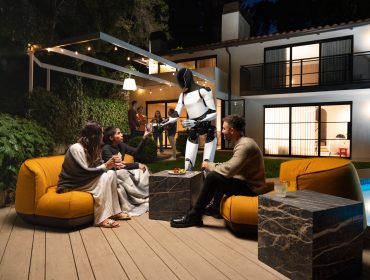
The Optimus humanoid robot received particular emphasis. Musk reiterated his view that Optimus would become “probably the biggest product ever,” not merely Tesla’s largest, and stated that internal production of Optimus components was increasing, with deployment outside Tesla expected within the next year. The language was consistent with prior calls, but the operational specificity, component ramp, internal deployment timelines, manufacturing line preparation, added incremental credibility.
Market Reaction and Valuation
Tesla, Inc (NASDAQ: TSLA) shares closed the regular session on April 22 at $387.51, up just 0.28 percent. After-hours trading saw an initial surge of approximately 4 percent on the earnings beat and margin strength, before gains moderated as investors absorbed the heavier investment pace and its near-term implications for free cash flow. The pattern is instructive. Margin recovery and cash generation were welcomed; the signal that the company is entering another sustained phase of elevated spending tempered enthusiasm.
That tension sits at the heart of Tesla’s current valuation. The stock trades at multiples that can only be justified by the eventual monetisation of full autonomy, humanoid robotics, and AI infrastructure at scale. Q1’s results neither resolve nor undermine that thesis; they simply extend the window of time within which it must be proved. With Cybercab pilot production under way and unsupervised Robotaxi operations now live in two American cities, the next several quarters will sharpen that picture considerably.
The broader market context adds another layer of complexity. Tesla has lagged megacap technology peers year-to-date, a relative underperformance that reflects investor uncertainty about the precise cadence of autonomy revenue rather than any fundamental deterioration in the business. For a stock that has historically commanded a premium on narrative as much as near-term earnings, the absence of a firm commercial timeline for unsupervised FSD at scale creates a valuation gap that operational progress alone cannot fully close. What the market is waiting for is not another strong quarter; it is proof that the transition from supervised to unsupervised autonomy can be executed on a timeline that justifies current pricing. Until that evidence accumulates, the stock is likely to trade in a range defined by sentiment as much as fundamentals.

The Investment Case, Reconsidered
For senior investors, the quarter offers several reference points. The balance sheet, with nearly $45 billion in liquidity, provides substantial runway for multi-year technology investment without resort to external financing. The services segment’s trajectory demonstrates that Tesla’s installed base generates compounding returns as software and subscription penetration deepen. The energy business, despite Q1’s dip, remains structurally intact; Megapack demand from utilities and data centre operators is not softening.
The risks are real but legible. Regulatory scrutiny of autonomous driving claims persists across jurisdictions. Delivery growth, while positive, is no longer self-evidently robust. The capital intensity of the AI and robotics roadmap will constrain free cash flow in the near term. And the precise timeline of full unsupervised autonomy at scale, the variable on which a significant portion of Tesla’s valuation rests, remains uncertain.
The Long View
Tesla’s leadership has argued for years that the company’s true competitive moat lies not in vehicle manufacturing but in the convergence of energy, AI, and robotics infrastructure. The Q1 results, and the commentary that accompanied them, are consistent with that framing. The margin recovery demonstrates that the vehicle business can sustain profitability even as investment priorities shift. The capital expenditure increase signals that management believes the window to establish durable leadership in autonomous systems is open now and will not remain so indefinitely.
The future of the company is fundamentally based on large-scale autonomous cars and large-volume, vast numbers of autonomous humanoid robots.
The coming quarters will be consequential. If Cybercab reaches volume, if unsupervised Robotaxi operations scale beyond pilot markets, and if Optimus achieves meaningful commercial deployment on the timelines Musk has outlined, the investment thesis gains hard evidence. If execution stumbles or timelines extend, the premium embedded in the stock will face scrutiny of a different kind. Q1 2026 was, in sum, a credible quarter from a company that knows precisely where it is going and is betting heavily, with its own capital, that it can get there.