- Capital Markets
- IPO
- Public Markets
- Space Tech
SpaceX Fixes IPO Price at $135, Targets Record $75B Raise
11 minute read
SpaceX’s fixed-price IPO strategy, targeting a $1.75 trillion valuation, challenges traditional book-building convention and tests public market appetite for frontier space and AI infrastructure at historic scale.
Key Takeaways
- SpaceX fixed its IPO price at $135 per share before roadshow launch, targeting $75 billion in proceeds and a $1.77 trillion valuation — the largest public offering in history by proceeds raised.
- Starlink’s 10.3 million subscribers and $4.4 billion operating income in 2025 provide a profitable core that funds aggressive AI compute investment, which alone consumed $12.7 billion in capital expenditure last year.
- Dual-class share structure preserves Elon Musk’s majority voting control post-IPO, while a 94x trailing revenue multiple demands investors price in years of compounding across Starship, global broadband, and orbital AI infrastructure.
A Different Kind of Roadshow
Most companies preparing for a public offering spend weeks in studied deference, presenting their story, absorbing investor feedback, and adjusting price expectations in response to demand signals gathered one meeting at a time. SpaceX arrived at this moment on entirely different terms. On June 3, 2026, the company announced a fixed offering price of $135 per share before a single formal institutional meeting had taken place, bypassing the architecture of conventional price discovery almost entirely.
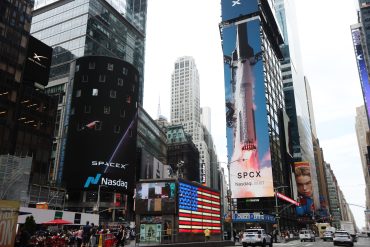
The scale commands attention on its own. SpaceX intends to sell 555.6 million shares of Class A common stock, raising approximately $75 billion in what would constitute the largest initial public offering in history by proceeds. The implied valuation reaches $1.77 trillion. The roadshow opened June 4, with pricing expected June 11 and trading set to begin on Nasdaq under the ticker SPCX on June 12.
The compressed timeline is itself a form of communication. Where traditional large-cap offerings use weeks of investor engagement to construct a range and refine a price, SpaceX’s approach treats that process as redundant. Prior “testing the waters” meetings with select institutional investors provided some market intelligence, but the fixed-price announcement closes the negotiation before it opens. The message is unambiguous: the company has decided what it is worth, it has concluded that demand exists at these terms, and it sees no advantage in arriving at that conclusion by the slower route.
From Launch Provider to Infrastructure Platform
To engage seriously with the valuation, the financial structure requires careful examination. SpaceX’s S-1, filed May 20, 2026, delivers the first comprehensive public account of a business that has, until now, disclosed remarkably little about its economics. What it reveals is a company operating three distinct segments with sharply different financial profiles and a single coherent strategic logic connecting them.
The Connectivity segment, anchored by Starlink, is the asset that makes everything else possible. It generated $11.387 billion in revenue in 2025 and delivered $4.423 billion in operating income, with Adjusted EBITDA growing 86 percent year-over-year. As of March 31, 2026, Starlink served 10.3 million subscribers across 164 countries, supported by a constellation exceeding 9,600 satellites. The network displays the structural hallmarks of a maturing platform: deepening operational leverage, expanding geographic reach, and improving unit economics as satellite utilization rises. Average revenue per user of $66 per month in Q1 2026 reflects deliberate expansion into lower-income markets and alternative plan structures, a mix shift that compresses near-term ARPU while extending the subscriber base toward genuinely global scale.
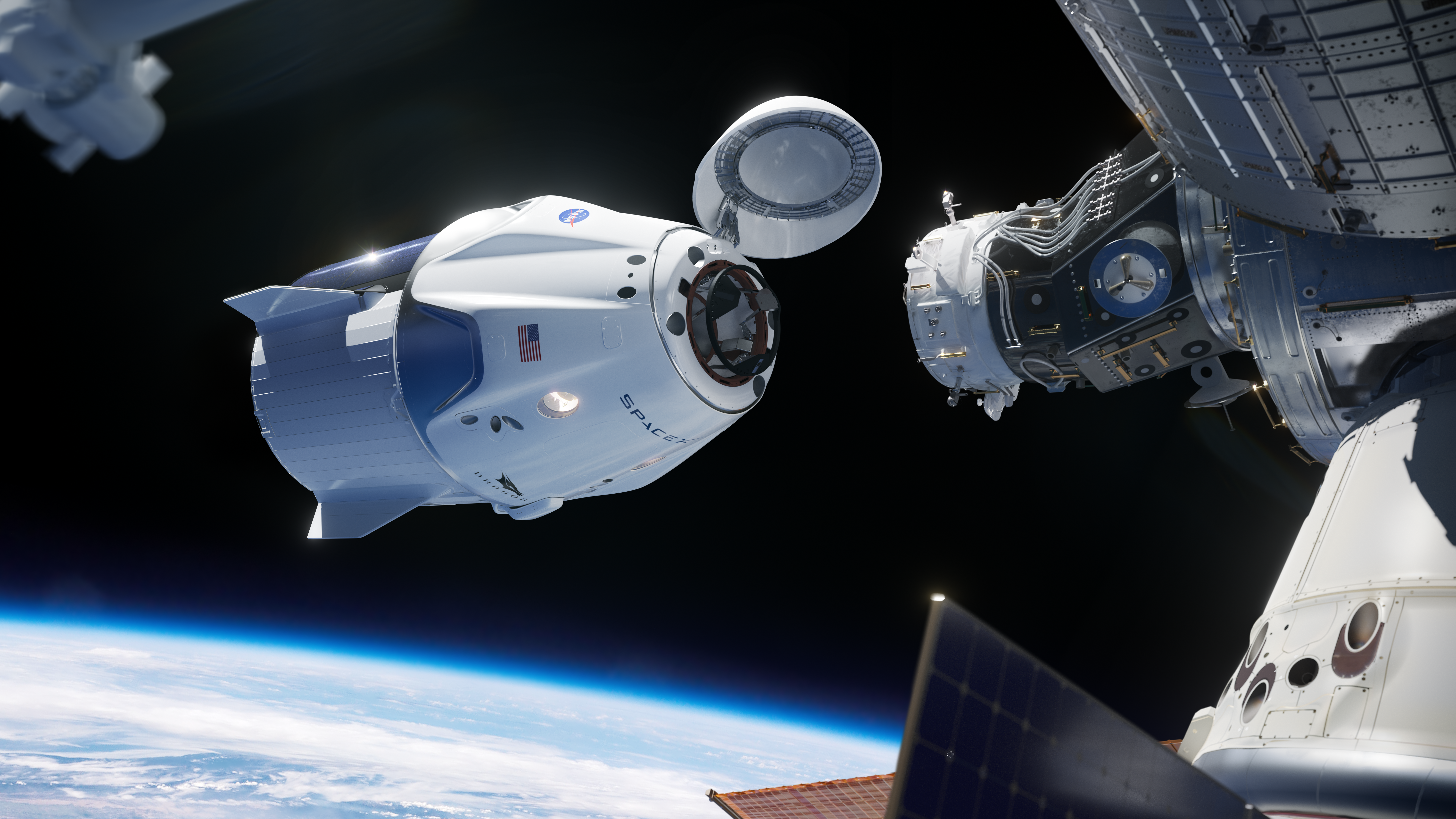
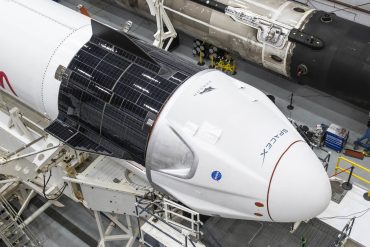
The Space segment, covering Falcon 9, Falcon Heavy, Dragon, and Starship development, produced $4.086 billion in 2025 revenue against an operating loss of $657 million. The losses are structural and, at this stage, expected: launch vehicle development carries substantial fixed costs, and Starship remains in intensive testing, with 11 flight tests completed and payload-to-orbit milestones targeted for the second half of 2026. The segment’s economics transform materially as reusability matures, and that transformation is the critical variable in SpaceX’s long-range cost model.
The AI segment is the most consequential and the most capital-demanding. It generated $3.201 billion in 2025 revenue while posting a $6.355 billion operating loss, absorbing $12.727 billion in capital expenditure during the year alone. The February 2026 acquisition of xAI, which brought Grok model development and frontier AI expertise under SpaceX’s corporate structure, accelerated both the investment trajectory and the strategic ambition. The combined entity is building toward gigawatt-scale orbital compute clusters and satellite-based AI inference infrastructure, premised on the conviction that space-based deployment offers structural energy efficiency and latency advantages that ground-based data centers cannot replicate.
Total group revenue reached $18.674 billion in 2025, up from $14.015 billion in 2024. The net loss of $4.937 billion, following a $791 million profit in 2024, reflects deliberate investment sequencing rather than operational weakness. The balance sheet supports that reading: cash and equivalents of $15.852 billion as of March 31, 2026, against total assets of $102.094 billion.
The Valuation Architecture
At $135 per share against 2025 full-year revenue, the implied multiple approaches 94 times trailing. That figure will stop most institutional investors mid-sentence, and it deserves honest engagement rather than reflexive dismissal or uncritical acceptance.
The multiple is coherent only as a forward-looking construct, and SpaceX has been explicit about the forward it is asking investors to price. The company quantifies its total addressable market at $28.5 trillion, with $26.5 trillion attributed to AI infrastructure, enterprise applications, and consumer platforms. That framing deliberately repositions SpaceX away from the aerospace category and toward something harder to classify but potentially far larger: the owner of critical global infrastructure at the intersection of orbital access, broadband connectivity, and frontier compute. Whether public markets absorb that repositioning at this scale is precisely the question the offering poses.
Private-market history provides useful context. A December 2025 tender offer valued SpaceX at approximately $800 billion, itself nearly double mid-2025 levels. The post-xAI combined valuation reached roughly $1.25 trillion before the IPO target climbed further. The $1.77 trillion figure therefore represents a genuine step-up, not the ratification of prior private pricing.
Governance warrants close attention from institutional allocators. The dual-class structure grants Class B shares 10 votes each, preserving Musk’s majority voting control after the offering and qualifying the company as a “controlled company” under Nasdaq rules, exempting it from certain board independence requirements. A 366-day lockup applies to Musk’s holdings and employee allocations. For governance-oriented investors, the concentration of strategic authority in a single individual who simultaneously leads Tesla, xAI, and other enterprises introduces a form of key-person exposure that no share price adjustment fully resolves. It is a known feature of the offering, not a hidden risk, and investors will price it accordingly.
What the Market Is Actually Being Asked to Fund
Beneath the headline figures, this offering asks investors to accept a specific long-duration thesis: that Starship achieves operational reusability at scale, driving cost reduction across commercial launch and satellite deployment; that Starlink continues its expansion into underserved global markets while sustaining its lead against broadband competitors; and that orbital AI compute, still in its earliest commercial stages, proves to be a structurally differentiated infrastructure category rather than an ambitious projection of a terrestrial trend onto a more exotic canvas.
Starlink gives that thesis its credibility. A business generating over $4 billion in operating income annually is not a speculative asset. It is a functioning, cash-generative platform that happens to sit inside a company with considerably larger ambitions, and that distinction matters profoundly when serious investors think about downside. Even in scenarios where Starship timelines extend or orbital AI commercialization slips, the connectivity business retains substantial and defensible standalone value. SpaceX is not asking the market to fund a vision from nothing. It is asking the market to value a vision that already has a profitable engine running beneath it.
The fixed-price strategy reflects a clear-eyed understanding of exactly that. By anchoring at $135 before the roadshow, SpaceX signals that it is not seeking price discovery in any conventional sense. It is offering access to a specific investment thesis at a stated entry point, with the confidence that investors who find it compelling will engage on those terms and that nothing is gained from the theater of a negotiated range.
Setting the Terms
The weeks ahead will determine whether the institutional market accepts SpaceX’s self-assessment. If demand materializes as anticipated, the listing will establish new reference points for the space and AI infrastructure sectors, reshape private valuations across dozens of adjacent companies, and provide the capital foundation for the next phase of Starship cadence, constellation density, and orbital compute expansion.
What is already evident, before a single share trades publicly, is that SpaceX has constructed this transaction entirely on its own terms. That posture carries real risk if demand disappoints. It carries significant validation if the order book fills at $135. Either outcome illuminates something essential about how this company operates: it determines the conditions, states the price, and invites the market to respond.
The ripple effects extend well beyond SpaceX’s own balance sheet. A successful listing at this valuation would compress the perceived risk premium across private space and AI infrastructure companies, accelerating fundraising timelines and re-rating comparable assets in both public and private markets. Satellite operators, launch services competitors, and orbital compute ventures would find their own valuation conversations permanently reshaped by whatever multiple the market ultimately assigns to SPCX. For the broader technology investment landscape, the offering functions as a referendum on a precise and consequential question: whether frontier infrastructure, combining physical assets, software platforms, and AI capability at planetary scale, commands the kind of long-duration capital that until recently flowed almost exclusively toward pure software businesses. The answer, crystallized in SpaceX’s order book over the coming days, will set the tone for a generation of capital allocation decisions in sectors that barely existed as institutional asset classes a decade ago.