- Data Centers
- Energy Infrastructure
- Hyperscalers
NVIDIA Bets on IREN to Solve Artificial Intelligence's Power Problem
9 minute read
NVIDIA’s partnership with IREN, targeting 5 gigawatts of AI infrastructure, marks a structural shift in how the industry is building the physical foundations of artificial intelligence.
Key Takeaways
- NVIDIA has granted IREN a five-year warrant to purchase up to 30 million shares at $70 each, representing a potential $2.1 billion equity stake that ties the chipmaker’s fortunes directly to infrastructure execution at gigawatt scale.
- IREN’s Sweetwater campus in West Texas, spanning roughly 2,200 acres with a newly energized 1.4 GW substation, gives the partnership immediate physical credibility that most AI infrastructure announcements currently lack.
- Beyond the strategic deal, a separate $3.4 billion AI cloud services contract for managed Blackwell GPU capacity provides IREN with contracted revenue visibility that fundamentally reshapes its investment profile.
From Mining to Megawatts
There is a particular kind of corporate transformation that only becomes legible in retrospect. IREN Limited’s journey from renewable-powered Bitcoin mining operation to strategic partner of the world’s most valuable semiconductor company is one of them. The announcement of a partnership with NVIDIA targeting up to 5 gigawatts of AI infrastructure is not simply a business development milestone. It is the culmination of a deliberate repositioning that, in the current environment, places IREN among a very small group of operators capable of meeting the physical demands of next-generation artificial intelligence at genuine scale.
The terms of the arrangement reflect its seriousness. NVIDIA received a five-year right to purchase up to 30 million of IREN’s ordinary shares at $70 each, a potential equity commitment of $2.1 billion, subject to regulatory conditions. That structure is notable. Rather than a conventional supply agreement, it ties NVIDIA’s economic interest directly to IREN’s execution capacity, creating alignment across the full lifecycle of deployment rather than simply at the point of hardware sale.
The Infrastructure Constraint That Defines the Moment
To understand why this deal matters, it is necessary to understand the supply-side reality that now shapes AI investment. The dominant narrative around artificial intelligence infrastructure has, for several years, centered on chips. That framing, while not wrong, has increasingly obscured the deeper bottleneck. Across North America, Europe, and Asia, the binding constraint on AI capacity is not silicon availability but power, land, cooling, and the operational expertise to integrate them. Data centers cannot be conjured quickly. Grid interconnection queues stretch years in many markets. Zoning and permitting introduce further friction. The result is that secured, energized capacity has become the scarcest input in the AI supply chain.
IREN spent the past year acquiring that scarcity. Its global pipeline of power-rich sites, assembled during and after its mining era, gives it a tangible asset base that most AI-focused developers lack. The energization of the 1.4 GW Sweetwater 1 substation in early May 2026, connecting the company’s approximately 2,200-acre West Texas campus to the ERCOT grid, was not a footnote to the NVIDIA announcement. It was its prerequisite.
DSX and the Architecture of the AI Factory
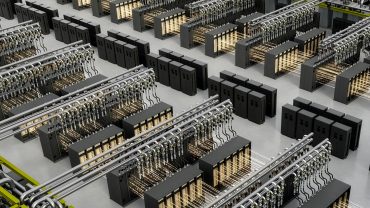
NVIDIA’s contribution to the partnership goes beyond capital and brand association. Its DSX AI factory reference architecture, unveiled earlier in 2026 as the design template for Vera Rubin-era deployments, provides IREN with a codesigned blueprint that spans compute, networking, storage, power management, and digital-twin simulation through Omniverse. Features including DSX Max-Q, targeting efficiency optimization, and DSX Flex, enabling grid interactivity and demand response, address the operational realities of large-scale power consumption with a level of sophistication that generic data center design cannot match.
For IREN, DSX alignment is more than a technical endorsement. It is a qualification signal in an increasingly stratified market. As AI workloads grow more computationally intensive, operators whose infrastructure is architected to NVIDIA’s reference standards will be better positioned to attract the enterprise and research clients who require guaranteed performance at scale. The alternative, deploying GPUs into environments not optimized for their power and thermal profiles, carries real efficiency penalties that sophisticated buyers will increasingly price into procurement decisions.
Jensen Huang, NVIDIA’s founder and chief executive, framed the collaboration in systemic terms. AI factories, he noted, are becoming foundational economic infrastructure, and deploying them at scale requires integration across the full stack from compute and networking through power and operations. That framing is neither rhetorical nor incidental. It reflects a strategic evolution within NVIDIA from chip designer to system architect, and a corresponding willingness to take equity positions in the operators who can execute on that vision.
Revenue Visibility and the Investment Case
The strategic partnership was accompanied by a separate commercial agreement that deserves equal attention. A five-year, $3.4 billion AI cloud services contract, covering managed GPU capacity based primarily on air-cooled Blackwell infrastructure, provides IREN with a contracted revenue base that transforms the financial profile of the business. Alongside this, IREN reported contracted annualized recurring revenue across its various agreements reaching $3.1 billion, with a stated target of $3.7 billion by the end of calendar 2026.
These figures arrive against a transitional backdrop. IREN’s Q3 FY26 results reflected the expected costs of pivoting away from Bitcoin mining. Total revenue of $144.8 million included $33.6 million in AI cloud revenue, rising sequentially, while Bitcoin contributions continued to decline. The trajectory is deliberate and the near-term financial drag a predictable feature of any business executing a structural shift at speed. Investors appear to have looked through it. IREN shares surged as much as 27% in after-hours trading on May 7 before settling in a range of roughly 13 to 20% higher.
That market reaction matters beyond the immediate price move. It signals appetite for credible execution stories in AI infrastructure at a moment when announcements have outpaced delivery. IREN’s combination of actual energization progress, contracted revenue, and a marquee partner with equity skin in the game distinguishes it from the broader field of aspirational developers.
Scale, Risk, and What Comes Next
The ambition embedded in this partnership is considerable and the path to realizing it is not without complexity. Delivering 5 GW across multiple markets will require sustained capital, regulatory approvals, and supply-chain coordination extending over several years. Texas power markets carry volatility risk, and liquid-cooling deployments at the scale envisioned introduce engineering and cost variables that will require careful management. NVIDIA’s prospective equity stake will face its own regulatory review.
IREN’s parallel acquisitions of Mirantis, adding software and orchestration capability, and Nostrum, adding European power assets, suggest the company understands that infrastructure scale alone is insufficient. The operators who succeed in this environment will be those who combine physical capacity with software fluency and geographic diversification. That is a harder and more expensive proposition than simply securing acreage, but it is also the one that defensible competitive positioning requires.
The broader lesson of this partnership is structural. The AI infrastructure buildout is entering a phase in which capital, land, power, and silicon must be assembled and operated as an integrated system rather than acquired and combined opportunistically. NVIDIA’s decision to take a prospective equity stake in an operator, and to co-architect the factories that will consume its own hardware, is the clearest expression yet of how the most sophisticated players in the industry are thinking about what it takes to win at scale.