- AI & Regulation
- Artificial Intelligence
- Corporate Governance
How a Statute of Limitations Ended Musk’s War With OpenAI
12 minute read
A federal jury found Elon Musk waited too long to sue his former colleagues, dismissing claims worth $150 billion and leaving OpenAI’s corporate structure untouched.
Key Takeaways
- A nine-person advisory jury in Oakland ruled that Musk’s breach of charitable trust claims were time-barred under California’s three-year statute of limitations, ending the case on procedural grounds before reaching the merits.
- The dismissal removes a significant legal overhang for OpenAI as it advances toward a potential public listing, having closed a $122 billion funding round in March 2026 that valued the company at approximately $852 billion.
- The case raised foundational questions about nonprofit governance in frontier technology that remain unresolved: whether founding missions can bind organizations once they require tens of billions in capital to remain competitive.
A Door Quietly Closes
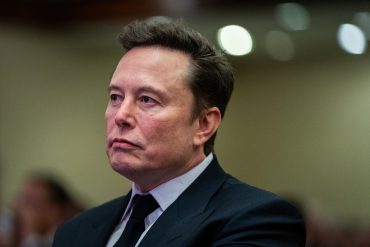
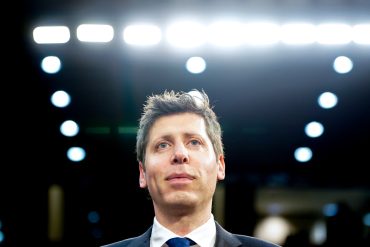
There is a particular kind of defeat that arrives not with a judgment on the merits but with a door quietly closing. On May 17, 2026, in a federal courtroom in Oakland, California, that door closed on Elon Musk. A nine-person advisory jury deliberated for two hours before concluding that he had simply waited too long. U.S. District Judge Yvonne Gonzalez Rogers accepted the finding and dismissed the case. The claims of breach of charitable trust and unjust enrichment against OpenAI, Sam Altman, and Greg Brockman were barred by California’s three-year statute of limitations. The $150 billion lawsuit, the most consequential legal action the artificial intelligence industry has yet produced, ended before the merits were ever tested.
It was, in the strictest legal sense, a procedural outcome. In every other sense, it was decisive. For OpenAI, the ruling removes a material legal overhang and clears a path toward a potential public listing. For the broader AI industry, it carries a more considered message: that courts are unlikely to revisit the commercial foundations on which the sector has been constructed, however contested the circumstances of their formation.
A Mission Written in Good Faith
To reduce this case to a billionaire’s grievance is to miss what it actually represented. When Musk co-founded OpenAI in December 2015, the organization embodied a proposition that was then still credible: that the most consequential technology in human history could be developed outside the gravitational pull of profit. He contributed more than $44 million of his own money. He lent the venture his credibility at a moment when it needed both. The founding documents spoke of artificial general intelligence developed openly, safely, and for the benefit of humanity as a whole, not as a phrase of aspiration but as an operational commitment.
Musk served on the board until February 2018, when disagreements over strategy and control prompted his departure. What followed, in his telling, was a systematic betrayal of that commitment. His central legal argument was that the founders had entered into an implied agreement, never codified in a single written contract, that OpenAI would remain a nonprofit, open-source enterprise insulated from commercial incentives. The organization, he argued, had not evolved. It had defected.
OpenAI’s response was equally clear. No such enforceable promise had ever existed. Musk had been aware of the organization’s commercial trajectory for years before filing suit. And the lawsuit itself, his former colleagues suggested, owed less to principled concern than to competitive anxiety: xAI, his own AI venture, launched in 2023 and positioned itself explicitly as an alternative to the organization he was now suing. The jury never adjudicated between those competing accounts. It decided only that Musk had known, or should have known, of the conduct he challenged long before the statutory window closed.
From Nonprofit Vision to Near-Trillion-Dollar Reality
To understand the scale of what the lawsuit sought to unwind, it is necessary to trace what OpenAI actually became. The transformation was neither sudden nor concealed. In 2019, the organization established a capped-profit subsidiary to attract the capital that frontier model training required. Microsoft’s investment followed, accumulating to approximately $13 billion over several years, providing the compute infrastructure and cloud distribution that turned ChatGPT from a research artifact into a product used by hundreds of millions of people worldwide.
By early 2025, OpenAI had completed its recapitalization into a for-profit public-benefit corporation, with its original nonprofit board retaining formal oversight. In March 2026, it closed a $122 billion funding round that valued the company at approximately $852 billion, one of the largest private capital raises in the history of technology. Monthly revenue stood at approximately $2 billion. Microsoft’s SEC filings disclosed a stake of roughly 27 percent on an as-converted basis, valued at approximately $135 billion before subsequent rounds pushed that figure higher. Satya Nadella, testifying at trial, was unambiguous: the partnership had always been commercial in nature.
Musk refiled his federal complaint in August 2024, after voluntarily dismissing an earlier state-court action. By that point, the institution he had helped create was worth, by some measures, more than most of the world’s major banks. The arithmetic of his delay was fatal. The jury concluded that he had waited too long to object, and Judge Gonzalez Rogers, who had telegraphed in pre-trial rulings that she would follow the jury’s guidance on limitations, agreed.
What the Courtroom Laid Bare
For all its procedural resolution, the trial produced something of lasting value: a public record of what happened inside one of the most consequential institutional transformations in modern business history. Musk took the stand and described OpenAI’s metamorphosis as the theft of a charity. Altman testified that Musk had departed the project years before its most demanding chapter, leaving the remaining founders to confront capital requirements that no nonprofit structure could realistically absorb. Internal emails, text messages, and diary entries entered into evidence traced the distance between early idealism and economic necessity with uncommon candor.
None of it was adjudicated on the merits. But the record will endure. It offers a detailed anatomy of the moment when a technology organization, founded on explicitly non-commercial principles, encountered the arithmetic of frontier AI: the hundreds of millions of dollars required to train a single competitive model, the infrastructure costs that only the largest corporations on earth could finance, the competitive pressure from well-capitalized rivals who faced no such ideological constraints. What Musk calls betrayal, OpenAI’s defenders call survival. Both accounts contain truth. That is precisely what makes the episode historically significant, and why the questions it raised will outlast the verdict by years.
The Question That Remains
A court in Oakland has answered one narrow question about a filing deadline. It has not answered the question underneath it, the one that gives this case its genuine historical weight.
The dismissal leaves OpenAI’s corporate architecture intact and affirms a principle that will govern the sector for years: courts are not equipped to relitigate the commercial realities of an industry that has attracted capital at a pace with few historical precedents. Microsoft shares moved negligibly on the verdict. Markets had already priced the outcome. The more consequential judgment belongs to the future.
Whether Musk appeals remains formally open. The odds are narrow. Appellate courts are highly deferential to lower court findings on statute-of-limitations questions, and the factual record in Oakland does not offer obvious grounds for reversal. xAI, meanwhile, continues to scale, with successive Grok model releases competing directly with OpenAI’s product line. The rivalry is real and, for the industry, genuinely productive.
OpenAI’s journey from a nonprofit with a founding vision to a near-trillion-dollar corporation is among the most compressed institutional transformations on record. The nonprofit board retains formal oversight. Day-to-day authority belongs to executives and investors whose incentives are shaped by markets, not missions. That arrangement may be the most rational response to an impossible set of constraints. It may also be exactly what Musk feared. The court has not told us which. It has only told us that he asked too late. The market, and history, will render that verdict in their own time, and on their own terms.