- Big Tech
- Policy & Regulation
- Workforce
Washington Freezes Microsoft, Adobe Green Card Pipeline
10 minute read
By suspending Microsoft, Adobe and six IT outsourcers from the PERM program, the Labor Department has turned an obscure immigration step into a test of how Big Tech keeps its engineers.
Key Takeaways
- The Labor Department will neither accept nor process PERM filings from eight employers, citing active federal probes into Microsoft and Adobe and alleged abuse by six outsourcers.
- Investors looked through the headlines: Microsoft slipped just over 1%, Adobe edged higher, and India’s IT index rallied more than 3% as TCS described its PERM exposure as negligible.
- The exposure is human rather than financial. PERM lets H-1B staff remain past six years, so a prolonged freeze threatens the retention of senior engineers as the AI buildout accelerates.
The Quietest Lever in Immigration Policy
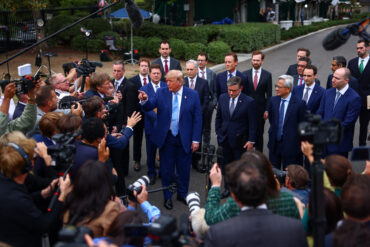
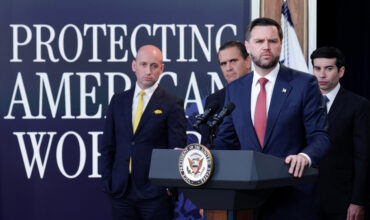
Few corners of American immigration law are as technical, or as consequential for the technology industry, as the Permanent Labor Certification Program. Known as PERM, it is the labor market test that precedes most employment-based green cards: before sponsoring a foreign worker for permanent residence, an employer must show it could not find a qualified American for the role. On October 8, Vice President JD Vance and Labor Secretary Keith Sonderling closed that door to eight employers. Six are IT outsourcers: Cognizant, Infosys, Tata Consultancy Services, Wipro, HCL Technologies and Capgemini. The remaining two, Microsoft and Adobe, were suspended because of what Sonderling described as multiple active federal investigations.
The department will accept no new applications from the eight and will stop processing those already filed. No end date has been set, and officials have not said which agencies are investigating Microsoft or Adobe, or why. Sonderling cast the decision as “shutting down the pipeline of systemic fraud.” Vance reserved his sharpest language for Microsoft, which he named as the program’s worst abuser, while insisting the administration wants the company to prosper. “The message to Microsoft is you’ve got to hire American workers,” he said. The tone was punitive, but the instrument was carefully chosen.
An Old Rule, Newly Sharpened
The power being exercised is not novel. Under 20 CFR 656.31(b), the Labor Department may suspend processing for any employer under investigation by the Justice Department, Homeland Security or another government body for possible fraud or willful misrepresentation in the PERM program. The suspension can last until investigators or courts finish their work, subject to a checkpoint at 180 days, when the National Certifying Officer may resume some or all applications or extend the freeze. That places the first natural review in early April 2027, well after the November midterm elections.
What has changed is the cadence. In May, the department froze Cloudera’s PERM applications for 180 days alongside allegations that it had favored foreign labor over American applicants. In September, Inspector General Anthony D’Esposito suspended Cognizant’s filings, a step that erased roughly ₹55,000 crore from Indian IT stocks in a single session. Both followed the inspector general’s H-1B and PERM fraud investigation, opened in July, and both belong to a broader program that includes a $100,000 H-1B fee and a lottery weighted toward higher salaries. On the same day as the PERM announcement, the administration opened a J-1 visa fraud inquiry into nine universities, among them Harvard, Stanford and MIT.
What Microsoft Stands to Lose
Microsoft answered within hours, saying it looked forward to supplying the administration with further information. Its case rests on the composition of its filings. Of roughly 6,000 H-1B applications in its most recent fiscal year, the company said 80% extended or changed the status of existing employees. The new hires were people already legally in the United States, equal to about 1% of its domestic workforce. Labor Department data show Microsoft filed about 1,680 PERM petitions in the first three quarters of federal fiscal 2026, while USCIS figures rank it fifth among H-1B users over the same period, with 3,688.
Against the scale of the business, those numbers barely register. Microsoft generated $331.8 billion in revenue in fiscal 2026, Azure crossed $100 billion for the first time, and commercial remaining performance obligations rose 84% to $678 billion. The risk sits in the workforce. PERM is the mechanism that allows H-1B employees to stay beyond the standard six-year limit, and Microsoft has long relied on it to keep talent. A lengthy suspension would leave senior engineers, many from India and China where green card queues stretch for years, with every reason to listen when competitors still able to sponsor them call. For a company that has guided fiscal first-quarter revenue of $89.85 billion to $90.95 billion on the strength of AI capacity it must build and staff, attrition among its most specialized people is a cost no balance sheet captures in advance.
Adobe and the Outsourcers
Adobe has said little in public, and its operating momentum gives it room to wait. Fiscal third-quarter revenue rose 13% to a record $6.76 billion, annualized recurring revenue reached $27.50 billion, and management raised its full-year targets while guiding fourth-quarter revenue of $6.80 billion to $6.85 billion. The suspension may also formalize a situation already underway. PERM Tracker, a private service that monitors Labor Department records, showed all 215 of Adobe’s pending cases on hold as of September 25, part of 2,070 held nationwide.
For the outsourcers, the stakes are lower than the headlines imply. Nasscom, the Indian industry body, said its members have sharply reduced their dependence on H-1B visas, which naturally means fewer green card sponsorships. TCS said its PERM filings had been in single digits over the past two years and repeated its commitment to add 15,000 American employees over five years. For firms whose model has already shifted toward local hiring and offshore delivery, the measure carries reputational weight in Washington and little operational consequence at home.
Leverage Dressed as Enforcement
Markets read the episode with notable composure. Microsoft lost just over 1% on Thursday, a modest move for one of the world’s three most valuable companies, while Adobe gained about 1%. Cognizant recovered early losses to trade more than 5% higher late in the session. In Mumbai the following day, the Nifty IT index advanced more than 3% as TCS rose about 5% on second-quarter results, with Infosys, HCL Technologies and Wipro adding close to 3%. Set against the sell-off that greeted Cognizant’s suspension in September, the reaction suggests investors have learned to distinguish political risk from earnings risk, particularly in a sector whose valuations were already compressed this year by fears of AI disruption.
The political reading is less settled. The suspensions arrived weeks before the midterms and on the same day President Trump presented Microsoft chief executive Satya Nadella with a National Medal of Technology and Innovation, a pairing that captures the administration’s uneasy posture toward an industry it courts for AI investment and criticizes for its hiring. Representative Pramila Jayapal, a Washington Democrat, accused the government of “taking a hammer to legal immigration.” Unless investigators produce findings, the 180-day review offers a route to a quiet resolution. Until then, the freeze works less as a sanction than as leverage, and a clear signal to every employer that access to global talent now depends on Washington’s discretion as much as on the letter of the law.