- AI & Regulation
- Geopolitics
- Global Markets
Beijing Blocks Meta's Manus Bid as AI Sovereignty War Widens
9 minute read
Beijing’s review of Meta’s $2bn acquisition of AI agent startup Manus signals that China now treats founder talent and offshore corporate structures as sovereign assets, reshaping global deal-making.
Key Takeaways
- Beijing’s multi-agency review of the Meta-Manus acquisition signals that China now views AI human capital and offshore corporate vehicles as strategic national assets subject to direct regulatory control, not merely the technology itself.
- The “Singapore washing” model, in which Chinese-founded startups relocate headquarters and IP before selling to Western buyers, faces structural closure as regulators issue fresh guidance to firms including Moonshot AI and StepFun on foreign capital.
- Cross-border AI deal-making has entered a higher-friction era: founders face personal operational constraints, venture investors must reprice sovereign risk on Chinese-origin assets, and Western acquirers confront explicit geopolitical overlays on otherwise routine M&A.
The Deal That Lit the Fuse
When Meta announced in late December 2025 that it had acquired Manus, a Singapore-headquartered developer of autonomous AI agents, the transaction appeared to exemplify the seamless cross-border talent flows that had long defined the industry’s rise. Manus had been founded with Chinese roots, raised $75 million in a Benchmark-led round at a valuation approaching $500 million, and built a platform capable of executing complex multi-step tasks autonomously, from résumé screening to portfolio analysis, at a scale rare for its vintage. The deal, valued at roughly $2 billion, was framed by both companies as a straightforward integration: Manus’s Singapore team would continue building agents, the technology would scale across Facebook, Instagram, WhatsApp and Meta AI, and there would be no continuing Chinese ownership interests in the entity.
On paper, it read as a clean exit into one of the world’s most capitalised technology platforms. In practice, it became a stress test for the assumptions underpinning a decade of cross-border AI ambition, and a demonstration that Beijing had been watching the trend closely enough to act on it.
Beijing Steps In
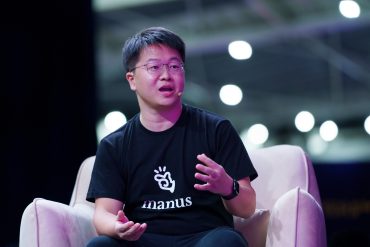
By early 2026, Chinese regulators had initiated a multi-agency review of the transaction, examining whether the prior relocation of Manus’s intellectual property, personnel and operations had complied with rules governing technology exports and outbound investment. By March, officials at the National Development and Reform Commission had summoned co-founders Xiao Hong and chief scientist Ji Yichao to Beijing. Following those meetings, both executives were instructed to remain available domestically while the review continued, a measure characterised as regulatory guidance rather than a formal travel restriction, though its practical effect required no elaboration.
The intervention was not framed as a conventional attempt to reverse a completed transaction. The deal’s Singapore-entity structure and the already-progressed integration of Manus personnel into Meta’s local office made clean unwinding legally complex. Instead, Beijing’s actions were calibrated to signal something broader: that the architecture of the Manus deal, and the wider model it represented, had attracted state-level attention, and that the response would not be confined to this single case.
The Loophole That Closed
The NDRC’s subsequent guidance made the scope of that response explicit. Prominent Chinese AI firms including Moonshot AI and StepFun were instructed to reject U.S.-origin capital in future funding rounds without prior regulatory approval. The common thread was Beijing’s view of what has become known informally as “Singapore washing”: the practice of relocating headquarters, talent and intellectual property to more permissive jurisdictions as a precondition for access to Western capital or acquisition by Western buyers. The model had grown attractive precisely because it appeared to thread a needle, preserving the global mobility of Chinese engineering talent while satisfying Western acquirers’ preference for non-Chinese corporate structures.
For a period, it worked. Manus itself was proof of concept, having navigated from Chinese origins to a Singapore entity to a $2 billion U.S. acquisition with apparent smoothness. The NDRC’s response confirms that Beijing recognised the pattern and moved to close it. No such restructuring will now proceed without explicit state-level visibility and, implicitly, approval. The sovereign risk premium on Chinese-origin AI assets has been repriced, and not marginally. Venture investors who underwrote the China-plus model face a structural recalibration; founders who once treated offshore incorporation as a reliable exit mechanism must now weigh a materially different set of personal and operational risks.
What Meta’s Exposure Reveals
Meta’s public posture throughout has been measured. Spokespeople confirmed the transaction complied with applicable law and expressed confidence in an appropriate resolution, a response that reflects an accurate reading of the deal’s proportionality. At roughly $2 billion, Manus represents a modest line item against a market capitalisation above $1 trillion and an annual capital expenditure programme running well into the tens of billions. The company’s broader AI architecture, anchored by its open-source Llama model family and a rapidly expanding agentic layer across its consumer ecosystem, is not contingent on any single acquisition.
Yet the episode does illuminate something meaningful about the limits of Meta’s sourcing strategy. What Manus offered was not merely technology but a proven operational stack generating real revenue, a combination that remains rare in a sector still dominated by research-stage products. That profile is now considerably harder to source from Chinese-adjacent talent pools without accepting a meaningful increase in regulatory friction, timeline uncertainty and personal risk to the founders involved. Western acquirers will need to factor those variables into origination and due diligence, or shift their sourcing to allied ecosystems where the sovereign-risk overlay is absent or manageable.
The Architecture of Fragmentation
The deeper significance of the Manus affair lies in what it confirms about the structural direction of global AI development. China has been assembling a layered architecture of technological control for some years, encompassing semiconductor export restrictions, data-security legislation and foreign investment screening. The Manus episode extends that architecture into new territory by applying it explicitly to human capital. Founders, engineers and scientists with Chinese professional or personal networks are now, in a meaningful sense, sovereign assets, individuals whose mobility and exit options are subject to state interests in a way that was less formalised, if not entirely absent, even twelve months ago.
That shift has consequences well beyond deal valuations. It accelerates the bifurcation of global AI development into distinct national ecosystems: Chinese laboratories advancing frontier capabilities under domestic capital and regulatory guardrails; Western platforms building or sourcing increasingly within allied talent pools. The framing of AI as a matter of national technological self-reliance, long articulated by Beijing, is becoming self-fulfilling as its institutional apparatus matures and its enforcement perimeter expands. For policymakers in Washington and Brussels, the episode is a reminder that technological sovereignty is not a uniquely Chinese preoccupation. For investors and executives, it is an instruction to price geopolitical risk with a rigour that earlier deal cycles rarely demanded.
A Cautionary Landmark
The Meta-Manus transaction may yet reach a quiet accommodation. Completed corporate transfers are rarely reversed cleanly, and regulators on both sides retain incentives to avoid a protracted standoff that would serve neither party’s broader interests. Whatever the eventual resolution, however, the episode has already accomplished what Beijing intended: it has functioned simultaneously as a signal, a precedent and a structural deterrent, one that will shape the behaviour of founders, investors and acquirers long after the specific review concludes.
The Manus affair did not end the era of cross-border AI ambition with a ban or a veto. It ended it with a summons, a quiet instruction not to leave, and the realisation that in the contest for technological primacy, a founder’s passport can be a policy instrument. That is a harder kind of friction to price, and a harder kind of world to navigate, than the one the industry assumed it was operating in.