- Autonomous Vehicles
- Robotaxi
- Venture Capital
Waymo Secures $16 Billion to Dominate Autonomous Driving
9 minute read
Alphabet’s self-driving unit achieves $126 billion valuation as competition intensifies from Tesla and Chinese rivals in high-stakes race to reshape urban mobility.
Key Takeaways
- The company’s $16 billion round, largest in autonomous vehicle history, nearly triples its valuation from $45 billion in October 2024, enabling fleet growth to 3,500 vehicles by year-end.
- With 400,000 weekly paid rides across ten U.S. cities and international launches in Tokyo and London, Waymo demonstrates autonomous mobility’s transition from experimental technology to revenue-generating infrastructure.
- Nearly 100 million driverless miles show injury-causing crashes reduced tenfold versus human drivers, establishing performance benchmarks that rivals must match to gain regulatory approval and consumer trust.
Capital and Conviction
The autonomous vehicle industry crossed a threshold on February 2, 2026, when Waymo announced a $16 billion financing that pushes its valuation to $126 billion. The scale alone commands attention: no autonomous driving company has raised remotely comparable sums in a single transaction. But the composition of the investor syndicate reveals deeper currents. Alphabet contributed roughly $13 billion, maintaining majority ownership while inviting validation from Dragoneer Investment Group, DST Global, and Sequoia Capital. These firms specialize in late-stage growth companies where operational metrics matter more than narrative, suggesting that Waymo has graduated from research project to infrastructure asset.
The round’s architecture reflects deliberate design. By blending internal capital with external heavyweights including Andreessen Horowitz, Silver Lake, Fidelity, and sovereign fund Temasek, Alphabet mitigates dilution concerns while securing global strategic partners. GV’s participation marks unusual internal alignment, connecting venture instincts with corporate resources. This structure signals confidence not merely in autonomous technology’s promise but in Waymo’s specific execution, a distinction investors have struggled to make as competitors stumble.
From Pilots to Operations
Waymo’s commercial trajectory justifies the confidence. The company now operates in ten American cities, having added Miami, Dallas, Houston, San Antonio, and Orlando to existing deployments in Phoenix, San Francisco, Los Angeles, Austin, and Atlanta. This expansion follows methodical validation: Phoenix launched in 2020, San Francisco opened commercially in 2023, and each subsequent market has benefited from refined operational protocols. The result is 400,000 weekly paid rides, with projections to reach one million by year-end. At over $350 million in annual recurring revenue reported for 2025, Waymo has achieved scale that transforms unit economics.
The service evolution parallels geographic growth. November 2025 brought freeway-capable rides across three major markets, eliminating range constraints that limited earlier versions to surface streets. Airport integrations at San Francisco International, San Jose Mineta, and Miami International address high-value travel corridors where reliability and comfort command premium pricing. Partnerships extend reach: DoorDash handles autonomous deliveries in Phoenix, while Uber integrations serve secondary markets. These arrangements convert Waymo from standalone operator to embedded logistics layer.
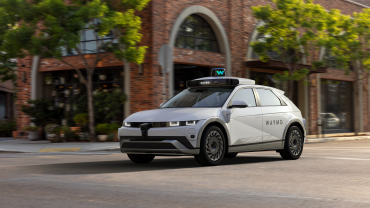
Product development accelerates the operational push. The Ojai vehicle, unveiled in January 2026 through collaboration with Chinese automaker Zeekr, represents purpose-built design rather than retrofitted sedans. Lacking steering wheels or pedals, it optimizes interior space for passengers while incorporating automated cleaning between rides. This vertical integration contrasts with competitors who rely on modified consumer vehicles, offering operational efficiency that compounds at scale.
The Safety Imperative
Underlying commercial expansion sits the foundational metric: safety. Waymo has logged nearly 100 million driverless miles, generating data that shows injury-causing crashes reduced tenfold compared to human driving benchmarks. This statistical advantage matters profoundly. Regulatory frameworks globally treat autonomous systems with caution born from high-profile incidents at competitors. Cruise’s 2023 operational pause following a pedestrian accident demonstrated how single failures can halt deployment. Waymo’s data depth provides regulatory cushion and consumer confidence that rivals must replicate to compete.
The distinction between Level 4 autonomy, which Waymo pursues, and hybrid approaches shapes industry dynamics. Level 4 systems operate fully autonomously within defined geographic areas, eliminating safety drivers entirely. This demands extensive mapping, redundant sensors, and validated decision algorithms, but delivers experiences that match the autonomous promise. Tesla’s approach, relying on camera-based systems with human supervision, targets broader applicability at lower infrastructure cost. The strategic divergence creates parallel competitions: Waymo for controlled urban deployment, Tesla for eventual ubiquity. Current evidence favors Waymo’s methodology for near-term commercialization.
Competitive Pressures
The $16 billion arrives as competition intensifies. Tesla continues developing its robotaxi platform, with Elon Musk targeting unsupervised full self-driving capabilities that could disrupt if realized. Amazon’s Zoox operates in limited markets with custom vehicles, while Chinese players like Baidu expand domestically with government support. Each competitor brings distinct advantages: Tesla’s manufacturing scale and brand, Zoox’s vertical integration under Amazon’s logistics umbrella, Baidu’s access to China’s massive urban markets.
Waymo’s response centers on execution speed. Planned expansions into Detroit, Las Vegas, Nashville, and Washington, D.C., aim for nationwide coverage by mid-2026. International launches in Tokyo and London test regulatory adaptability while establishing beachheads in developed markets with mature transportation infrastructure. The London deployment, targeted for fourth quarter 2026, represents the first commercial overseas operation, requiring navigation of right-hand traffic patterns and distinctly different urban layouts from American cities.
Market reception validates the strategy. Alphabet’s stock rose following the announcement, with analysts upgrading valuations based on Waymo’s trajectory. The reaction suggests investors increasingly view autonomous vehicles as value creators within Alphabet’s portfolio rather than speculative cost centers. Projections that Waymo could capture 10 percent of U.S. rideshare markets by 2030 imply substantial revenue streams that justify current investments.
Execution Ahead
The path forward demands sustained operational excellence. Fleet expansion from 2,000 vehicles to over 3,500 by year-end requires manufacturing partnerships, maintenance infrastructure, and training systems that scale efficiently. Research investments must advance perception algorithms and prediction models that handle edge cases, from construction zones to emergency vehicle interactions. Each new market introduces unique challenges: weather conditions in Detroit, tourism patterns in Las Vegas, federal government security in Washington.
International operations compound complexity. Japanese and British regulatory frameworks differ materially from American approaches, requiring local partnerships and extended validation periods. Cultural attitudes toward autonomous technology vary, potentially affecting adoption rates independent of technical performance. Success in these markets would establish templates for European and Asian expansion, multiplying addressable opportunities.
The broader implications extend beyond corporate results. Annual U.S. road fatalities exceed 42,000, many attributable to human error. Autonomous systems validated at scale could materially reduce this toll while reclaiming urban space currently devoted to parking. These societal benefits justify regulatory support but demand sustained safety performance. Any significant failure would invite backlash that could slow industry progress.
Waymo’s $16 billion moment represents inflection rather than culmination. The capital enables aggressive expansion, but outcomes depend on flawless execution across operations, technology, and regulatory engagement. For investors and policymakers alike, this milestone marks autonomous mobility’s transition from possibility to probability, backed by data, capital, and institutional conviction.