
Ahead of Consensus.
Intelligence across tech and capital markets, for investors, policymakers, and business leaders.
9 minute read
Numbers alone rarely tell a company’s story, but Volkswagen’s second quarter comes close. Operating profit fell 9.5 percent to €3.469 billion, below the roughly €4.3 billion analysts had expected, and the margin slipped to 4.2 percent from 4.7 percent a year earlier. Earnings after tax dropped by a third, to €1.538 billion. None of this arrived as a shock. The first quarter had already put the group’s margin near 3 percent, well under its own long-term ambition, and Friday’s release read less like a surprise than a confirmation of arithmetic that had been visible on the horizon for months.
What deserves closer attention is the shape beneath the headline. Revenue actually rose 2 percent, to €82.4 billion, even as the volume underneath it fell hard: deliveries down 8.6 percent, wholesale sales down nearly 10 percent, production down more than 13 percent. A company selling fewer cars while collecting more money is not evidence of strength. It is evidence of a business defending price and mix while its factories run at a slower pace, a strategy that buys time rather than momentum, and one that cannot be sustained indefinitely without volume eventually following revenue back upward.
Trace the six-month numbers and the picture sharpens considerably. Group operating profit for the first half fell to €5.9 billion from €6.7 billion, with gross margin down to 15.3 percent from 16.7 percent. About €0.5 billion of that decline has a single, identifiable source: the decision to stop building the ID.4 in Chattanooga in mid-April, part of a broader retreat from products that no longer fit American demand. Add tariffs, which cost the automotive business €1.3 billion in the first half, almost exactly matching last year’s toll, and the shortfall becomes less a mystery than a ledger of specific, named decisions rather than a diffuse loss of competitiveness.
Not every part of the business absorbed the pain equally. Passenger cars and light commercial vehicles held a 4.1 percent margin. Commercial vehicles slipped to 4.5 percent, weighed by litigation costs and the sale of a plant in the United States. Financial services, the one division still growing on volume as much as price, saw revenue climb nearly 8 percent, though even there rising risk costs pulled the margin down to 5.5 percent from 6.1 percent. Growth financed by lending is a different kind of growth than growth financed by demand, and the distinction matters more with each passing quarter, since one is a cushion and the other a warning.
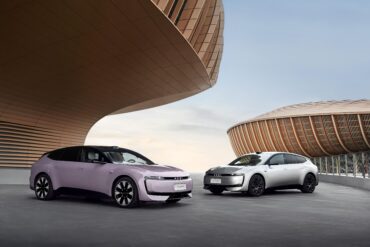
If Volkswagen’s income statement tells a story of restraint, its delivery data tells one of geography. Asia-Pacific deliveries fell 24 percent in the first half, with China alone down 26 percent to 971,150 vehicles and the second quarter down by more than a third. Because Volkswagen’s Chinese operations run through joint ventures accounted for on an equity basis, the damage rarely shows up directly in the top line. It shows up instead in market share, where the erosion is unambiguous: the company’s share of the Asia-Pacific passenger car market fell to 6.7 percent from 8.0 percent, a decline that speaks less to a single quarter than to a multi-year contest with domestic manufacturers that Volkswagen has not yet won, and may not win on its current timeline.
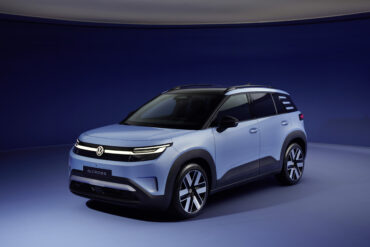
Europe, by contrast, offered something closer to reassurance. Deliveries rose nearly 3 percent, and electric vehicle sales in Western Europe climbed more than 8 percent, now accounting for roughly a fifth of the region’s deliveries. The new Electric Urban Car Family, a set of entry-level electric models built jointly across Volkswagen, Skoda, and CUPRA, drew more than 54,000 orders within weeks of launch, with only three of its four planned models even on sale, while the region’s electric order book grew more than 50 percent larger than it stood at the start of the year. It is tempting to read this as evidence that Volkswagen has found its footing in electrification. A more careful reading suggests only that it has found its footing in Europe, which is a narrower and considerably less comfortable claim.
For all the pressure on earnings, Volkswagen’s cash position tells a more encouraging story, and one worth taking seriously rather than treating as a footnote. Net cash flow in the automotive business turned positive, to €3.2 billion, from negative €1.4 billion a year earlier, helped by a lower investment ratio and tighter capital spending. Net liquidity stood at €32.7 billion, comfortably within the company’s own targets, even after €2.7 billion in dividends and the redemption of a €1.7 billion hybrid note.
The company also moved to sharpen its portfolio. An agreement to sell a majority stake in Everllence, its large engine and turbomachinery business, to Bain Capital should bring in roughly €7.4 billion by year’s end. A further billion-dollar investment in Rivian, lifting Volkswagen’s stake to nearly 16 percent, suggests a continued bet that the American start-up’s software architecture still carries value worth paying for. None of this changes the harder conversation underway inside the company. Reports since June point to as many as 100,000 job cuts and renewed uncertainty over four German plants. Total headcount has already fallen to just over 652,000, a modest first step relative to what has been discussed internally, and a reminder that the most difficult decisions still lie ahead rather than behind.
Markets had already priced in much of this. Volkswagen’s shares fell more than 30 percent in the first half of the year, far worse than the broader German market and worse even than the struggling European auto sector as a whole. The reaction to Friday’s results was comparatively muted, a decline of little more than a percentage point, which is itself a kind of verdict: investors had stopped expecting good news some time ago and were, in effect, grading on a curve.
The detail that should occupy analysts in the months ahead is not the miss itself but a quiet asymmetry buried in the guidance. Volkswagen cut its revenue forecast for the year, now expecting a decline of as much as 3 percent rather than the growth once projected. Yet it left its margin target untouched, still aiming for a return on sales between 4 and 5.5 percent. Holding a profitability goal while lowering a revenue goal reads either as confidence that cost discipline will arrive on schedule, or as an admission of how little room for error now remains. Volkswagen has effectively given itself six months to settle the question. What the company does with that time, more than anything in Friday’s release, will determine which version of the story investors are eventually asked to believe.