- AI
- AI Investment
- Big Tech
- UK–US Relations
Royals and Trump Court Tech Titans as UK Secures AI Investment
10 minute read
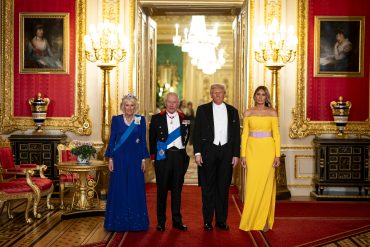
The pageantry in St George’s Hall was unmistakable, but the message was clearer: a state banquet positioning transatlantic tech and capital at the centre of UK–US relations
President Donald Trump’s second UK state visit marked a pivot from ceremony to commerce, with King Charles III hosting a Windsor Castle banquet as Downing Street unveiled record inward-investment commitments exceeding $200 billion and launched the UK–US “Tech Prosperity Deal.” The gathering featured the world’s most influential technology and finance leaders, signaling a boardroom-level commitment to positioning Britain as Europe’s primary destination for AI infrastructure and advanced computing.
Key Investment Commitments:
- Microsoft: $30 billion UK AI infrastructure programme through 2028
- Google: £5 billion over two years for data-centre capacity and cloud services
- Total package: Over $200 billion in US technology investments tied to the visit
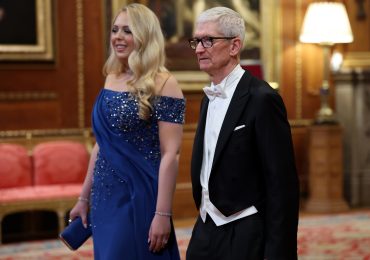
Strategic Attendees: Apple’s Tim Cook, Nvidia’s Jensen Huang, OpenAI’s Sam Altman, Google DeepMind’s Demis Hassabis, BlackRock’s Larry Fink, Bank of America’s Brian Moynihan, Blackstone’s Stephen Schwarzman, and Arm’s Rene Haas—underscoring a comprehensive approach to AI capacity, semiconductors, and capital deployment.

The Windsor Proposition
Windsor Castle’s St George’s Hall delivered the ceremonial gravitas; the investment figures delivered the market signal. As trumpets and toasts framed the state banquet, the UK positioned itself as Europe’s premier venue for AI and advanced computing, anchoring the broader investment package within a UK–US technology compact designed to integrate AI, quantum computing, semiconductors, and civil nuclear power into a single, durable bilateral framework.
For a government seeking to translate sentiment into supply-side reality, the choreography was deliberate: royal pageantry to open doors, capital expenditure to move markets.
The Power Table
This gathering transcended traditional diplomatic entertainment—it constituted a working assembly of the global technology ecosystem’s key decision-makers. The confirmed attendee roster mapped directly to the realities of the AI value chain: compute vendors and model platforms, capital allocators capable of financing hyperscale deployments, and infrastructure operators responsible for maintaining grid stability as GPU clusters scale exponentially.
The venue selection was equally strategic. St George’s Hall accommodates extended-table diplomacy through its 50-metre configuration, seating approximately 160 guests in a layout that prioritises proximity over podiums—an arrangement optimised for cross-table deal-making rather than formal presentations.

Capital, Capacity, and Transatlantic Coordination
The headline deliverable, the Tech Prosperity Deal, establishes a UK–US framework for coordination across artificial intelligence, quantum computing, semiconductors, telecommunications, and civil nuclear power, underpinned by over $40 billion in immediate AI-adjacent investment led by American firms. The agreement functions less as a singular treaty than as a structured corridor for fast-track projects, regulatory harmonisation, and export-control alignment throughout the compute supply chain.
The technology giant announced a $30 billion UK programme extending through 2028 to expand AI data-centre capacity and advanced computing infrastructure. This initiative aligns with Microsoft’s global strategy to position compute resources proximate to demand centres while anchoring sovereign AI initiatives. The investment includes plans for what the company describes as the UK’s “largest supercomputer,” featuring over 23,000 advanced graphics processing units.
Google confirmed a £5 billion investment over two years, highlighted by the opening of its Waltham Cross data centre in Hertfordshire, designed to serve AI-intensive workloads across Cloud and consumer services platforms.
A complementary pillar addresses energy requirements for compute-intensive operations. UK–US agreements encompassing civil nuclear power, including small modular reactors (SMRs), are designed to de-risk the power requirements for AI data centres—critical infrastructure if Britain intends to host decarbonised, continuous compute operations at scale without destabilising the national grid.

Strategic Implications for UK Technology
The principle underlying this initiative is straightforward: capacity generates ecosystems. Should the announced capital expenditure materialise on schedule and with adequate grid security, Britain can consolidate an industrial strategy that treats compute power, capital deployment, and clean energy as integrated policy objectives. Microsoft’s and Google’s infrastructure commitments provide tangible assets supporting this thesis, while the transatlantic framework grants UK policymakers enhanced leverage with both technology vendors and international regulators.
Immediate practical effects include reduced latency for UK enterprise AI workloads, enhanced competitive positioning in cloud price–performance metrics, and catalyst effects for UK semiconductor design capabilities, data-centre supply chains, and industrial power projects.
The strategic upside extends beyond technical capabilities. The placement of premier computing infrastructure has evolved into a foreign direct investment competition among nations; countries securing such resources subsequently attract model laboratories, enterprise pilot programmes, and high-wage employment clusters centered on integration, safety protocols, and machine learning operations.
The primary challenge lies in implementation—securing planning consents, constructing transmission infrastructure, developing skills pipelines, and managing power costs. The nuclear energy component and private capital within the broader investment package are intended to mitigate these risks by pairing long-duration power generation with sustained computational workloads.
Policy and Geopolitical Context
The visit’s second phase transitions to Chequers, where the Prime Minister hosts the President for negotiations addressing trade, tariffs, and security cooperation. For technology stakeholders, industry representatives anticipate opportunities to reform or eliminate the UK Digital Services Tax and align enforcement approaches for content and safety regulations affecting platform economics—agenda items explicitly connected by some industry participants to this week’s investment announcements.
Westminster’s calculation suggests that deepening the transatlantic digital corridor can offset strategic dependencies in semiconductors, rare earth elements, and cloud infrastructure while preserving regulatory autonomy. For Washington, the objective involves consolidating the Anglosphere’s leadership in AI and advanced computing during a period of global competition over graphics processing units, power infrastructure, and export controls. The civil nuclear component addresses resilience considerations: computing infrastructure lacking energy security cannot achieve true sovereignty.
Market and Industry Analysis
Accelerated procurement of GPUs and networking equipment is anticipated, with UK-based clusters becoming particularly attractive for regulated sectors including healthcare and financial services seeking data residency and low-latency solutions. Grid constraints and power purchase strategies will likely determine implementation timelines.
With Arm Holdings participating and given UK research capabilities in chip architecture, government policy makers have opportunities to link intellectual property frameworks and talent visa programmes to domestic design-to-prototype pipelines, even as fabrication capacity remains predominantly offshore.
The broader investment framework is significant for institutional investors. Sovereign funds, infrastructure investors, and private equity firms now possess policy support for deployment into data centres, grid improvements, and industrial facilities adjacent to cloud infrastructure. The participation of BlackRock and Blackstone signals institutional readiness to finance the energy–compute infrastructure nexus.
Enterprise Adoption: With Google and Microsoft expanding local capacity, UK corporations gain enhanced access to generative AI pilot programmes and production deployments, particularly in applications where latency, security considerations, and computing costs significantly impact margins.
Ceremonial Symbolism and Diplomatic Craft
State banquets function as diplomatic instruments. The formal speeches appropriately honoured the “special relationship,” with President Trump describing it as “priceless and eternal,” while King Charles positioned trade and shared values at the centre of a renewed bilateral phase. The ceremonial elements—royal procession, military pageantry, and the extended table configuration in St George’s Hall—were strategically paired with a guest list comprising operational executives and capital allocators rather than entertainment figures.
Even the menu selection—Hampshire watercress panna cotta, Norfolk chicken ballotine, and dessert bombe featuring Kentish raspberries—emphasised local supply chain symbolism, reinforcing themes of domestic capability and regional economic integration.

Key Monitoring Indicators
Immediate Policy Developments:
- Chequers Outcomes: Announcements regarding digital trade provisions, Digital Services Tax modifications, online safety implementation frameworks, or tariff adjustments will directly influence technology sector cost structures and expansion strategies.
- Infrastructure Implementation: Concrete location announcements and construction timelines for hyperscale facilities; clarification of SMR pilot projects linked to data-centre power requirements.
- Procurement Execution: Signals from Microsoft and Google regarding GPU deployment schedules and interconnect infrastructure development—primary determinants of effective computational capacity.
- Capital Mobilisation: Assessment of whether the investment framework catalyses additional private sector commitments to AI-adjacent infrastructure and UK industrial development corridors.
Conclusion
The Windsor gathering transcended ceremonial obligations to constitute a defining moment for industrial policy—the UK leveraging its institutional advantages including rule of law, research capabilities, and diplomatic soft power to accelerate the next phase of AI investment while positioning key decision-makers for coordinated action.
Should the Tech Prosperity Deal evolve from announcement to implemented infrastructure—and should energy policy maintain adequate pace—Britain can establish itself as central to the AI economy’s physical foundation while strengthening the most consequential bilateral relationship in contemporary technology policy.
The ceremonial proceedings concluded in St George’s Hall; the substantive execution now begins at electrical substations, planning offices, and data centre construction sites across the United Kingdom.
This analysis reflects publicly available information as of September 18, 2025. Investment commitments and policy frameworks remain subject to implementation timelines and regulatory approvals.