- Biotech
- Market Outlook
- Pharmaceuticals
Novo Nordisk Meets a Patent Cliff as GLP-1 Dominance Weakens
9 minute read
Novo Nordisk faces weakening GLP-1 momentum as semaglutide patents near expiry, competitive pressure intensifies, and valuation risks rise amid slowing growth.
Key Takeaways
- Jefferies slashes Novo Nordisk price target by 7% to DKK270 from DKK290, maintaining an “underperform” rating and implying 15% downside from current levels as competitive pressures mount in the GLP-1 market.
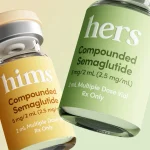
- Semaglutide patent expiration looms in 2031/2032, exposing Novo Nordisk to generic and compounded competition while analysts predict 8% revenue decline and 14% earnings drop by 2026.
- U.S. obesity prescription volumes remain flat despite price reductions from White House pricing agreement and Inflation Reduction Act negotiations, with Eli Lilly capturing market share across multiple channels.
Introduction
Jefferies has delivered its second downgrade of Novo Nordisk in as many months, cutting the price target for the Danish pharmaceutical giant by 7% to DKK270 per share while maintaining an underperform rating. The revision, which implies a 14.2% decline from the December 1 close of DKK315.20, reflects mounting concerns over the company’s ability to sustain its premium valuation as its semaglutide franchise approaches a critical patent expiration window.
The timing is particularly significant. Despite third-quarter 2025 sales of $11.87 billion that surpassed analyst expectations, Novo has revised its full-year growth outlook downward to 8-11%. This recalibration signals a deceleration in the GLP-1 receptor agonist market that has driven the company’s extraordinary expansion over the past three years. For a firm whose obesity and diabetes revenues have become almost synonymous with Ozempic and Wegovy, the convergence of patent vulnerability and competitive pressure represents a structural challenge rather than a cyclical headwind.
The Patent Expiration Timeline
The mathematics of Novo’s situation are stark. Semaglutide patents begin expiring in 2026 in Canada, with US and European protections lasting until 2031-2032. While this might suggest a comfortable runway, Jefferies projects an 8% revenue contraction and 14% earnings decline by 2026, driven by early generic competition and compounded alternatives that erode pricing discipline even before formal patent lapses.
Historical precedent offers little comfort. The pharmaceutical industry’s experience during the 2010s patent cliff, when blockbusters including Lipitor and Plavix faced generic incursions, resulted in affected companies trading at 7-8 times forward earnings. These valuations represented steep discounts to sector norms and persisted for years as firms struggled to replace lost revenues. Novo currently trades at elevated multiples that assume sustained growth, creating substantial downside risk if diversification efforts fail to materialize at scale.
Eli Lilly’s Market Capture
The competitive landscape has shifted dramatically. Eli Lilly now commands 58% of the US GLP-1 market as of September 2025, up from rough parity earlier in the year. This gain reflects Zepbound’s dominance in new prescriptions, where it captures 71% of initiations. The reversal is comprehensive, affecting both retail and institutional channels, and suggests that patient and physician preferences have tilted decisively toward tirzepatide formulations.
The divergence in corporate trajectories has become unmistakable. Eli Lilly raised its full-year revenue guidance to $63 to $63.5 billion in its third-quarter results, underscoring momentum that stands in sharp contrast to Novo’s tempered outlook. While Novo grapples with market share erosion and margin compression, Lilly has demonstrated the operational capacity to scale production and capture demand, translating therapeutic advantages into durable financial outperformance.
Novo’s response to this erosion has been constrained by supply bottlenecks and pricing pressures. Weekly US prescriptions for Ozempic have stabilized below prior peaks, even as overall market growth continues. New therapy initiations for Novo’s offerings have plateaued, indicating that expanded access through price reductions has not translated into proportional volume gains. The White House’s Inflation Reduction Act agreements, which mandated lower prices for Ozempic and Rybelsus, have achieved policy objectives of broader affordability but at the expense of margin compression that Novo has struggled to offset through volume increases.

Pipeline Setbacks Compound Pressure
Recent clinical developments have intensified concerns about Novo’s diversification capacity. In late November, the company disclosed that semaglutide failed to meet primary endpoints in an Alzheimer’s disease trial, triggering an immediate share price decline. While the trial represented an exploratory extension of the compound’s therapeutic applications, the failure underscores a broader vulnerability: Novo’s pipeline beyond GLP-1s remains unproven, and setbacks in adjacent indications eliminate potential hedges against core franchise erosion.
This disappointment arrives at a particularly inopportune moment. As semaglutide approaches patent expiration and faces intensifying competition in its primary markets, Novo requires successful diversification not as a growth opportunity but as a defensive necessity. The Alzheimer’s trial failure suggests that expanding semaglutide’s addressable market may prove more difficult than anticipated, narrowing the pathways available for sustained revenue growth beyond metabolic disorders.
Strategic Countermeasures
Novo’s recent actions reveal both ambition and defensive necessity. The November 2025 FDA filing for a higher 7.2 mg dose of Wegovy, utilizing a priority review voucher to accelerate approval, aims to provide a near-term competitive boost. The company has also slashed Wegovy’s US list price to $349 monthly beginning in 2026, matching Eli Lilly’s concessions and attempting to reclaim market share through affordability.
Pipeline developments offer more substantial promise. Mid-stage data for amycretin, a dual GLP-1/amylin agonist, demonstrated 14.5% weight loss, while Phase 3 results for CagriSema showed 22.7% mean weight reduction. These next-generation candidates could theoretically extend Novo’s technological lead, but their commercial impact depends on execution variables that remain uncertain.
The fundamental challenge lies in timing and scale. Semaglutide’s maturation is accelerating faster than new products can compensate. Even successful clinical programs require years to build manufacturing capacity and market penetration comparable to existing franchises. Previous supply constraints that limited Novo’s ability to meet demand for current products raise questions about the company’s operational readiness to launch multiple major therapies simultaneously while defending existing positions.
Valuation Compression Risk
Jefferies suggests that true intrinsic value may approach DKK200 per share absent significant positive catalysts. This assessment reflects not only patent cliff mechanics but also the reality that Novo’s concentration in GLP-1s has become a liability rather than a strength. Where diversification once seemed like a strategic choice, it has become an existential requirement.
The broader pharmaceutical sector has responded to similar pressures by accelerating investments in artificial intelligence-driven drug discovery and novel therapeutic modalities. Eli Lilly, now valued at $1 trillion, has leveraged these capabilities to entrench advantages across multiple high-margin therapeutic areas. Novo’s relative concentration leaves it vulnerable to any misstep in its pipeline execution, as there are fewer alternatives to absorb shortfalls. The Alzheimer’s trial failure provides precisely the kind of evidence that justifies heightened skepticism about the company’s ability to offset metabolic franchise declines through therapeutic expansion.
Implications for Institutional Investors
The investment thesis for Novo Nordisk has fundamentally changed. What was recently a growth story predicated on GLP-1 market expansion has become a restructuring narrative centered on portfolio transformation under time pressure. The company’s ability to navigate this transition will determine whether it maintains its position among pharmaceutical leaders or joins the ranks of former dominators diminished by patent expirations.
Current valuations appear to assume successful execution of an exceptionally difficult strategy: defending existing franchises against aggressive competition while simultaneously scaling multiple new products before patent protections expire. The probability of this outcome has declined as competitive dynamics have worsened, regulatory pressures have intensified, and pipeline setbacks have accumulated.
For policymakers and industry observers, Novo’s situation illustrates how quickly market leadership can erode when structural advantages expire. The company’s decline from an unassailable position to one requiring defensive price cuts within two years demonstrates the velocity of competitive shifts in high-value therapeutic categories. As generic entry approaches and Eli Lilly consolidates gains, the question is no longer whether Novo will face pressure, but whether its response will prove sufficient to prevent substantial and lasting market share erosion.