
Ahead of Consensus.
Intelligence across tech and capital markets, for investors, policymakers, and business leaders.
12 minute read
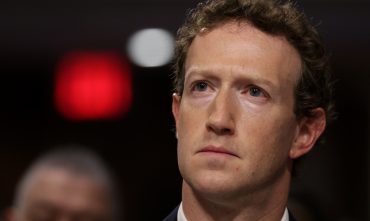
On March 25, a Los Angeles jury delivered something the technology industry had long assumed was structurally impossible: a finding of liability against Meta and Alphabet’s Google rooted not in what users posted on their platforms, but in how those platforms were built to hold attention. The jury awarded Kaley, a 20-year-old plaintiff identified in court filings as K.G.M., $3 million in compensatory damages, apportioned roughly 70 percent to Meta and 30 percent to YouTube. After years of near-total immunity behind Section 230 of the Communications Decency Act, the machinery of product liability has found a foothold in Silicon Valley.
The verdict, the lead bellwether in Judicial Council Coordination Proceeding No. 5255, is not primarily a financial event. Three million dollars registers as a rounding error for companies whose combined market capitalization exceeds $2.5 trillion. Shares of Meta (NASDAQ: META) rose modestly and Alphabet (NASDAQ: GOOGL) edged higher on the day, the market’s quiet acknowledgment that a single award resolves nothing. What the verdict does accomplish is more durable: it confirms, through the considered judgment of twelve jurors after seven weeks of testimony and nine days of deliberation, that the deliberate architecture of social media platforms, infinite scrolls, push notifications, algorithmic recommendation engines optimized for time-on-platform, can constitute a defective product when its harms are foreseeable and its designers knew.
Kaley began using YouTube at age six and Instagram at nine. By adolescence, she was experiencing anxiety, depression, body dysmorphia, and suicidal ideation. Her legal team did not argue that the platforms hosted harmful third-party content, the territory where Section 230 has historically provided reliable cover. Instead, they argued that the companies had engineered dependency through product choices that prioritized engagement metrics over user welfare, and had failed to warn of the risks they privately understood.
Internal documents introduced at trial made that private understanding difficult to contest. Meta’s own researchers had documented elevated rates of body-image distress and suicidal ideation among teenage girls exposed to Instagram’s curated feed environments. Similar research had circulated within Google. Mark Zuckerberg, who testified in February, argued that correlation is not causation and that pandemic isolation, family circumstances, and pre-existing vulnerabilities were the more proximate causes. The jury found otherwise.
The significance of that finding lies in its conceptual architecture. Courts have long struggled to apply traditional product-liability doctrine to software and platforms, which do not corrode, crack, or malfunction in the mechanical sense. What the Los Angeles proceeding established, at least at the trial court level, is that behavioral engineering is product design, and that when a product is designed with awareness of its potential to harm a vulnerable population, liability can follow on conventional negligence principles. The platform’s choices about how content is surfaced, sequenced, and amplified are not neutral technical decisions. They are, the jury concluded, choices for which accountability is appropriate.

The Los Angeles verdict did not arrive in isolation. The day before, a New Mexico jury returned a $375 million verdict against Meta in a separate consumer-protection case alleging the company had failed to curb sexual exploitation and other harms on its platforms. Two substantial verdicts on consecutive days, in different jurisdictions, testing different legal theories, against the same defendant, constitute a pattern that courts, legislators, and insurers will notice.
TikTok and Snap settled with Kaley before trial on undisclosed terms, leaving Meta and Google to bear the reputational and legal weight of the bellwether outcome. Meta’s lead counsel indicated the company was “evaluating legal options,” the standard prelude to post-trial motions and appeal. Appeals may well succeed in narrowing the verdict, reducing the award, or introducing doctrinal qualifications that limit its reach. The legal process at this level typically spans years. But the theory of liability has now survived a full trial, and that survival changes the risk environment regardless of what appellate courts ultimately decide.
The broader litigation landscape compounds the pressure. The coordinated proceeding in California encompasses more than 1,600 individual claims. State attorneys general are pursuing parallel actions under consumer-protection statutes. The European Union’s Digital Services Act already imposes obligations around algorithmic transparency that anticipate the kinds of harms at issue in Los Angeles. In Washington, legislators have introduced bills that would carve out exceptions to Section 230 specifically for minors’ mental health. A string of bellwether victories, even partial ones, could accelerate that legislative momentum in ways that dwarf any individual damages award.
Both companies have made substantive investments in safety. Meta has deployed Teen Accounts with default privacy protections, time-limit prompts, and family supervision tools, and has directed billions toward moderation and harm-detection systems. Google has introduced supervised account structures, parental dashboards, and age-appropriate content filters on YouTube. These efforts are real, and they are not trivial. Dismissing them entirely would misread the record.
What the verdict makes difficult to sustain, however, is the argument that safety investment is structurally compatible with a business model that rewards engagement above all other variables. An advertising engine that generates revenue in proportion to time spent on platform creates an inherent tension with any intervention designed to reduce that time. Plaintiffs argued, and the jury accepted, that this tension was resolved consistently in favor of engagement, and that the safety measures, however genuine in intent, were insufficient to address risks the companies had identified internally and chosen not to foreground in their product design.
For the industry’s senior leadership, the verdict reframes a question that has often been treated as philosophical. The question is no longer whether platforms bear some moral responsibility for the wellbeing of adolescent users. It is whether they bear legal responsibility, under what circumstances, and at what scale of damages. The answer, at least in one California courtroom, is yes. Future product decisions, from the cadence of notifications to the logic of recommendation algorithms, will now be developed with that answer in the room.
None of this resolves easily. Social media platforms have delivered genuine and documented benefits: community for geographically or socially isolated adolescents, educational content at scale, civic participation and economic opportunity. A legal and regulatory environment that treats every design decision as presumptively harmful would impose costs that fall unevenly and unpredictably. Balance is not a retreat from accountability; it is a precondition for workable policy.
What the Los Angeles verdict does, at its most precise, is distinguish between the platform as publisher and the platform as product designer. The former has long enjoyed statutory protection because the alternative, holding platforms liable for every piece of user content, would collapse the open internet. The latter is subject to the same negligence principles that govern the design of any product with foreseeable capacity for harm. That distinction is both intellectually defensible and practically significant. It does not condemn social media. It applies to social media the standards that already govern every other designed environment in which children spend their time.
For investors pricing litigation exposure, for policymakers drafting the next generation of platform regulation, and for executives whose product roadmaps now carry legal weight they did not carry five years ago, the Los Angeles verdict is not a conclusion. It is an opening. The industry’s response to it, in courts, in boardrooms, and in the products themselves, will define the next chapter of the accountability debate.