- Data Centers
- Earnings Report
- Enterprise AI
- Semiconductors
Intel Crushes Wall Street Estimates on AI Chip Boom
9 minute read
Second-quarter revenue jumped 25 percent to $16.1 billion and adjusted profit nearly doubled forecasts, Intel’s best growth in fifteen years, despite a one-time GAAP accounting charge.
Key Takeaways
- Revenue surged 25 percent to $16.1 billion, beating consensus of roughly $14.4 billion, as Data Center and AI sales jumped 59 percent to $6.3 billion on record Xeon demand.
- Adjusted earnings of 42 cents per share nearly doubled the 21 cent consensus, with non-GAAP gross margin expanding to 41.8 percent from 29.7 percent a year earlier.
- Shares jumped as much as 12 percent after hours and Intel raised Q3 guidance above consensus, even as Intel Foundry posted a continued 2.1 billion dollar operating loss.
A Blowout Quarter by Any Conventional Measure
Intel’s second quarter was, by nearly every operating measure that matters to a semiconductor company, the strongest in years. Revenue reached $16.1 billion, up 25 percent from $12.9 billion a year earlier, easily clearing the roughly $14.4 billion Wall Street had modeled and marking Intel’s fastest quarterly growth since 2011. Adjusted earnings of $0.42 per share nearly doubled the consensus estimate of about $0.21, and non-GAAP gross margin expanded to 41.8 percent, up from 29.7 percent a year ago, a swing that reflects genuine operating leverage rather than one-time cost cutting.
This was, in short, the quarter Intel’s supporters have been waiting for since Lip-Bu Tan took over as chief executive: proof that demand for the company’s chips, not just its cost discipline, is driving results. Chief financial officer Dave Zinsner told analysts the beat came from stronger factory yields and faster production cycles, meaning Intel converted more of its existing orders into shipped, revenue-generating product than it had guided for. That distinction matters, because it points to execution rather than a favorable one-time mix.
Data Center and AI Leads the Charge
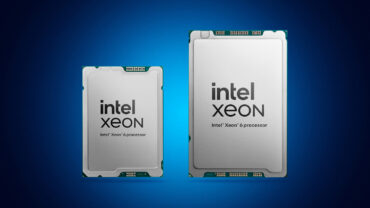
The clearest evidence of that demand sits in Data Center and AI, where revenue climbed 59 percent year over year to $6.3 billion, the fastest growth of any Intel business line this quarter. More telling than the revenue figure is what happened to profitability underneath it: operating income in the segment jumped to $2.5 billion from just $633 million a year earlier, meaning Intel is not only selling more but converting that growth into profit at a far higher rate than before. The engine behind it is Xeon 6+, Intel’s first server chip built on its 18A manufacturing process, and the company has said plainly that it cannot produce enough of these chips to keep pace with current orders, a remarkable sentence from a company that spent much of the past three years explaining the opposite problem.
Intel’s other major business, now renamed the Client Computing and Physical AI Group, added $8.9 billion, up 13 percent, with operating income rising more modestly to $2.3 billion from $2.1 billion. More than 130 customers are already testing Intel’s Core Ultra Series 3 chips for robotics and edge AI applications. Combined, Intel’s product businesses, excluding the foundry operation, generated $15.1 billion, up 28 percent, the single number that best captures how much ground Intel has recovered on the demand side of its turnaround.
Guidance Raised, Wall Street Convinced
Intel did not simply beat the quarter it just reported. It raised expectations for the one ahead, guiding to third-quarter revenue of $15.8 billion to $16.8 billion and non-GAAP earnings of $0.38 per share, both above where analysts had been positioned heading into the release. On the call, Zinsner lifted Intel’s full-year 2026 capital spending target to more than $20 billion, up from an earlier $18 billion plan, with 2027 spending expected to climb further still, a clear signal that management sees sustained demand rather than a temporary spike. He tempered the picture only slightly, flagging that PC consumption is likely to run below its usual seasonal pattern in the back half of the year, a note of caution buried inside an otherwise confident outlook.
The market’s initial reaction reflected genuine conviction. Shares jumped as much as 12 percent in after-hours trading, briefly touching $113, building on a stock that had already gained close to 170 percent for the year even after pulling back roughly a quarter from its June all-time high of $142.35. Options markets had priced in a similarly large move ahead of the release, so the size of the reaction was not the surprise. What stood out instead was that a company beating on nearly every major line item still gave back some of that move later in the session, evidence that investors were reading past the headline numbers into what produced them.
The Accounting Footnote Behind the Net Loss
That partial reversal traces to one line item worth understanding, if only so it is not mistaken for an operating problem. Intel’s GAAP results showed a net loss of $11 billion, or $2.16 per share, driven entirely by a $12.5 billion non-cash charge on shares the company placed in escrow under last year’s agreement with the Department of Commerce. When the U.S. government took its roughly 9.9 percent stake in Intel, funded largely through unpaid CHIPS Act grants rather than cash, about 159 million of those shares were held back in escrow, and accounting rules require Intel to revalue that stake every quarter against its own share price.
Because Intel’s stock has risen so sharply, up 170 percent in 2026 on top of an 84 percent gain in 2025, the value of the escrowed stake rose with it, and the increase became a non-cash charge against earnings. It is, in effect, a byproduct of Intel’s own success in the market, and it says nothing about how the underlying chip business performed. Stripped of that charge, GAAP operating income was a positive $1.8 billion, reversing a $3.2 billion operating loss a year earlier, the real story of the quarter’s bottom line.
What This Means for the Turnaround
One part of Intel’s business is still lagging the rest. Intel Foundry grew revenue 31 percent to $5.8 billion but posted a $2.1 billion operating loss, narrower than last year’s $3.2 billion shortfall but proof that manufacturing chips profitably for outside customers remains unfinished work. The 18A-P process entered risk production on schedule, and Panther Lake, Intel’s newest chip family, began high-volume manufacturing using ASML’s newest extreme ultraviolet lithography tools. Both are genuine milestones, and neither changes the fact that Foundry has yet to earn a return on the capital being poured into it, including a fresh €5 billion commitment to expand Intel 3 capacity in Ireland announced earlier this month.
Taken together, the quarter supports the more optimistic reading of Intel’s turnaround. Demand for its chips is real, broad-based, and in the case of data center silicon, outrunning what the company can currently supply. The GAAP loss that led some early headlines is a financing artifact tied to a government stake, not a verdict on the business. The question that will matter more than any single quarter’s results is whether Intel Foundry can eventually convert that demand into a profitable manufacturing operation rather than simply a growing one.