- AI Infrastructure
- CES 2026
- Robotics
Hyundai Targets 2028 Atlas Robot Deployment With DeepMind AI
9 minute read
Korean conglomerate unveils commercial timeline for Boston Dynamics’ Atlas at CES, targeting 2028 factory deployment with Google DeepMind partnership.
Key Takeaways:
- Hyundai will deploy Atlas humanoids at its Metaplant America facility in Georgia starting 2028 for parts sequencing, then assembly by 2030, while targeting annual production of 30,000 units using automotive manufacturing infrastructure to drive down costs and demonstrate industrial viability before broader market rollout.
- New Google DeepMind partnership unveiled yesterday combines Boston Dynamics’ Atlas hardware platform with DeepMind’s Gemini Robotics AI models to enable adaptive learning and multimodal reasoning, allowing robots to train on new manufacturing tasks within one day rather than requiring extensive reprogramming for each function.
- Subscription-based robotics-as-a-service model includes continuous over-the-air software updates and maintenance, eliminating prohibitive upfront capital expenditures for manufacturers while creating predictable recurring revenue streams for Hyundai as it addresses persistent labor shortages in automotive and industrial sectors.
Introduction
Hyundai Motor Group outlined its robotics strategy at CES yesterday, detailing plans to deploy Boston Dynamics’ Atlas humanoid robot in manufacturing facilities starting in 2028. The announcement clarifies how the Korean conglomerate intends to commercialize technology that has spent years in development, connecting robotics deployment to its broader industrial operations and AI partnerships.
The presentation focused on what Hyundai calls Physical AI, autonomous systems that process operational data for real-world decision-making. Atlas represents the centerpiece of this effort, moving from research prototype to a product designed for factory environments. The timeline and investment commitments suggest Hyundai views humanoid robotics as integral to its manufacturing operations rather than a speculative side venture.
Acquisition Background
Hyundai purchased an 80% stake in Boston Dynamics in June 2021 for $1.1 billion. The company had changed hands twice before, passing from Alphabet to SoftBank, with each owner struggling to find a viable commercial path. Boston Dynamics was founded in 1992 by MIT researcher Marc Raibert, initially focusing on dynamic locomotion funded through defense contracts.
Hyundai’s interest stemmed from its manufacturing capabilities. With revenues exceeding 162 trillion won annually, the company operates extensive supplier networks and production facilities. The acquisition thesis centered on applying automotive manufacturing scale to robotics, using existing infrastructure to reduce production costs and accelerate commercialization.
Since the acquisition, Boston Dynamics has expanded its commercial offerings. Spot, the quadruped robot, now operates in over 40 countries for inspection and monitoring. Stretch, designed for warehouse automation, has processed more than 20 million boxes for logistics companies including DHL and Maersk. These deployments provided operational experience and revenue while Atlas development continued.
Atlas Specifications
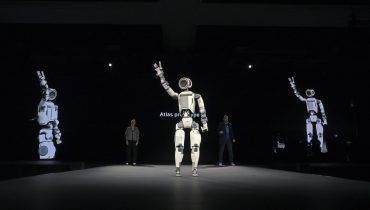
The production Atlas model includes 56 degrees of freedom with fully rotating joints and a 2.3-meter reach. It can lift 50 kilograms instantaneously or 30 kilograms continuously, suitable for parts handling and assembly work. The IP67 environmental rating allows operation in industrial conditions from minus 20 to plus 40 degrees Celsius.
The system uses tactile sensors and 360-degree vision for manipulation tasks. Battery swapping occurs autonomously to maintain continuous operation. Connection to Boston Dynamics’ Orbit software platform enables fleet coordination, with learned capabilities transferred across units. Training for new tasks takes under one day, using foundation models that process operational data rather than requiring explicit programming for each function.
These specifications target manufacturing applications where flexibility matters. Traditional industrial robots require fixed positions and rigid programming. Atlas is designed to handle variable conditions and adapt to new tasks without extensive reprogramming, addressing a constraint in current automation systems.
Manufacturing Plans
Hyundai will begin Atlas deployment in 2028 at its Metaplant America facility in Georgia, starting with parts sequencing. Assembly tasks will follow by 2030. This approach tests capabilities in controlled settings before broader implementation across Hyundai’s manufacturing network.
The company targets production of 30,000 robot units annually by 2028. This requires substantial manufacturing capacity. Hyundai plans a dedicated U.S. robot production facility as part of a $26 billion American investment over four years. In Korea, a separate 125.2 trillion won five-year investment program includes AI robotics development.
Hyundai Mobis, the components affiliate, will supply actuators and parts, leveraging automotive production volumes to reduce costs. Kia and Hyundai Glovis will handle logistics integration. This affiliate coordination applies Hyundai’s existing supply chain to robotics production, a key advantage over standalone robotics companies lacking similar infrastructure.
Technology Partnerships
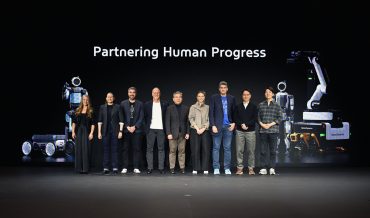
Hyundai announced a collaboration with Google DeepMind yesterday, combining Boston Dynamics’ hardware with DeepMind’s Gemini Robotics AI models. The partnership focuses on automotive manufacturing applications, with Atlas fleets deployed for testing. DeepMind provides multimodal AI for reasoning, tool use, and interaction capabilities.
A separate agreement with NVIDIA and Korea’s Ministry of Science and ICT supports Physical AI development through simulation tools and AI frameworks. These partnerships acknowledge that humanoid robotics requires software capabilities beyond mechanical engineering. Real-time processing of sensor data, movement coordination, and adaptive learning depend on AI systems that exceed what individual companies typically develop internally.
The DeepMind collaboration marks Boston Dynamics’ return to working with Google entities after the 2013-2017 ownership period, but with clearer commercial objectives. The focus on automotive manufacturing provides a defined testing ground with measurable performance metrics.
Business Structure
Hyundai structures robotics as a service offering rather than equipment sales. Customers pay subscriptions covering software updates and maintenance, reducing upfront costs while creating recurring revenue. This model resembles software-defined vehicle approaches where ongoing capability improvements justify subscription pricing.
The service model addresses adoption barriers. Manufacturing facilities can deploy robots without large capital expenditures, paying for actual utilization. For Hyundai, subscriptions provide predictable revenue and maintain customer relationships for upgrades and expansions.
Financial reporting remains aggregated. Boston Dynamics revenue appears in consolidated “other” segments. Hyundai also holds a 47.5% stake in the Boston Dynamics AI Institute, a nonprofit research organization with assets of 208 billion won. Direct robotics revenue remains small relative to Hyundai’s automotive business, but the company points to efficiency gains in its own facilities as evidence of value.
Industry Context
The robotics push addresses labor constraints in manufacturing. Korea, Japan, and the United States face aging workforces and difficulty filling physically demanding factory positions. McKinsey estimates the global robotics market will exceed $200 billion by 2030, with industrial applications driving growth.
Hyundai’s strategy emphasizes augmentation rather than replacement. Robots handle repetitive, heavy, or dangerous tasks while human workers manage oversight and problem-solving. Early Metaplant America implementations aim to demonstrate productivity improvements without workforce reductions, addressing concerns about automation’s employment impact.
The 2028 timeline provides development buffer while establishing market position. Humanoid robotics remains technically challenging at commercial scale. Reliability, maintenance requirements, and total cost of ownership need demonstration in actual production environments before widespread adoption occurs.
Regulatory and Operational Challenges
Workplace safety standards for autonomous humanoid robots remain under development in major markets. Liability frameworks for systems operating alongside human workers lack clarity. Data governance for Physical AI systems that continuously collect operational information raises privacy and security questions.
Hyundai’s phased deployment allows adjustment as regulatory requirements solidify. The company must also demonstrate cybersecurity for systems receiving over-the-air updates, particularly given subscription models that maintain network connectivity.
Geopolitical considerations influence the dual investment strategy. U.S. manufacturing capacity addresses market access and potential trade restrictions. Korean investments maintain core research capabilities and domestic supply chain strength. This geographic distribution reduces concentration risk while positioning production near major deployment regions.
Assessment
Hyundai has assembled infrastructure connecting robot development, AI research, manufacturing capacity, and deployment channels. Boston Dynamics provides technical capabilities and market recognition. Hyundai contributes production scale and automotive industry access. Partnerships with DeepMind and NVIDIA supply AI capabilities.
This structure creates multiple revenue opportunities: robot sales or subscriptions, component supply through affiliates, software licensing, and productivity gains in Hyundai’s own operations. The model requires sustained coordination across business units and continued investment before generating significant returns.
The fundamental question is whether humanoid form factors prove economically viable for industrial applications or whether task-specific robots continue dominating manufacturing automation. Hyundai’s investment scale suggests confidence in humanoid platforms achieving sufficient versatility and cost-effectiveness, but actual deployment results will determine commercial success.
Atlas deployment over the next three years will provide data on humanoid robotics’ practical viability in manufacturing. For Hyundai, successful implementation could establish competitive advantages in automation-dependent industries. The company has committed substantial resources to this outcome, with results becoming measurable as production deployments begin in 2028.