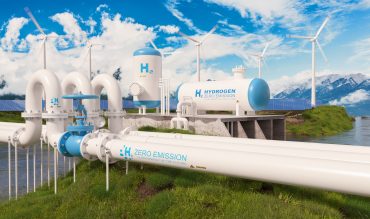
Hydrogen pipeline infrastructure costs surge as energy companies weigh retrofitting against new construction for clean energy transition
Three Key Facts
- Hydrogen transport costs 3.5 times more than methane due to pressure losses requiring increased compression and infrastructure upgrades in repurposed natural gas pipelines.
- Pipeline retrofitting reduces capital costs by 75% compared to building new hydrogen-specific infrastructure, making it an attractive bridge solution for energy transition.
- Hydrogen pipeline market projects $25.43 billion by 2032 with potential to reach $75.61 billion by 2037, driven by decarbonization policies and government incentives.
Introduction
The race to build hydrogen transport infrastructure faces a critical decision point between retrofitting existing natural gas pipelines and constructing new hydrogen-specific networks. Recent analysis reveals that hydrogen’s unique properties create transport challenges that could reshape energy infrastructure investment strategies.
Energy companies and governments are prioritizing pipeline conversion to accelerate hydrogen deployment while minimizing upfront costs. The approach leverages existing infrastructure to support the transition toward clean energy, though technical hurdles remain significant.
Key Developments
The National Energy Technology Laboratory recently released advanced modeling tools to calculate hydrogen transport costs through both new pipelines and existing natural gas infrastructure. These Excel-based tools, including the Hydrogen Pipeline Cost Model and Natural Gas with Hydrogen Pipeline Cost Model, assist stakeholders in making informed infrastructure decisions.
Testing reveals substantial operational differences between hydrogen and methane transport. In a 300-mile pipeline scenario, hydrogen experiences pressure drops exceeding 120 psi compared to just 40 psi for methane, necessitating significant compression upgrades.
The U.S. Department of Energy supports this infrastructure development through Bipartisan Infrastructure Bill funding, targeting hydrogen hub projects that aim to decarbonize heavy industries and generate clean power.
Market Impact
The hydrogen pipeline market demonstrates robust growth projections, expanding from $4.78 billion in 2025 to an estimated $25.43 billion by 2032. Industry analysts project the market could exceed $75.61 billion by 2037, reflecting strong investor confidence in hydrogen transport infrastructure.
Current hydrogen production stands at approximately 90 million tonnes annually. The Hydrogen Council forecasts hydrogen could meet 18% of global energy demand by 2050, representing a $700 billion market opportunity.
Pipeline retrofitting offers cost savings between 75% and 90% compared to new construction, primarily through material reuse and reduced construction requirements. These economics drive corporate interest in repurposing strategies.
Strategic Insights
The infrastructure challenge highlights a fundamental tension between short-term cost optimization and long-term operational efficiency. While retrofitting provides immediate capital savings, hydrogen’s unique properties may favor dedicated pipeline systems for sustained operation.
Material compatibility emerges as a critical factor, with hydrogen’s tendency to cause steel embrittlement requiring specialized coatings and enhanced leak detection systems. These upgrades add complexity to retrofit projects but remain essential for safety compliance.
Regional pilot projects in Europe and Asia provide mixed results, with performance varying significantly by location and pipeline age. Europe’s Hydrogen Backbone project exemplifies efforts to connect major industrial centers, advancing continental hydrogen strategies.
Expert Opinions and Data
Technical analysis by Khan, Layzell, and Young emphasizes the importance of systematic assessment combining hydraulic performance with economic feasibility. Their work on techno-economic principles for pure hydrogen pipelines provides design and costing frameworks applicable to various scales.
According to ScienceDirect, hydrogen’s lower density and higher velocity create operational challenges requiring increased inlet pressures and additional compression to maintain comparable energy delivery to methane systems.
Industry stakeholders increasingly view pipeline repurposing as a pragmatic bridge to the hydrogen economy, though some skepticism remains about scalability for pure hydrogen transport over long distances or in regions with aging infrastructure.
Comparative studies suggest pipelines prove more cost-effective for high demand and short to medium distances, while tube trailers offer advantages for low demand and short-distance scenarios. The transition point depends on volume requirements and distance factors.
Conclusion
The hydrogen transport infrastructure debate reflects broader energy transition challenges balancing immediate cost pressures with long-term operational requirements. While pipeline retrofitting offers substantial capital savings, hydrogen’s unique transport properties may ultimately favor dedicated infrastructure for optimal performance.
The rapid market growth and substantial government support indicate strong momentum for hydrogen pipeline development. Success depends on resolving technical challenges around material compatibility, compression requirements, and safety systems while maintaining economic viability for energy companies and utilities.