- Buy Rating
- Deutsche Bank
- US Airlines
Frontier Gains Edge as Spirit Bankruptcy Opens Routes
5 minute read
Low-cost carrier Frontier Airlines gains competitive advantage as Spirit’s bankruptcy creates major route expansion opportunities
Key Takeaways
- Deutsche Bank upgrades Frontier to Buy from Hold following Spirit Airlines’ bankruptcy, raising price target to $8 from $4 with expectations of 63% upside potential.
- Frontier stock surges over 10% in premarket trading as analysts project the carrier will capture significant market share from Spirit’s 40% overlapping route network by December.
- Spirit’s fleet reduction of 50 aircraft anticipated as the bankrupt carrier restructures with assets and liabilities between $1-10 billion, creating expansion opportunities for Frontier.
Introduction
Deutsche Bank has upgraded Frontier Group Holdings to Buy from Hold, predicting significant market share gains for the low-fare carrier following Spirit Airlines’ bankruptcy. The investment bank’s decision reflects expectations that Frontier will emerge as the dominant ultra-low-cost carrier (ULCC) in the U.S. market.
Frontier’s stock jumped over 10% in premarket trading following the upgrade announcement. The move signals a major shift in the competitive landscape of budget aviation, with analysts positioning Frontier as the primary beneficiary of Spirit’s financial distress.
Key Developments
Deutsche Bank analyst Michael Linenberg leads the research supporting Frontier’s upgraded rating. The bank raised its price target to $8 from $4, representing a 63% potential increase from current trading levels.
Currently, 35% of Frontier’s routes overlap with Spirit’s network, a figure expected to reach 40% by the December quarter. Frontier recently announced 20 new routes, with 18 directly competing with Spirit’s existing operations in key hubs including Fort Lauderdale, Houston, Detroit, and Charlotte.
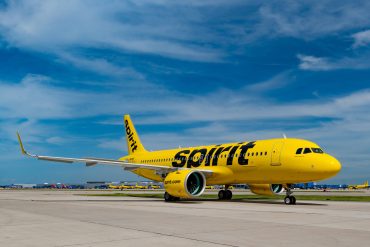
Spirit Airlines filed for Chapter 11 bankruptcy with assets and liabilities ranging between $1 billion and $10 billion. The carrier operates 214 aircraft but only 157 remain active, with 38 grounded due to Pratt & Whitney engine issues and 19 scheduled for sale.
Market Impact
Frontier’s shares have declined 25% year-to-date, underperforming the S&P 500 Airlines Index’s 30% gain. The Deutsche Bank upgrade provides a significant catalyst for the stock’s recovery trajectory.
Deutsche Bank values Frontier at 8.5 times its projected 2025 EBITDAR, above its typical 5-8 times trading range but within reasonable bounds for 2026-2027 earnings forecasts. Spirit’s projected cash burn exceeds $500 million in 2025, creating further opportunities for Frontier’s expansion.
The market response reflects investor confidence in Frontier’s ability to capitalize on reduced competition in the ULCC segment. Deutsche Bank’s “Overweight” rating emphasizes expected benefits from Spirit’s capacity reduction in major U.S. metropolitan markets.
Strategic Insights
Deutsche Bank projects Spirit’s active fleet will shrink by an additional 50 aircraft during restructuring. This capacity reduction positions Frontier to dominate overlapping routes, particularly in high-traffic airports like Houston.
Frontier moves beyond traditional ULCC models by introducing premium service upgrades and enhancing loyalty programs. The strategy aims to attract higher-yield customers while maintaining competitive pricing, with new routes featuring fares as low as $29.
According to Investing.com, the overlapping networks position Frontier for substantial market share capture through aggressive route expansion and strategic network density improvements.
Expert Opinions and Data
In the recent CNBC interview, Frontier CEO Barry Biffle expresses confidence in the airline’s growth prospects, attributing opportunities to financial troubles at Spirit and Southwest Airlines. Biffle emphasizes investments in technology and customer loyalty as central to Frontier’s differentiation strategy.
“We’re creating the most rewarding loyalty program among low-fare carriers,” Biffle states, highlighting the company’s evolution beyond basic budget service. The CEO positions these enhancements as critical for capturing market share from struggling competitors.
Deutsche Bank acknowledges potential risks including economic downturns, fuel price volatility, regulatory changes, and increased labor costs. However, analysts maintain that Frontier’s strategic positioning outweighs these industry-wide challenges.
Conclusion
Frontier’s strategic response to Spirit’s bankruptcy through targeted expansion and product innovation has earned analyst approval and market confidence. The carrier’s ability to leverage overlapping route networks while enhancing service offerings positions it as the likely leader in the transformed ULCC sector.
The success of Frontier’s market share capture depends on Spirit’s restructuring timeline and broader airline industry dynamics. Current indicators suggest Frontier stands well-positioned to emerge as the dominant ultra-low-cost carrier in the U.S. market.