- Brent Crude
- Commodities
- Energy Security
Brent Crude Tops $90 as Hormuz Crisis Shakes Global Oil Markets
11 minute read
As U.S.-Iran hostilities choke the world’s most critical oil artery, energy markets face a reckoning that reaches from Persian Gulf tanker lanes to central bank inflation desks across three continents.
Key Takeaways
- Brent crude surged roughly 25% in under two weeks to breach $90 per barrel on March 6, driven by the near-closure of the Strait of Hormuz, which carries one-fifth of global oil supply, embedding a risk premium of $10-18 per barrel that analysts warn could persist well into mid-2026.
- OPEC+ has chosen discipline over opportunism, maintaining its production pause while preserving flexibility to respond, a posture that reflects the cartel’s strategic maturity but also exposes internal tensions as member interests increasingly diverge under pressure.
- Major oil companies are using elevated prices not merely to harvest margins but to accelerate structural repositioning toward low-emission investments, carbon capture, and energy transition infrastructure, signaling that the industry’s long-term architecture is quietly being redrawn.
A Threshold With Consequences
On March 6, 2026, Brent crude futures crossed $90 per barrel for the first time in nearly two years, closing at $91.48 after rising as much as 6% intraday. The move was not the product of a single headline but of several forces arriving in close succession: confirmed U.S. and Israeli military strikes against Iran, retaliatory tanker seizures in the Strait of Hormuz, and a global shipping industry scrambling to reroute through the Cape of Good Hope. The weekly trajectory had already been dramatic. From a February 27 close of $72.48, Brent climbed to $85.41 on March 5, a surge of roughly 18%, before breaching $90 the following session. The cumulative move from late February represents a gain of approximately 25%, among the sharpest short-term rallies the market has recorded in recent years.
The numbers are striking enough. What matters more is what they reveal about the structural fragility embedded in global energy supply chains, and about how markets, producers, and policymakers are positioned to respond when a single chokepoint comes under genuine threat.
The Strait at the Center
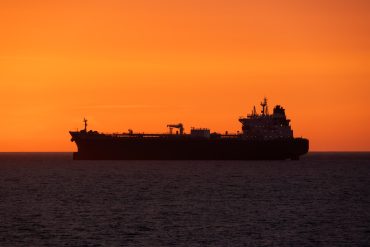
The Strait of Hormuz is, by most measures, the most consequential 33-kilometer passage in the global economy. Approximately 20% of the world’s oil transits its waters daily. When Iranian forces began restricting traffic following the strikes, the effect on sentiment was immediate; the effect on physical supply, potentially severe.
Analysts at Goldman Sachs and Citi estimated that the disruption had embedded a risk premium of between $10 and $18 per barrel into the forward curve. UBS warned that a prolonged closure could push prices past $100. More concretely, the rerouting of tankers around the Cape of Good Hope has added between 10 and 18 days to voyage times and inflated shipping surcharges by up to 20 to 30% or more by some analyst estimates, costs that will eventually surface in refined product prices across Europe and Asia.
The conflict’s immediate trigger was the March 1 strikes, which eliminated Iran’s Supreme Leader and prompted the retaliatory measures that followed. President Trump’s subsequent demand for unconditional surrender pushed West Texas Intermediate above $85. Layered on top of all this are the ongoing Houthi attacks in the Red Sea, which had already disrupted one major trade corridor. The convergence of two separate flashpoints in the same region has left physical oil markets with limited margin for further shock absorption.
What OPEC+ Is Actually Doing
In a moment of acute supply disruption, the world’s attention naturally turns to OPEC+. The group’s March 1 reaffirmation of its production pause, covering January through March 2026, was consistent with a strategy it has pursued for the better part of two years: manage the floor, preserve cohesion, and maintain optionality.
The decision builds on November 2025’s voluntary cuts of 137,000 barrels per day, and the group’s stated intention is to achieve full conformity with its Declaration of Cooperation by June 2026. The Secretariat has been explicit that adjustments can be reversed should conditions deteriorate or improve sharply, the kind of institutional language that prevents markets from pricing in extremes.
That discipline, however, conceals internal complexity. The UAE’s phased capacity expansion of 300,000 barrels per day from April 2025 reflects diverging long-term interests within the cartel. Gulf producers with low extraction costs and substantial sovereign wealth buffers can afford a longer horizon; others cannot. The current consensus holds, but it is a managed consensus rather than a natural one.
Rabobank has revised its second and third quarter forecasts to $85 per barrel, assuming a disruption lasting one to three months. That projection is grounded in the arithmetic of the situation: OPEC+ can partially offset the Hormuz disruption but cannot replace it. No credible alternative supply corridor exists at sufficient scale to compensate for a protracted closure of the Strait.
Demand, Inventories, and the China Variable
The demand picture adds another layer of complexity. China’s directive to stockpile 140 million barrels between July 2025 and March 2026 proved a prescient hedge, buffering the market against earlier supply volatility. That buffer is now diminishing. Storage capacity constraints and slower domestic economic growth limit Beijing’s ability to repeat the exercise at the same scale.
Global inventories, per the U.S. Energy Information Administration, had been forecast to build at roughly 0.7 million barrels per day across 2026. The Hormuz disruption has materially altered that picture, with analysts estimating a draw of between 1 and 2 million barrels per day through the first quarter. The EIA’s March 3 Short-Term Energy Outlook, which had forecast a 2026 average of $58 per barrel, now looks like a baseline that events have already rendered obsolete.
Structural demand in emerging markets provides a partial counterweight. India and parts of Sub-Saharan Africa are accelerating transitions toward electrification and renewables, reducing their long-term dependence on imported hydrocarbons. Near-term, however, aviation fuel, petrochemicals, and industrial energy needs sustain firm demand across both regions. AI infrastructure buildout, which has become a material driver of data center electricity consumption, represents a demand vector that few forecasters had fully integrated before 2025.
Markets React, Then Recalibrate
The initial equity market response was predictably volatile. On March 2, the Dow Jones Industrial Average fell approximately 800 points intraday before closing down 73, as investors attempted to separate the supply risk from the broader economic drag that sustained high energy prices would impose.
The sectoral divergence was telling. Over the March 1 to 6 period, ExxonMobil gained 2.1%, Chevron 1.5%, and Occidental Petroleum 2.5%, reflecting straightforward margin expansion expectations. European industrials and U.S. airlines moved in the opposite direction; the STOXX 600 fell 3.1% on its peak volatility session. Bond yields rose for five consecutive sessions, a signal that inflation expectations are shifting and that Federal Reserve rate flexibility may be more constrained than the market had priced entering the year. A $10-per-barrel sustained increase in oil prices historically adds between 0.2 and 0.4 percentage points to global headline inflation.
Trading volumes on ICE reached record levels, exceeding 1 million Brent contracts on multiple sessions through the week, reflecting not panic but active institutional repositioning as the risk distribution around energy prices shifted materially to the upside.
How the Majors Are Responding
What distinguishes this price cycle from prior ones is the degree to which major oil companies are using elevated revenues not simply to return capital but to accelerate strategic repositioning. ExxonMobil’s December 2025 investor update raised its 2030 earnings growth target by $4 billion, while committing $30 billion through 2030 to low-emission investments. The company’s joint methane pyrolysis project with BASF, targeting low-emission hydrogen production at Baytown by late 2026, and its expanded carbon capture and storage operations with Linde and Nucor, represent a deliberate effort to build durable value that is less sensitive to cycle volatility.
Shell’s fourth-quarter 2025 earnings of $3.3 billion, while down sharply from $5.4 billion the prior year, were accompanied by a $5 to $7 billion structural cost reduction target and meaningful progress on carbon capture. The company’s 2026 Energy Security Scenarios project oil demand growth of 3 to 5 million barrels per day into the 2030s, alongside a 10% increase in global natural gas demand. That long view shapes capital allocation decisions that will outlast the current geopolitical episode by decades.
What Comes Next
TD Securities anticipates a retreat toward the $70s should tensions ease and the disruption prove short-lived. That scenario is plausible. Geopolitical crises in the Gulf have historically proven episodic, with markets eventually pricing in resolution. What is less certain is whether the structural supports for elevated prices, OPEC’s production discipline, resilient U.S. shale output projected by the EIA at 13.6 million barrels per day in 2026, and sustained industrial demand, will prevent a full retracement even under benign conditions.
For senior investors, the current environment rewards selectivity over broad sector exposure. Companies with integrated low-carbon portfolios, strong cash generation, and balance sheet flexibility are better positioned to compound value across scenarios than pure-play producers dependent on a specific price band. For policymakers, Hormuz has served as a reminder that supply chain diversification is not an abstract policy preference but an economic necessity, one that becomes considerably more expensive to address in the middle of a crisis than before one begins.
The Strait’s status will evolve. Markets will adjust, as they always do. But the $90 breach of March 2026 has clarified something that sophisticated participants already suspected: the energy transition and geopolitical risk are not separate chapters in the industry’s story. They are being written simultaneously, and the outcome of each will shape the other for years ahead.