- Automotive Industry
- EV Strategy
- Global Auto Market
BMW 2025 Results Show Revenue Decline as EV Shift Accelerates
11 minute read
Facing tariff pressures and a cooling China market, BMW’s 2025 results reveal a company deliberately trading near-term revenue for long-term electric dominance.
Key Takeaways
- BMW Group revenues fell 8.4% to €142.4 billion in 2025, yet disciplined cost management and record Q4 free cash flow of €5.0 billion demonstrate that the contraction reflects strategic restraint rather than structural weakness.
- Electrified vehicles now represent 26.2% of all BMW Group deliveries, with battery-electric models alone at 18.0%, as the Neue Klasse architecture positions the group to accelerate this share substantially through 2027 and beyond.
- Forward guidance projecting a further 5–9.9% EBT decline in 2026 unsettled markets, but BMW’s pricing power, operational discipline, and a Neue Klasse pipeline spanning over 40 models provide a credible foundation for recovery.
A Contraction With Character
There is a version of BMW’s 2025 performance that reads as a story of decline. Revenues fell 8.4% to €142.4 billion. Net profit dropped 36.9% to €7.7 billion. Shares shed 7% in a single session when the annual report landed on March 12, 2026. Taken in isolation, these are uncomfortable numbers for any company carrying the premium expectations BMW’s valuation has historically demanded.
But industrial performance is rarely best understood in isolation, and BMW’s 2025 results reward a more attentive reading. The revenue contraction was anticipated and, to a significant degree, managed. Earnings before tax settled at €10.2 billion, a 6.7% decline from €11.0 billion the prior year, reflecting an organisation absorbing genuine external pressure while preserving its financial core. The automotive EBIT margin closed at 5.3%, within the revised guidance corridor of 5–7%. These are not the numbers of a company in distress; they are the numbers of one in transition, and the distinction carries weight.
The pressures that shaped 2025 were neither unique to BMW nor fully within its control. U.S. import tariffs and European Union levies on Chinese-manufactured electric vehicles combined to subtract roughly 1.25 percentage points from automotive profitability. A weakening renminbi eroded earnings by hundreds of millions in translation. China, BMW’s single largest market, contracted 12.5% in deliveries as domestic overcapacity and aggressive price competition from local manufacturers restructured the competitive landscape. That BMW delivered 2.45 million vehicles globally, a 2.4% year-on-year increase, while absorbing these headwinds, speaks to the depth of its geographic and product diversification.
Where Growth Held Firm
The geographic composition of BMW’s 2025 delivery growth deserves particular attention. Europe expanded 8.6% and the United States 9.5%, providing a counterweight to China’s deterioration that few analysts had fully priced. These are not peripheral markets padding aggregate figures; they are BMW’s most profitable channels, home to its highest-margin model variants and its most loyal customer base. Their resilience in a year of global economic friction suggests that the group’s brand positioning in Western markets remains largely intact.
Within the portfolio, the brand hierarchy performed according to its design. BMW’s core marque reached 2.2 million units. MINI held at 245,000. Rolls-Royce, operating at the extreme end of the luxury spectrum where volume is both small and deliberately constrained, delivered 5,700 vehicles. Together, the three brands present a structure that is unusually well-balanced: volume stability at the centre, aspirational premium at the top, and a heritage sub-brand navigating its own electrification journey at the compact end.
Electrification was, perhaps, the year’s defining operational theme. Battery-electric and plug-in hybrid vehicles together accounted for 26.2% of all deliveries, with BEVs representing 18.0% on their own. The group surpassed 1.5 million cumulative electric vehicles on the road. These figures sit within a broader technology-agnostic strategy that has drawn criticism from those who prefer a more singular commitment to electrification but has proved its value in a regulatory environment still marked by uncertainty. With EU CO2 compliance targets confirmed as achievable, BMW’s hedged approach looks less like indecision and more like prudent engineering of optionality.
The Quarter That Clarified Things
The third quarter of 2025 offered the year’s most instructive episode. Deliveries rebounded 8.7% to 588,000 units, a meaningful operational recovery that demonstrated demand had not structurally retreated. Yet Group EBT for the period was €2.3 billion, yielding a 7.2% margin, as currency movements and raw material costs eroded the volume gains in real-time. It was a quarter that illustrated, with unusual clarity, the gap between commercial momentum and financial outcome when macroeconomic conditions are adverse.
The fourth quarter offered a partial resolution. Automotive segment free cash flow reached €5.0 billion in the period alone, affirming that BMW’s underlying liquidity generation remained robust even as reported profitability faced pressure. Free cash flow is, in many respects, the most reliable indicator of industrial health, less susceptible to currency translation and tariff accounting than headline earnings, and its strength through a difficult year provides reasonable comfort about the group’s capacity to fund both its capital programme and shareholder returns through the transition ahead.
The Neue Klasse Imperative
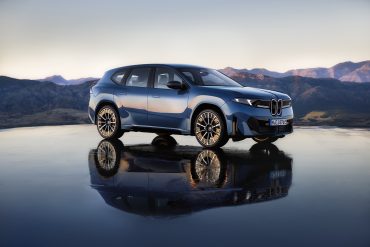
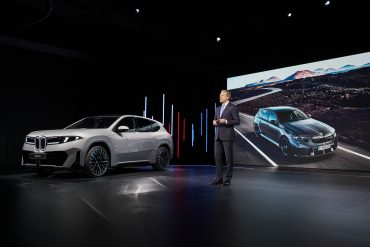
No assessment of BMW’s 2025 position is complete without engaging seriously with the Neue Klasse, because it is here that the investment thesis either holds or fractures. The architecture’s commercial debut arrived with the BMW iX3 in late 2025, and the early indicators were strong. Incoming orders exceeded internal projections. The technology proposition, sixth-generation eDrive offering up to 30% more range, 30% faster charging, and 20% improved efficiency through cylindrical battery cells and an 800-volt system, represents a genuine generational step rather than incremental refinement.
The iX3 also introduced the Panoramic iDrive, a full-windshield head-up display, and an AI-enhanced Intelligent Personal Assistant incorporating Alexa+ integration. A collaboration with Qualcomm produced the Snapdragon Ride Pilot, a scalable automated driving system validated for deployment across more than 60 countries. These are not marketing features; they are platform decisions that will define the Neue Klasse’s competitive positioning for years. Pre-series production of the BMW i3 began in Munich, scheduled for 2026 launch, extending the architecture’s reach.
The production side of the Neue Klasse story is equally significant. BMW’s “iFACTORY” approach, integrating digital planning tools and AI-assisted assembly optimisation, has been deployed at the new Debrecen facility in Hungary and at Spartanburg in South Carolina, where humanoid robotic systems are now operational. These investments compound: each efficiency gain in manufacturing lowers the cost structure against which the Neue Klasse must prove its margin profile as volumes scale.
What the Market Missed
The 7% share price decline on March 11, triggered by forward guidance projecting a further 5–9.9% EBT contraction in 2026 and broadly flat delivery volumes, reflects a rational short-term response to disappointing numbers. It does not, however, fully account for what BMW’s 2025 performance actually demonstrated about the group’s operational quality.
The 2026 automotive EBIT guidance of 4–6% is honest about the continued drag from tariffs and the investment cycle associated with Neue Klasse expansion. Capital expenditure is projected below 6%, a deliberate compression that prioritises cash preservation. The combination of disciplined capex and strong free cash flow generation creates a financial profile that is, on balance, more resilient than the headline earnings decline implies.
Over 40 Neue Klasse model variants are scheduled by 2027. Bidirectional charging capability and integrated drive ecosystem features, designed to deepen user retention, are entering the product roadmap. BMW is building, methodically, the platform from which its next growth phase will be launched.
For investors with a two-to-three-year horizon, the risk in 2025’s results is not that BMW has weakened. It is that the market, focused on the near term, is temporarily underpricing a premium manufacturer in the middle of its most consequential product transition in decades. That is a different kind of story entirely.