- Asian Markets
- Global Markets
- Nikkei 225
Asian Markets Rally as SK Hynix AI Chip Boosts Tech Stocks
5 minute read
Semiconductor stocks propel Asian markets higher as SK Hynix advances AI chip technology amid Fed rate cut expectations
Key Takeaways
- Asian markets surge 1.5-2.5% as technology stocks lead gains following Wall Street record highs and growing expectations of Federal Reserve rate cuts next week.
- SK Hynix jumps nearly 6% after unveiling its new HBM4 memory chip for AI applications, which doubles bandwidth with 40% improved power efficiency.
- US jobless claims hit four-year high at 263,000 while August payrolls show only 22,000 jobs added, strengthening the case for Fed policy easing.
Introduction
Asian stock markets extend their rally on Friday, with technology and chipmaker shares driving gains across major indices. The momentum follows record highs on Wall Street and builds on expectations that the Federal Reserve will cut interest rates at next week’s policy meeting.
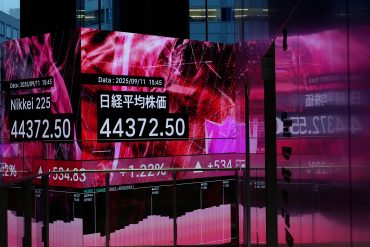
Hong Kong’s Hang Seng Index surges 1.6% while South Korea’s Kospi jumps 1.7%, led by semiconductor companies capitalizing on artificial intelligence demand. Japan’s Nikkei 225 reaches a new record high despite ongoing political uncertainties following Prime Minister Shigeru Ishiba’s resignation.
Key Developments
The rally gains traction from recent US economic data that investors interpret as clearing the path for Federal Reserve policy easing. Jobless claims in the United States reached a four-year high last week, while August payrolls data revealed only 22,000 jobs were added, according to U.S. Bureau of Labor Statistics (BLS).
SK Hynix emerges as a standout performer, climbing nearly 6% after revealing its new HBM4 memory chip designed for AI applications. The chip doubles bandwidth while delivering over 40% improved power efficiency compared to previous generations.
Alibaba shares surge nearly 7% in Hong Kong trading after the e-commerce giant announced expanded AI investment plans and pledged increased spending on its core business operations. The moves signal intensified competition in the artificial intelligence sector across Asia.
Market Impact
Technology sectors lead gains across Asian markets, with Hong Kong’s Hang Seng TECH sub-index climbing 2.5%. Japan’s TOPIX index rises 0.7% to a record 3,171.77 points, while Australia’s S&P/ASX 200 gains 0.7% to reach 8,824.20.
European markets open higher, with France’s CAC 40 rising 0.8% and Germany’s DAX advancing 0.6%. US stock index futures show mixed signals, with S&P 500 futures gaining 0.3% while Dow futures decline 0.1%.
Currency markets see the US dollar strengthen to 147.53 Japanese yen, while the euro falls to $1.1695. Oil prices extend losses, with Brent crude dropping 0.45% to $66.07 per barrel amid signs of softer demand and rising global supply.
Strategic Insights
The technology sector’s outperformance reflects accelerating investment in artificial intelligence infrastructure and digital transformation initiatives. Global IT spending reaches projected levels of $5.75 trillion in 2025, representing a 9.3% increase over 2024, with double-digit growth expected in data center and software segments.
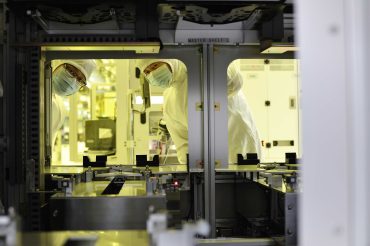
Semiconductor companies benefit from strategic shifts toward vertical integration and capital expenditure on computing capacity. This approach aims to ensure supply chain resilience while meeting surging demand for AI-capable hardware across industries.
The Federal Reserve’s anticipated rate cut creates favorable conditions for growth-oriented technology investments, though companies face ongoing challenges from high valuations and energy consumption concerns related to data center operations.

Expert Opinions and Data
Market analysts express cautious optimism about the Fed’s policy direction. “Inflation is not getting closer to the Fed’s target, but as labour market concerns grow more pressing, fears that price pressures will be persistent fade,” says Taylor Nugent, senior economist for markets at National Australia Bank.
Futures markets indicate near-certain expectations of a 25-basis-point rate reduction, with minimal speculation about a larger 50-basis-point cut. Ahmad Assiri, research strategist at Pepperstone, notes that market sentiment increasingly anchors on Fed rate cut expectations for next week’s meeting.
Recent inflation data shows consumer prices rose 0.4% in August, holding steady at around 3% annually. The figures align with expectations while easing concerns that tariff policies might trigger sharp price increases across key sectors.
Conclusion
Asian markets demonstrate strong momentum driven by technology sector leadership and Federal Reserve rate cut expectations. The combination of robust AI-related investments and accommodative monetary policy signals creates favorable conditions for continued equity market gains.
Companies across the region position themselves to capitalize on artificial intelligence demand while navigating challenges from geopolitical tensions and supply chain complexities. The current environment reflects a delicate balance between growth opportunities and valuation concerns as investors await central bank policy decisions.