- Capital Markets
- IPO
- Stock Market
- Venture Capital
SpaceX Files for the Largest Initial Public Offering in History
12 minute read
After two decades of private operation, SpaceX’s S-1 lays bare the financial architecture behind the world’s most ambitious industrial enterprise — and reframes what space is worth.
Key Takeaways
- Starlink generated $11.4 billion in 2025 revenue at an adjusted EBITDA margin approaching 63 percent, making it the high-margin engine that quietly subsidizes every Mars-bound ambition on SpaceX’s roadmap.
- The February 2026 acquisition of xAI and a $1.25 billion-per-month cloud agreement with Anthropic signal that SpaceX is competing directly in the hyperscale compute race alongside traditional aerospace operations.
- Elon Musk holds approximately 79 percent of voting power through a dual-class structure, with performance equity tied to milestones including a $6 trillion market-cap threshold and a self-sustaining Mars colony.
The Veil Lifts
Private companies of a certain scale develop their own gravitational pull. Capital orbits them. Narratives accumulate around them. Valuations are assigned by secondary markets operating on inference rather than disclosure. For two decades, SpaceX existed in that condition, large enough to reshape entire industries and opaque enough that no one outside a small circle could say with precision how it had done so. The S-1 filed on May 20 ended that condition permanently.
The Form S-1 filed with the Securities and Exchange Commission that morning ran to hundreds of pages of audited financials, segment disclosures, risk factors, and governance arrangements that no amount of secondary-market speculation had previously supplied. What it revealed was not a company that had been misunderstood so much as one that had been fundamentally underexamined. The numbers confirmed certain expectations and complicated others. Together, they introduced the capital markets to a business whose internal logic is unlike anything the modern IPO era has produced.
Goldman Sachs leads a 23-bank syndicate targeting a raise of $75 to $80 billion at a valuation north of $1.75 trillion under the ticker SPCX on Nasdaq. If that pricing holds through the roadshow, SpaceX will enter the public markets as the largest IPO in history. The figure deserves neither reflexive awe nor reflexive skepticism. It deserves examination.
What Starlink Actually Built
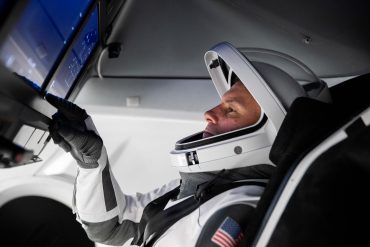
Starlink, housed within the Connectivity segment, was the business that made all of this possible. It generated $11.4 billion in revenue in 2025 — roughly 61 percent of group totals — at an adjusted EBITDA margin of 63 percent. On a GAAP basis the group remains unprofitable, posting a net loss of $4.937 billion for the year, driven primarily by heavy capital investment in the AI segment and continued Starship development. The difference is that Starlink delivers these software-like margins from orbit, across 164 countries and territories, to 10.3 million active subscribers supported by roughly 9,600 satellites as of March 31, 2026.
The business was not supposed to scale this cleanly. Satellite broadband had failed commercially before, weighed down by high-altitude physics, capital costs that crushed early-mover economics, and consumer propositions that never justified the price. SpaceX invalidated each of those precedents in sequence. By integrating launch, manufacturing, and network operations under a single balance sheet, it compressed the cost structure that had defeated every predecessor. The result is a connectivity business that generates $1.188 billion in segment operating income in a single quarter and serves subscribers from Indonesian fishing vessels to Ukrainian frontline positions with interchangeable hardware and uniform software.
Average revenue per user ran at $81 per month across 2025 before softening to $66 in Q1 2026 as the company accelerated into lower-priced residential tiers in India, Brazil, and Indonesia. The compression is not a warning sign. It reflects a deliberate sequence: establish margin leadership in high-value verticals — maritime, aviation, enterprise, and government — then deploy volume growth in emerging markets to deepen network density and consolidate spectrum position. The economics remain extraordinary at either price point. Most terrestrial operators have spent decades and hundreds of billions of dollars constructing networks that produce narrower margins than a constellation of mass-manufactured satellites launched on reusable rockets.
The Machine Beneath the Machine
Falcon 9’s record requires little elaboration at this stage. Forty orbital launches in Q1 2026 alone. More than 650 launches historically. Five hundred forty flight-proven boosters. A launch cadence that has redefined what the word routine means in aerospace. The numbers do not appear in the S-1 as boasts; they appear as the operational baseline from which everything else is measured.
Yet the launch segment is no longer the axis around which SpaceX’s financial identity rotates. It remains indispensable as an enabling capability, delivering Starlink satellites, government payloads, and commercial cargo with a reliability and frequency no competitor approaches. Its economics, while positive on a unit basis, are increasingly underwritten by Starlink’s recurring cash flows rather than self-sustaining at the margins required to fund what comes next. SpaceX has built a vertically integrated system in which each layer subsidizes the ambition of the layer above it. Falcon 9 enabled Starlink. Starlink funds Starship. Starship, if it performs as the filing suggests, changes the arithmetic of every market the company has identified as a future target.
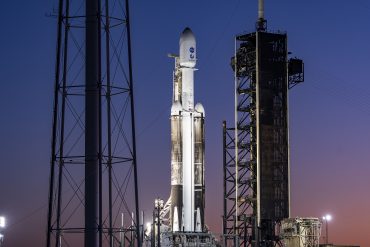
Starship Version 3, powered by the Raptor 3 engine, is described in the prospectus as critical to the company’s growth strategy. SpaceX states that it is “highly dependent on Starship” for commercial development, anticipated performance, launch cadence and cost targets. This development occurs under formal coordination on orbital safety with NASA pursuant to the longstanding Space Act Agreement.
That language, careful and precise in the way SEC filings require language to be, understates the degree to which the vehicle is not merely a product in development but the central element of SpaceX’s entire forward projection. It will deploy next-generation V3 Starlink satellites at more than twenty times the payload capacity of Falcon 9. It will service lunar economy ambitions, in-orbit manufacturing programs, and eventually, if the timeline holds, crewed missions to Mars. Recent test flights demonstrated successful booster catches that compress the reusability cycle further still. The filing projects a total addressable market of $28.5 trillion across its segments, excluding China and Russia. Starship is the mechanism by which that figure ceases to be theoretical.
The Orbital AI Claim
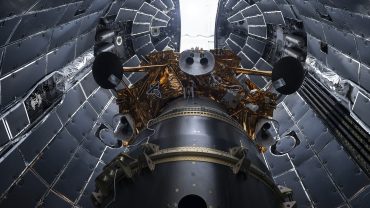
Nothing in the S-1 attracted more immediate attention, or invited more considered reading, than the AI segment. Consolidated following SpaceX’s all-stock acquisition of xAI in February 2026, the division contributed $3.2 billion in revenue while absorbing $6.4 billion in operating losses. Capital expenditure on the Colossus and Colossus II GPU clusters reached $12.7 billion for the year. Presented in isolation, these numbers describe a money-losing position in an intensely competitive market dominated by better-capitalized incumbents. Read inside the broader filing, they describe something more precise: a claim on the infrastructure layer of the next computing cycle, placed before the market has fully priced the cost of orbital compute capacity.
The validation is contractual. A cloud-services agreement signed in May 2026 with Anthropic commits that counterparty to $1.25 billion per month through 2029 for access to orbital and terrestrial compute capacity. That is $15 billion annually from a single customer, a revenue line that, if sustained, transforms the AI segment’s economics within the forecast period. An option agreement with Cursor, the AI coding platform operated by Anysphere, carries an implied valuation of $60 billion and signals that SpaceX is not assembling compute infrastructure for resale alone. It is constructing an AI ecosystem with its own network effects.
The prospectus names OpenAI twice as a direct competitor in the AI infrastructure arena. That disclosure, unremarkable in its brevity, is perhaps the most strategically revealing sentence in the filing. SpaceX has entered a competitive domain that bears no resemblance to the one in which it established its reputation. Whether it prevails there will depend on factors — power economics, model differentiation, customer concentration — that its aerospace heritage does not guarantee. What the S-1 confirms is that the company has committed to the contest at a scale that forecloses any interpretation of xAI as an opportunistic side project.
Reading the Balance Sheet
The group spent $20.737 billion in capital expenditure in 2025. The AI division alone consumed $12.7 billion of that sum. The balance sheet carries $29.1 billion in debt and finance leases. Cash and equivalents stood at $15.852 billion at quarter-end, supported by a bridge refinancing completed earlier in the year. Operating cash flow turned positive in Q1 2026, reaching $1.0 billion. The U.S. government contract backlog exceeded $22 billion.
Presented as a static snapshot, these figures describe a heavily leveraged enterprise investing at a rate that would concern a credit committee evaluating most industrial businesses. Presented as a dynamic system, they describe precisely what SpaceX intends them to describe: a company that has structured its balance sheet to sustain capital intensity at a level commensurate with the markets it believes it is building. Starlink’s software-like margins are not incidental to that structure. They are the mechanism. The recurring cash flows of a broadband business operating at 63 percent EBITDA margins finance the capital requirements of an orbital infrastructure platform that no balance sheet built on launch economics alone could sustain. The debt is a tool. The cash generation is the argument.
Power, Control, and the Musk Question
Elon Musk holds approximately 79 percent of voting power through a dual-class share structure while retaining roughly 42 percent of economic equity. Performance-based equity awards are tied to market-capitalization thresholds exceeding $6 trillion and measurable progress toward a self-sustaining Mars colony. There is no precedent in the listed universe for compensation architecture calibrated to interplanetary settlement. There is also no clean analytical framework for pricing the governance risk that accompanies it.
The filing acknowledges Musk’s divided attention across Tesla, xAI, and political activities as a material risk factor. It simultaneously treats his technical leadership as a capability without substitute. Both statements are true. The tension between them is not resolved in the prospectus, and it will not be resolved on the roadshow. Institutional investors who require conventional governance frameworks will find this structure difficult to accommodate. Those who have concluded that such frameworks were not designed for companies operating at this frontier will read the same pages differently. The market will establish, at pricing, which of those two groups commands the larger allocation.
What the Market Must Now Decide
In the hours after the S-1 appeared on EDGAR, shares of Rocket Lab (NASDAQ: RKLB), Iridium (NASDAQ: IRDM), and satellite-component suppliers edged higher in after-hours trading. The movement was modest. Its meaning was not. A publicly listed SpaceX, held to quarterly disclosure standards, audited by major accounting firms, and priced by the full weight of institutional capital, legitimizes the entire sector as an asset class in ways that two decades of private operation never could. The risk premia that have kept generalist allocators at the margins of space investment will compress. Capital that was waiting for the disclosure architecture that private companies cannot provide will now have it. Pre-IPO secondary trading had already implied an enterprise value north of $1.75 trillion; the audited figures support rather than challenge that consensus. Roadshow commencement is targeted for early June, with a Nasdaq debut possible by mid-month.
The S-1 accomplishes what the best corporate disclosures accomplish: it replaces the stories people told about a company with the reality the company has built. That reality is a broadband business generating software margins from orbit, a launch platform with no peer, an AI infrastructure division absorbing losses at scale in pursuit of a compute market still taking shape, and a governance structure bound to the personal ambition of a founder whose track record makes conventional risk assessment an insufficient tool.
What the document cannot supply is the conviction required to price a company whose nearest point of reference is not another enterprise but an idea about what organized human effort might accomplish across the remaining decades of this century. The data is now public. The launch cadence that once seemed implausible has become the industry baseline. The question that remains, for every allocator who will read this prospectus, is not whether SpaceX has built something extraordinary. It plainly has. The question is what the capital markets, with all their discipline and all their limitations, are prepared to pay for the distance between here and what comes next.