- Child Safety
- Policy & Regulation
- Social Platforms
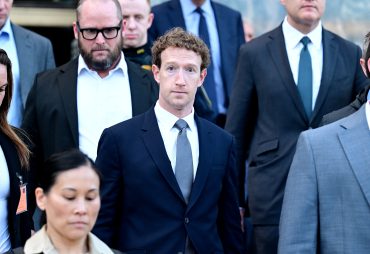
Zuckerberg Testifies in Child Safety Trial as Meta Faces Liability
11 minute read
As Mark Zuckerberg testifies before a jury on child safety claims, the trial exposes the deepening tension between engagement-driven business models and the duty of care owed to the next generation of users.
Key Takeaways
- Zuckerberg’s courtroom testimony marks the first time Meta’s chief executive has defended child safety practices before a jury, raising the stakes from congressional theater to potential billion-dollar liability, with the next bellwether MDL trial set for June 2026.
- Despite the gravity of the proceedings, Meta’s shares closed up 0.61% on February 18, 2026, reflecting investor confidence in the company’s financial resilience, with $200.97 billion in 2025 revenue and $43.59 billion in free cash flow, as a buffer against litigation outcomes.
- The trial arrives as Meta diversifies aggressively beyond its advertising core into AI infrastructure, mixed-reality hardware, and health-tracking wearables, a strategic repositioning that may prove as important to its long-term standing as any courtroom verdict.
The Witness Stand as Watershed
For more than a decade, Mark Zuckerberg has navigated congressional hearings, regulatory inquiries, and public controversies with the practiced composure of an executive who has learned that institutional scrutiny, however intense, tends to be temporally bounded. A Los Angeles courtroom on February 18, 2026 offered something different: a jury, a plaintiff, and the prospect of damages that no quarterly earnings report can absorb with ease.
Testifying in a civil trial that places Meta’s Instagram and Alphabet’s YouTube at the center of allegations concerning deliberate harm to children’s mental health, Zuckerberg faced questioning that moved well beyond the procedural exchanges of Senate committee rooms. The case centers on K.G.M., now 20, who contends that the platforms’ algorithmic design, including infinite scrolling, notification engineering, and engagement-optimizing feed curation, functioned as a system of compulsion during her adolescence, worsening depression, anxiety, and suicidal ideation. It is the first time Zuckerberg has been required to defend these claims before a jury, and the distinction matters. Damages, not merely reputational discomfort, are now the operative variable.
The Architecture of Accusation
The legal theory at the heart of this litigation is not incidental. Plaintiff attorney Mark Lanier argued, through a succession of internal documents, that Meta’s product decisions were shaped less by safety than by retention: that the same mechanisms designed to hold attention, including variable reward loops, social validation prompts, and frictionless content delivery, were understood internally to carry particular risks for adolescent users, and that this understanding did not meaningfully alter the company’s priorities.
Zuckerberg, composed but occasionally terse under cross-examination, contested the framing at each turn. According to CNBC, he argued that sustained usage reflects value, not manipulation, and pointed to the company’s substantial investment in child safety infrastructure, including tools to detect and remove child sexual abuse material and restrictions on adults initiating contact with teenage users. When confronted with internal communications referencing strategies to engage “teens” and “tweens,” he characterized them as exploratory deliberations that never materialized into targeted products, citing the termination of an Instagram for kids initiative as evidence of institutional restraint.
The jury, however, was also shown the other side of that record: executive discussions on monetizing younger demographics, revenue models predicated on sustained engagement, and research suggesting awareness of harm that preceded rather than followed whistleblower disclosures in 2021. The tension between these two evidentiary narratives, company as responsible steward versus company as knowing architect of risk, will determine not only this verdict but the template for those that follow.
Scale of Exposure
This trial does not stand alone. It is a single proceeding within a multidistrict litigation consolidated in the Northern District of California since October 2022, gathering personal injury claims from minors, parents, and school districts into a coordinated legal front. Meta’s most recent annual report discloses that the first MDL bellwether trial involving a school district is scheduled for June 15, 2026. Parallel actions include a New Mexico attorney general trial and mass arbitrations involving more than 100,000 claimants alleging Instagram-related addiction. The cumulative financial exposure, should adverse rulings accumulate, runs into the tens of billions.
That figure requires context. Meta generated $200.97 billion in revenue in 2025, a 22% year-over-year increase, driven by a 12% rise in ad impressions and a 9% increase in average ad pricing. Free cash flow reached $43.59 billion. The company serves 3.58 billion daily active users. These are not the numbers of an enterprise vulnerable to existential legal risk in the near term. They are, however, the numbers of a company whose core economic model, advertising sold against time spent, is now being examined as a product liability question rather than a market design choice.
Regulatory Convergence
The courtroom proceedings represent one vector of a broader regulatory convergence. The European Union’s Digital Services Act initiated a formal investigation into systemic risks to minors in May 2024. U.S. state legislatures have moved toward mandated parental consent and age verification requirements. The political appetite for platform accountability, which was building before the 2021 whistleblower disclosures and accelerated sharply afterward, has not receded.
Meta’s response has been substantive, if contested in its timing. Instagram Teen Accounts, introduced in 2024 and extended to Facebook and Messenger in 2025, default to private settings, restrict direct messages from unknown adults, and offer parents supervision tools including daily time limits as low as 15 minutes. Subsequent 2025 enhancements added direct message safety prompts and content restrictions calibrated to younger users. Zuckerberg referenced these measures in testimony as evidence of genuine commitment. Critics noted, with some justification, that the timeline places them squarely in the post-disclosure, post-litigation period, raising questions about whether market and legal pressure, rather than internal values, drove the decisions.
Strategic Repositioning
Whatever the trial’s outcome, Meta is not waiting passively on its core platforms to determine its future. The company has moved with deliberate speed to build businesses that are less dependent on the advertising model that makes engagement metrics legally and reputationally fraught. Investments in artificial intelligence infrastructure have expanded materially, with AI-enhanced features now embedded across the product suite: animated Facebook profile pictures, personalized feed controls on Threads, and broader integrations that position Meta AI as a consumer-facing capability rather than a backend tool.
More consequentially, Meta is reviving a smartwatch program, codenamed Malibu 2, targeted for a 2026 launch with health-tracking capabilities and integrated AI. The device is intended to compete within the broader ecosystem-driven wearables market. Reality Labs, the division housing Quest VR headsets and mixed-reality glasses, continues to absorb significant R&D expenditure as a loss center, but its strategic function of establishing Meta’s presence in post-smartphone computing environments reflects a management team thinking in decade-length horizons. Headcount reached 78,865 by the end of 2025, a 6% increase, consistent with an expansion phase rather than a defensive posture.
What the Markets Reflect
The market’s response to Zuckerberg’s testimony was instructive in its restraint. Meta Platforms (NASDAQ: META) shares closed up 0.61% on February 18, a performance that signals investor confidence in the company’s financial durability rather than indifference to the proceedings. Slight after-hours softness acknowledged the uncertainty without amplifying it. This is the behavior of a market that has priced litigation as a manageable variable, one that may impose costs, force algorithmic reforms, and accelerate regulatory timelines, but that does not threaten the structural health of the enterprise.
That assessment may prove correct. It may also prove complacent. The tobacco and opioid analogies invoked by plaintiffs’ attorneys are not perfect, but they are not frivolous. Both industries once appeared institutionally durable against mounting evidence of harm; both ultimately faced settlements and regulatory frameworks that reconfigured their operating models. Social media is a different product, delivered through different mechanisms, with different social functions. But the underlying legal question, whether a company can be held liable for engineering features it knew posed risks to vulnerable users, is neither new nor easily dismissed.
A Test of Institutional Accountability
What this trial ultimately tests is whether the legal and regulatory infrastructure governing consumer products is capable of reaching the design decisions of digital platforms, decisions made in engineering meetings rather than manufacturing plants, quantified in behavioral metrics rather than chemical compounds. That is a harder evidentiary and conceptual task than the cases that preceded it. It is also, for the same reasons, a more consequential one.
Meta will almost certainly endure this litigation. Its resources, legal team, and financial position ensure that much. Whether it endures it unchanged is a more open question. The narrative of a platform that grows without limit, that optimizes engagement as an unambiguous good, that treats time spent as a proxy for value delivered, is under sustained challenge in a courtroom, and beyond it, in the legislatures and regulatory bodies of every major market in which Meta operates. The outcome of the K.G.M. trial is one data point in a much longer arc. For senior investors and policymakers alike, it is the arc, not the verdict, that warrants the closer attention.