- European Economy
- Global Tech Race
- Trade & Geopolitics
Xi Jinping Offers France Greater Market Access Amid Trade Deficit
9 minute read
China signals expanded market access for France as Xi Jinping and Emmanuel Macron address a nearly 20-billion-euro trade deficit and sign new technology and energy agreements.
Key Takeaways
- China signals readiness to expand market access for French goods as Xi Jinping tells Emmanuel Macron that greater imports depend on fair treatment of Chinese companies operating in France. The talks come as France faces a nearly 20 billion euro trade deficit with China in 2024.
- Bilateral trade growth remains stagnant at just 1.2 percent in early 2025 with total first-half trade reaching 39.1 billion dollars. China now accounts for 46 percent of France’s overall trade deficit, amplifying pressure on Paris to rebalance economic ties while avoiding escalation of EU-China tensions.
- Twelve new cooperation agreements across AI, aerospace, nuclear energy, and agriculture signal Beijing’s intent to deepen engagement despite France’s strengthened investment screening and a phased reduction of Chinese telecom vendors by 2028.
Introduction
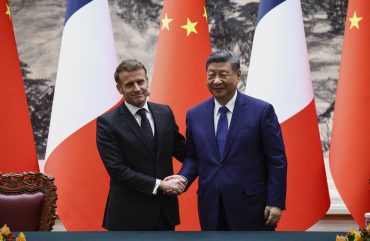
On December 3, 2025, Emmanuel Macron arrived in Beijing with a delegation of corporate chiefs and a deficit problem approaching €47 billion. His fourth state visit to China since taking office was never intended as ceremony. France’s trade imbalance with Beijing now represents nearly half its global goods deficit of approximately €85 billion, a figure that has nearly doubled since 2015 and shows no sign of natural correction. What unfolded over three days in the Chinese capital was less diplomatic theater than commercial negotiation, structured around a simple proposition: expanded market access for French agriculture and industrial goods in exchange for predictable operating conditions for Chinese investment on European soil.
The symbolism was deliberate. Xi Jinping, who rarely escorts foreign leaders beyond Beijing, accompanied Macron to Chengdu, underscoring the visit’s importance at a moment when China’s domestic growth struggles to sustain five percent and its export engine faces mounting resistance from trading partners. For France, the stakes were equally pressing. European imports of Chinese electrical machinery alone exceeded €9 billion last year, while reciprocal flows remain constrained by regulatory barriers and consumer preferences that tilt heavily toward domestic brands. The resulting asymmetry has become politically untenable in Paris and Brussels alike.
The Mechanics of Imbalance
Franco-Chinese trade reached approximately €66 billion in 2024, with modest growth masking profound structural distortions. French exports, valued at €24.3 billion, concentrate in high-value machinery, vehicles, chemicals, and pharmaceuticals. Chinese imports, at €41.4 billion, consist largely of consumer electronics and textiles. The first half of 2025 registered tepid growth of just 1.2 percent, suggesting momentum has stalled even as the imbalance persists.
This pattern replicates across the European Union, where the 2024 trade gap with China expanded to €304.5 billion. Chinese exports to the bloc surged 12 percent between May 2024 and May 2025, with France absorbing a 24 percent increase. The numbers describe not cyclical fluctuation but systematic overcapacity, fueled by state subsidies that distort global pricing and erode European manufacturing competitiveness. Macron’s repeated calls for a “balanced relationship” acknowledge this reality without pretending quick remedies exist.
Xi’s response combined reassurance with conditionality. China would open further to French wine, pork, poultry, and beef, sectors where quality commands premium pricing in Chinese markets. Investment restrictions would ease, and supply chain integration would proceed under frameworks Beijing describes as “cross-border, orderly, and rational.” In return, Chinese enterprises required what Xi termed a “fair, conducive environment” in France, language that translates to fewer regulatory obstacles and reduced political risk for capital deployment.
The context for this exchange includes China’s renewed interest in European investment. Chinese foreign direct investment in Europe rebounded to €10 billion in 2025, up 47 percent year over year, driven largely by green technology sectors. France has historically captured between 20 and 30 percent of Chinese FDI flows into Europe, with cumulative investment stock reaching approximately €12 billion through 2024. This represents substantial capital that Paris cannot afford to dismiss, even as it tightens screening mechanisms.
Automotive Friction
The electric vehicle sector crystallizes the broader tension. France championed EU tariffs of up to 45 percent on Chinese EVs in October 2024, following an investigation that documented subsidies undermining fair competition. Beijing retaliated with an anti-dumping probe into French cognac, imposing duties of 34.9 percent that threatened €1.5 billion in total brandy exports, of which cognac represents 90 percent. Parallel threats loomed over pork, with potential tariffs targeting $2 billion in EU exports. Macron’s visit aimed explicitly to defuse these threats while preserving Europe’s defensive posture.
The outcome reflects tactical accommodation rather than strategic surrender. France secured commitments to shield agricultural exports while maintaining its ecological bonus system, which scores Chinese EVs poorly on environmental criteria and effectively excludes most from subsidy eligibility. This approach allows Paris to protect domestic producers without resorting to outright bans, a distinction that preserves negotiating flexibility.
European manufacturers have already adapted to the new landscape. Renault’s Twingo E-Tech, designed at the company’s Shanghai development center, will be assembled in Europe, illustrating how companies navigate these constraints. The model incorporates Chinese engineering expertise while satisfying European content requirements, embodying the “de-risking without decoupling” framework that guides French industrial policy. Such arrangements reduce dependency without severing collaboration, recognizing that complete separation would sacrifice efficiency gains neither side can easily replace.
Selective Openness
France has systematically tightened foreign investment controls since 2023, lowering the threshold for mandatory review to 10 percent of voting rights in listed companies. Coverage now extends to low-carbon energy, photonics, and critical minerals, sectors central to technological sovereignty. In telecommunications, the 2019 5G law requires case-by-case authorization for high-risk vendors. Licenses granted to Huawei and ZTE expire by 2028, engineering their gradual exit from core networks without triggering immediate disruption.
These measures aim for calibration rather than exclusion. Paris accepts capital where strategic vulnerabilities remain manageable while blocking entry to sensitive domains. The 2025 guidelines formalize this distinction, creating legal predictability for investors willing to operate within defined boundaries. The surge in Chinese green technology investment reflects both parties’ recognition that climate transition offers common ground where economic interests genuinely align.
Xi promoted deeper cooperation in artificial intelligence, biopharmaceuticals, and digital services during the summit, areas where French capabilities complement Chinese scale. The 12 agreements signed in Beijing address energy transitions, agricultural protocols, educational exchanges, and environmental standards. A commitment to renew panda diplomacy, returning the diplomatic bears to French zoos, added cultural warmth to proceedings rooted in commercial calculation.
Nuclear Continuity and Strategic Patience
Civil nuclear collaboration represents the relationship’s most durable pillar. Électricité de France maintains a 30 percent stake in Guangdong’s Taishan Nuclear Power Plant, where two Generation III reactors began operations in 2018 and 2019. The partnership extends to Britain’s Hinkley Point C, where Chinese financing supports EDF’s construction lead, though the project has been delayed to an estimated 2029 to 2031 completion timeline, with costs reaching €35 billion. A 2023 agreement renewed this alliance, with the 2025 accords reaffirming joint development in reactor technology and fuel cycle management.
Four decades of nuclear cooperation have built institutional trust that transcends political cycles. French expertise refines Chinese reactor fleets while Beijing’s capital sustains European projects facing significant cost overruns and regulatory delays. Both sides recognize the arrangement’s mutual value, particularly as aging populations and decarbonization imperatives create overlapping needs. This domain demonstrates how technical interdependence can persist even as broader economic relations grow contested.
The Architecture of Managed Competition
The Xi-Macron summit produced no transformative breakthrough. Anticipated Airbus orders approaching 500 aircraft failed to materialize, constrained by American diplomatic pressure and financing complications. Structural imbalances persist, with Chinese overcapacity continuing to pressure European producers across multiple sectors. Retaliatory threats remain dormant rather than resolved.
The €47 billion deficit France faces with China cannot be eliminated through summit diplomacy alone. It reflects deeper patterns of industrial capacity, consumer preference, and state intervention that resist quick correction. What Paris can accomplish is ensuring that Chinese capital flows remain subject to strategic oversight while maintaining enough openness to capture investment in sectors that advance French economic priorities, particularly in green technology and advanced manufacturing.
European policymakers face an enduring challenge: maintaining commercial ties with China while preventing dependencies that compromise economic security. France’s strategy combines selective openness with strategic protection, accepting Chinese capital where risks appear manageable while fortifying defenses in critical sectors. Whether this balance proves sustainable depends on Beijing’s willingness to moderate export surges and Paris’s capacity to resist protectionist pressure from industries facing genuine competitive disadvantages.
Conclusion
The Beijing meetings offered no resolution to these tensions, only mechanisms for managing them. In an international system fragmenting along technological and ideological lines, such mechanisms acquire value precisely because alternatives promise greater instability. What Macron and Xi constructed was not partnership in any traditional sense, but rather architecture for competition conducted within negotiated constraints.
The economic realities underlying this relationship remain stark. France imports nearly twice what it exports to China, a gap that has expanded steadily despite repeated political commitments to rebalancing. Yet complete disengagement would sacrifice markets, investment capital, and technological collaboration that French industry increasingly requires. The challenge is navigating this dependence without capitulating to practices that undermine fair competition or strategic autonomy.
The 12 agreements signed in Beijing, the agricultural market access commitments, and the nuclear cooperation frameworks represent incremental progress within these constraints. They will not fundamentally alter the trade deficit or resolve the structural asymmetries driving it. What they offer instead is breathing room for both sides to pursue their interests without triggering escalation neither can afford. In the current environment, that represents achievement enough. Its durability will be tested repeatedly in coming years as both sides navigate pressures neither fully controls.