Ahead of Consensus.
Intelligence across tech and capital markets, for investors, policymakers, and business leaders.
11 minute read

When Uber and Rivian announced their autonomous vehicle alliance on March 19, 2026, the terms told a particular story about where the industry now stands. Up to 50,000 Rivian R2 vehicles deployed exclusively through Uber’s platform. As much as $1.25 billion invested through 2031, beginning with an initial $300 million tranche. Commercial operations in San Francisco and Miami by 2028, expanding across 25 cities in the United States, Canada and Europe by the decade’s end. These are not the numbers of companies chasing headlines. They are the numbers of companies that have watched the robotaxi sector’s turbulent adolescence and drawn careful conclusions.
For Uber, the deal is the clearest expression yet of a strategic identity that has been sharpening for half a decade. When the company sold its Advanced Technologies Group to Aurora Innovation in late 2020, it made a choice that was widely misread as retreat. In practice, it was clarification: Uber’s competitive advantage lay not in building autonomous hardware but in operating the world’s most sophisticated demand-matching platform. The February 2026 launch of Uber Autonomous Solutions formalised that logic, establishing a commercial infrastructure designed to accelerate partners’ deployment while keeping Uber at the centre of the customer relationship. The Rivian deal is that infrastructure’s most significant test to date.
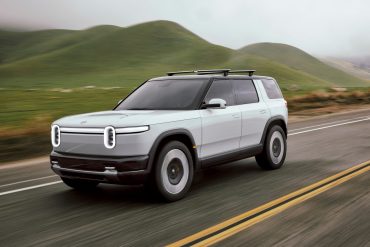
For Rivian, the transaction arrives at a moment of genuine inflection. The company reported full-year 2025 revenue of $5.387 billion, up eight per cent year-over-year, alongside its first positive consolidated gross profit of $144 million. Net losses, at $3.626 billion, remain substantial, reflecting the capital intensity of scaling both manufacturing and advanced technology simultaneously. The Uber investment, structured in milestone-linked tranches rather than as a lump sum, offers something particularly valuable in that context: capital that arrives in proportion to demonstrated progress, reducing dilution risk while aligning incentives precisely.
The vehicle at the centre of this arrangement is the R2, a midsize electric SUV priced from approximately $45,000, with customer deliveries scheduled from the second quarter of 2026 at Rivian’s Normal, Illinois plant. The R2’s third-generation autonomy platform, unveiled in December 2025, is technically substantive: 11 cameras delivering 65 megapixels of resolution, five radars, one LiDAR unit, and two proprietary RAP1 inference chips capable of 1,600 tera operations per second. Crucially, the system is designed to feed a proprietary data flywheel drawn from Rivian’s consumer fleet, compounding the machine learning advantage with every mile driven. This architecture of continuous improvement is precisely what separates credible autonomy programmes from those that plateau.
What the Uber-Rivian partnership illustrates most sharply is a division of labour that is consolidating across the autonomous mobility sector. Vehicle manufacturers with deep vertical integration, combining hardware design, software development and domestic production capability, are concentrating on the machine itself. Platform operators are concentrating on everything that surrounds it: demand generation, fleet operations, regulatory navigation and the customer experience. The logic is compelling. Neither task is straightforward, and attempting both simultaneously has proven, repeatedly, to be the sector’s most reliable path to value destruction.
Uber’s multi-vendor approach reinforces this reading. Its existing arrangements with Waymo in Austin and Atlanta, alongside newer partnerships with Motional, Zoox and WeRide, reflect a deliberate choice to remain technology-agnostic at the hardware layer. By diversifying across autonomous vehicle providers while maintaining ownership of the platform, Uber hedges against the possibility that no single technology proves definitively superior across all geographies and conditions. The commercial risk is distributed; the customer relationship is not.
Rivian, meanwhile, extends its commercial footprint well beyond consumer adventure vehicles and the Amazon electric delivery van programme that has defined much of its fleet identity. Layering robotaxi deployment onto its existing manufacturing expertise creates a third revenue stream while generating the scale of real-world operational data that autonomy programmes require to mature.
The market’s initial response was instructive. Rivian shares rose between seven and ten per cent in pre-market and early trading, reflecting investor relief at the combination of fresh capital, volume commitment and external validation of its autonomy roadmap. Uber’s stock (NASDAQ: UBER) edged modestly higher, a reaction entirely consistent with the market’s settled view of the company as a platform aggregator rather than a capital-intensive hardware deployer.
The asymmetry in share price movement captures the risk profiles accurately. Rivian carries meaningful execution risk across two demanding dimensions simultaneously: the manufacturing ramp required to deliver 10,000 R2 robotaxis in the first wave, and the technical development required to achieve Level 4 autonomy reliably enough to unlock subsequent funding tranches. Uber’s exposure is more contained, and its 2025 free cash flow of approximately $10 billion provides ample latitude to absorb a commitment of this scale without altering its financial character.
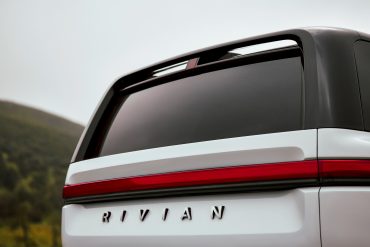
The partnership’s measured pacing reflects an industry that has internalised one of the past decade’s most expensive lessons: regulatory approval for unsupervised autonomous operations is neither predictable nor uniform. San Francisco and Miami have emerged as relatively hospitable early environments for robotaxi operators, but expansion across 25 cities in three jurisdictions by 2031 will require sustained and sophisticated engagement with local and federal authorities at every stage.
That reality is embedded in the deal’s structure. Milestone-linked funding does not simply protect Uber’s capital; it creates a governance rhythm that forces regular accountability against technical and commercial targets. In an industry that once measured progress by press releases, this is a meaningful discipline.
The broader autonomous mobility landscape provides essential context. Waymo has established commercial viability in selected markets. Tesla continues its distinct pursuit of full self-driving at consumer scale. Traditional automakers and specialised developers are forging their own platform alliances. The competitive topology is still forming, and the companies that will define it are not yet entirely clear.
What is clear is that the Uber-Rivian alliance reflects the sector’s most sophisticated thinking to date about how autonomous mobility is actually built: through patient capital, rigorous milestone governance, genuine vertical integration on the hardware side and proven operational capability on the platform side. Whether San Francisco and Miami in 2028 mark the beginning of a durable transformation in urban transportation will depend on execution across five demanding years. But the architecture of this agreement, more than its ambition, suggests that both companies understand what that execution requires.