- Critical Minerals
- Rare Earths
- Strategic Reserves
Trump's $12B Mineral Reserve Marks New Era for US Industry
9 minute read
Washington launches Project Vault to break China’s rare earth dominance, backed by private capital and defense manufacturers seeking supply chain independence.
Key Takeaways
- The administration combines $10 billion in federal loans with $2 billion in private investment to establish America’s first critical minerals reserve, mirroring the petroleum reserve model for industrial raw materials.
- Boeing, GE Vernova, and Western Digital anchor the partnership alongside commodity traders, reflecting cross-industry recognition that supply security now ranks alongside cost efficiency in procurement strategy.
- Rare earth mining stocks jumped up to 16% on announcement day, with sustained gains signaling investor confidence in government-backed demand stabilization for a historically volatile sector.
The Strategic Imperative
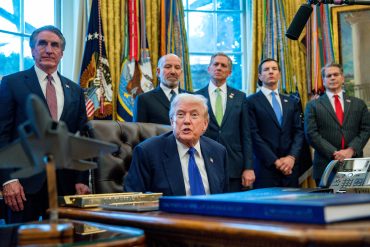
The February 2 announcement of Project Vault represents a fundamental shift in how Washington approaches industrial policy. For the first time, the United States will maintain a strategic reserve of rare earth elements and critical minerals, recognizing these materials as essential to national security as crude oil reserves have been for decades.
The numbers tell a stark story. China controls more than 80% of global rare earth processing capacity. America produces less than 2% of refined rare earths despite hosting significant deposits. This disparity has created vulnerability across defense manufacturing, electronics production, and the emerging electric vehicle sector. When Beijing restricted rare earth exports in 2010, global prices spiked and manufacturers scrambled for alternatives. The memory of that disruption has shaped policy deliberations ever since.
Project Vault addresses this exposure through a shared stockpile model. Rather than requiring individual companies to maintain costly inventories, the reserve allows participants to draw materials during supply disruptions. The Export-Import Bank of the United States approved a $10 billion direct loan on February 2, structured to generate taxpayer returns while serving strategic objectives. Private capital contributes an additional $2 billion, creating a genuine public-private partnership rather than pure government intervention.
Industrial Architecture
The participant roster reveals which sectors consider supply security most critical. Boeing’s involvement underscores aerospace dependence on specialized alloys and magnets. GE Vernova’s energy infrastructure business requires rare earths for turbine generators and grid equipment. Western Digital’s data storage devices rely on precise magnetic materials. Clarios produces advanced batteries for both automotive and stationary applications.
On the supply side, commodity specialists Hartree Partners, Mercuria Americas, and Traxys bring procurement expertise and global trading networks. Their participation suggests confidence in the reserve’s operational structure and potential profitability. These firms typically avoid projects with unclear commercial logic, making their involvement a meaningful validation signal.
Boeing Executive Vice President Jeff Shockey framed the initiative as essential for maintaining competitive position. GE Vernova CEO Scott Strazik emphasized connections between mineral access and energy security. These are not abstract concerns for companies operating in industries where material shortages can halt production lines and breach customer contracts.
Policy Continuity
Project Vault builds on recent administration moves to rebuild domestic rare earth capacity. In July 2025, the Department of Defense invested $400 million in MP Materials, operator of California’s Mountain Pass mine. That transaction secured government equity while funding expansion of separation and processing facilities. On January 26, the administration committed up to $1.6 billion for a 10% stake in USA Rare Earth, supporting development of Oklahoma mining operations and magnet production capabilities.
These investments follow a consistent pattern. The government provides capital for projects where market forces alone have struggled against subsidized Chinese competition. The approach de-risks long development timelines and capital-intensive infrastructure requirements that deter private investors in commodity sectors with volatile pricing.
MP Materials recently announced a joint venture with Saudi Arabia’s Ma’aden and the Department of War to develop additional refining capacity. USA Rare Earth acquired U.K.-based Less Common Metals to integrate magnet production into its supply chain, targeting commercial output by 2028. Private sector activity is accelerating alongside federal support, suggesting genuine momentum rather than dependency.
Market Response
Equity markets delivered immediate validation. MP Materials shares surged 7% intraday before closing up 3.6%. USA Rare Earth jumped as much as 16%, settling with a 4.7% gain. Critical Metals advanced 5.6%, Energy Fuels rose 3.5%, and the broader cohort of U.S.-listed rare earth miners traded 4% to 6% higher in premarket sessions.
The rally, though partially retraced, reflects more than speculative enthusiasm. Government procurement creates baseline demand that can stabilize prices and smooth the cyclical downturns that plague commodity producers. For companies navigating permitting challenges and construction timelines measured in years, predictable offtake agreements reduce project risk and improve financing terms.
Analysts at William Blair characterized the administration’s approach as demonstrating clear determination to reduce Chinese market power. The firm expects additional funding announcements as processing capacity expands. Some caution remains warranted given the sector’s history of false starts, but current momentum appears distinct from previous episodes.
International Dimensions
Secretary of the Interior Doug Burgum indicated that 11 countries will soon join what he termed a critical minerals trade club. This framework could formalize cooperative relationships with allied nations holding significant deposits, including Australia, Canada, and potentially African nations with undeveloped resources.
Such arrangements serve multiple objectives. They diversify supply sources beyond China while creating preferential access for participating nations. They also establish standards for environmental practices and labor conditions, differentiating allied production from less regulated competitors. The structure resembles trade agreements but focuses specifically on strategic materials rather than broad economic integration.
Implementation Realities
Challenges remain substantial. Rare earth processing generates significant waste and requires intensive energy input. Environmental review processes have delayed or blocked mining projects across the United States. Technological improvements are necessary to achieve cost parity with Chinese operations that benefit from decades of optimization and less stringent regulation.
Scaling American processing capacity will require years and billions in additional investment beyond Project Vault’s initial funding. The reserve itself addresses only one element of supply chain vulnerability. Domestic manufacturing still depends on China for numerous intermediate goods and specialized components that incorporate rare earths.
President Trump’s executive order establishing the reserve emphasizes energy independence and protection against economic coercion. The language reflects recognition that supply chains now function as instruments of geopolitical competition. Whether federal intervention can genuinely reshape global mineral markets remains uncertain, but the administration has committed substantial resources to testing that proposition.
Project Vault represents pragmatic adaptation to changed circumstances rather than ideological departure. When strategic materials concentrate in potentially hostile hands, governments respond. The initiative’s structure attempts to harness market mechanisms while accepting that pure market solutions have failed to produce desired outcomes. Execution will determine whether this model proves effective or becomes another costly intervention with limited lasting impact.