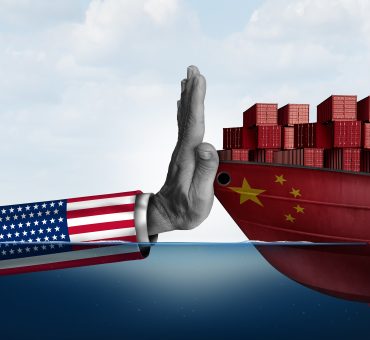
Tech companies shift manufacturing operations to Southeast Asia as U.S. tariffs drive 15% cost increase for Chinese imports
Key Takeaways
- Markets show optimism on tariff resolution as analysts at Barclays report increasing hope that a U.S. tariff “endgame” is approaching, with European equities at tariff risk showing signs of recovery.
- Tech industry faces 15% cost increases due to tariffs on Chinese imports, prompting major companies like Apple and Intel to accelerate supply chain diversification to India, Vietnam, and Malaysia.
- Global IT spending growth slows dramatically from an expected 10% to approximately 5% in 2025 as tariff-driven inflation and economic uncertainty reshape business investment priorities.
Introduction
Markets are displaying renewed optimism about the resolution of U.S. tariff policies as businesses adapt to trade tensions that have reshaped global commerce. Analysts at Barclays report growing confidence that a tariff “endgame” is within sight, despite ongoing uncertainty over trade strategies.
The technology sector faces particular pressure as companies navigate cost increases of up to 15% on manufacturing due to tariffs on Chinese imports. This development affects major players including Apple, Microsoft, Amazon, and Intel, forcing strategic pivots in supply chain management and operational planning.
Key Developments
President Trump’s administration approaches a critical deadline for the expiration of a pause on “reciprocal” tariffs in July. While expectations centered on numerous individual trade agreements, only framework deals with China, Britain, and Vietnam have materialized.
The administration plans to issue letters detailing tariff rates to trading partners, acknowledging the complexity of negotiating with approximately 170 countries. Barclays analysts, led by Emmanuel Cau, suggest that despite minimal formal progress, potential exists for deadline extensions or incremental agreements that could ease trade tensions.
Technology companies are implementing comprehensive adaptation strategies. Major firms are accelerating supply chain diversification beyond China to countries including India, Vietnam, and Malaysia. Intel is expanding U.S. manufacturing capacity to reduce exposure to tariffs on components and raw materials.
Market Impact
European equities at tariff risk demonstrate recovery signals as market sentiment improves. However, European momentum stocks face challenges as investor focus on domestic markets hampers any shift toward exporters, impacting momentum factors.
The financial implications extend across the technology sector. Global IT spending growth faces significant deceleration from an expected 10% to a range closer to 5% due to tariff-driven inflation and economic uncertainty, according to IDC forecasts.
Companies experience margin pressure as increased input costs compel strategic choices about pricing and product design. Supply chain disruptions contribute to delays and inventory challenges, potentially increasing indirect operational costs including installation and configuration fees.
Strategic Insights
The tariff environment catalyzes fundamental shifts in global manufacturing patterns. Technology companies are witnessing a geographic redistribution of production, with expanded manufacturing in Southeast Asia and the U.S. to reduce tariff exposure.
Rising hardware costs indirectly affect software-related IT spending as companies delay software upgrades due to higher hardware prices, potentially impacting security and performance. This dynamic reshapes competitive vendor landscapes as customers seek price-conscious alternatives.
Cloud adoption accelerates as businesses invest more heavily in cloud-based solutions from providers like Microsoft Azure and Amazon AWS to offset higher hardware costs and reduce upfront capital expenditure on physical infrastructure.
Expert Opinions and Data
According to Investing.com, investors closely monitor developments as trade tensions continue to influence market dynamics. Barclays analysts observe that “markets appear increasingly hopeful the endgame is in sight,” noting European equities at tariff risk have shown recovery.
Research from Barclays Business Prosperity reveals that despite widespread concerns over new U.S. tariffs, UK businesses, particularly larger firms, are adapting and predict net positive impacts on exports, supply chains, and profits. The survey of 1,000 UK businesses found 79% are concerned about tariffs and global trade uncertainty, with nearly half already adjusting U.S. operations or supply chains.
Data indicates proactive business responses, with 59% of those increasing trade doing so with Europe and Central Asia in the first quarter of 2025, compared to 18% with North America and 10% with Asia-Pacific. Almost half of businesses report that improving productivity is now more important than a year ago.
Conclusion
The convergence of tariff pressures and adaptive business strategies creates a complex landscape for global trade and technology sectors. While markets show optimism about potential resolution, companies continue implementing comprehensive risk management approaches through supply chain diversification and operational adjustments.
The technology industry’s response demonstrates both resilience and pragmatism as firms balance cost pressures with innovation investments. Current developments suggest a fundamental restructuring of global manufacturing and trade relationships, with businesses positioning for both near-term challenges and longer-term strategic advantages.