- Aerospace Defense
- Capital Strategies
- Space Tech
SpaceX Begins Wall Street Bank Selection for Trillion-Dollar IPO
12 minute read
The aerospace company’s 2026 IPO would mark the largest offering in history, testing whether public markets will embrace capital-intensive space infrastructure at unprecedented scale.
Key Takeaways
- SpaceX’s planned 2026 IPO at a $1.5 trillion valuation would exceed $30 billion in proceeds, surpassing Saudi Aramco as history’s largest offering and testing investor appetite for capital-intensive infrastructure in a technology-dominated market.
- The company projects revenues of $22-24 billion in 2026, with Starlink satellite internet comprising 70% of the total and 8 million subscribers, fundamentally transforming SpaceX from government contractor to diversified infrastructure operator with global reach.
- Starship’s development and NASA’s $2.9 billion Artemis contracts anchor SpaceX’s technical credibility, though execution risks around reusability, regulatory approvals, and geopolitical considerations will determine whether public markets validate the premium valuation.
Introduction
The commercial space industry’s most consequential moment arrives in 2026, when SpaceX plans to raise over $30 billion through an initial public offering at a $1.5 trillion valuation, according to Bloomberg. Should the offering proceed as structured, it would eclipse Saudi Aramco’s $29.4 billion listing as the largest in history. Elon Musk confirmed the timeline as “accurate” in recent media exchanges, characterizing the move as strategic rather than driven by capital need.
This development carries weight beyond its headline figures. SpaceX represents the most successful fusion of private capital and aerospace engineering since the industry’s inception, having achieved what Boeing, Lockheed Martin, and their predecessors considered technically impractical or economically unviable: reusable orbital launch systems at scale. The company now stands at $800 billion in private valuation following its latest insider share sale at $421 per share, positioning it to fundamentally reshape both capital markets and space infrastructure.
Market Context
The timing reflects broader capital market dynamics. U.S. equity markets have shown renewed vigor in 2025, according to EY, with year-to-date proceeds reaching $29.3 billion, marking a 31% increase over the prior year. September alone generated approximately $8 billion in offerings. After years of drought, venture-backed companies found renewed appetite from public investors, though with heightened scrutiny on profitability metrics that favor SpaceX’s financial profile. Full-year projections suggest the market could host roughly 200 offerings as momentum builds through year-end.
The company’s biannual secondary tenders have systematically prepared employees and early investors for public market liquidity while maintaining Musk’s operational control. This measured approach contrasts sharply with the company’s early years, when three consecutive Falcon 1 failures between 2006 and 2008 nearly bankrupted the venture before the fourth launch succeeded. That survival instinct, combined with NASA’s $1.6 billion Commercial Orbital Transportation Services contract awarded in 2008, established the discipline that now defines SpaceX’s execution model.
Revenue Architecture and Government Integration
SpaceX projects $15 billion in revenue for 2025, climbing to $22-24 billion in 2026. Starlink satellite internet accounts for approximately 70% of this total, fundamentally altering the company’s risk profile from single-customer government contractor to diversified infrastructure operator. Government contracts, competitively awarded through standard procurement processes, provide 7-10% of revenues and include the U.S. Space Force’s $714 million commitment for seven national security launches in 2025.
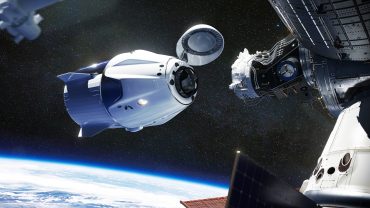
NASA represents the company’s longest-standing government partnership. The Commercial Resupply Services program has generated over $3.1 billion in cumulative contracts since inception, with recent extensions structured in increments approximating $1.1 billion for continued International Space Station cargo delivery. The Commercial Crew Program, where SpaceX’s Crew Dragon has transported over 50 astronauts to orbit since 2020, demonstrates the maturation of public-private space operations.
The Department of Defense’s $733 million award for proliferated low-Earth orbit communications services through Starlink illustrates the integration of commercial and national security infrastructure. These engagements operate primarily through fixed-price contracts that reward efficiency and penalize overruns, distinguishing SpaceX from traditional defense contractors dependent on cost-plus arrangements. The distinction matters for public market investors assessing regulatory risk and competitive positioning.
Starlink’s Operational Reality
The Starlink constellation exceeded 7,600 satellites by mid-2025, serving approximately 8 million subscribers globally. Growth accelerated from 6 million users earlier in the year, driven by rural broadband demand in developed economies and basic connectivity in emerging regions. The system operates at 360 kilometers altitude with laser mesh interconnection enabling seamless handoffs without ground station intermediaries.
Direct-to-cell capability represents the next phase. Over 600 specialized satellites deployed by September enable 4G connectivity on five continents through carrier partnerships including T-Mobile domestically, Optus in Australia, and Kyivstar in Ukraine. The service connected 1.5 million users during U.S. natural disasters and sustained Ukrainian communications throughout ongoing conflict, though the latter deployment generated geopolitical scrutiny regarding service boundaries and government influence.
Technical advancement continues through 50 MHz of S-band spectrum acquired from EchoStar, enabling projected throughput increases of 20-fold and capacity expansion of 100-fold as the architecture evolves toward 5G standards. A $280 million research and development facility in Bastrop, Texas, focuses on semiconductor integration, including phased array systems from STMicroelectronics designed to support eight million concurrent users.
Starship: The Core Infrastructure Bet
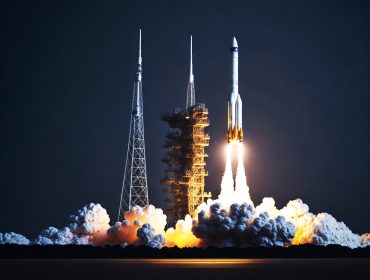
Starship represents SpaceX’s fundamental technical and business thesis. Designed for full reusability with projected orbital delivery costs below $10 per kilogram, the vehicle completed eleven integrated flight tests in 2025. Flight 7 in January achieved the second successful Super Heavy booster catch by launch tower arms. Flight 8 in March replicated this despite engine anomalies during ascent. Flight 9 in May revealed fuel system vulnerabilities during atmospheric reentry that required design modifications.
By October, six Block 1 and five Block 2 vehicles had flown, demonstrating in-space propellant transfer of 5 metric tons and substantial Raptor engine endurance: 226,000 seconds cumulative for Raptor 2 variants and 40,000 for the newer Raptor 3 design. Infrastructure investment runs to billions, with manufacturing complexes at Starbase, Texas, and Kennedy Space Center, Florida, expected operational by late 2026. Launch operations expand from Pad 39A alongside the existing Falcon program.
NASA’s Artemis program provides validation and revenue certainty. Selected in 2021 for the Human Landing System, SpaceX has cleared 49 technical milestones spanning propellant transfer demonstrations, docking qualifications, landing leg load testing, environmental control systems, and navigation software verification. Contracts totaling $2.9 billion for Artemis III and IV missions enable 100-ton lunar payload delivery and reusable mission architecture targeting a 2028 crewed lunar surface return.
This arrangement extends the collaboration established through the Commercial Crew Program, demonstrating aligned incentives: SpaceX drives cost reduction through reusability while NASA validates human-rated systems and provides anchor tenancy during technology maturation. The partnership has fundamentally altered how the United States approaches human spaceflight, shifting from sole reliance on government-built vehicles to commercially operated systems.
Strategic Application of Capital
IPO proceeds target infrastructure beyond launch services. Space-based data centers leveraging Starlink’s third-generation satellites represent one priority, exploiting vacuum cooling and uninterrupted solar power to address artificial intelligence computing’s energy intensity. This aligns with Musk’s broader technology portfolio, connecting Tesla’s AI hardware development and xAI’s Grok language models through SpaceX’s orbital platform.
The vision extends to Mars colonization, Musk’s stated founding objective. Starship’s 100-person payload capacity supports colony fleet concepts targeting initial missions by 2030, though technical and biological challenges remain largely unaddressed in public planning.
Risk Framework
Regulatory complexity persists across multiple jurisdictions. Federal Aviation Administration launch licensing, International Telecommunication Union spectrum coordination, and environmental review processes create execution risk independent of technical performance. Amazon’s Project Kuiper constellation and legacy aerospace contractors present competitive pressure, though delayed timelines and cost structures favor SpaceX’s operational advantages.
Geopolitical considerations carry weight. Musk’s public positions on various policy matters and Starlink’s strategic importance to U.S. national security create potential friction points. Past service limitations in conflict zones demonstrate the operational reality of navigating government relationships while maintaining commercial independence.
Analysts recognize aerospace infrastructure’s appeal during economic uncertainty, yet execution risk around Starship’s human rating and Mars mission timelines warrant scrutiny. The company’s history of missing ambitious deadlines while ultimately delivering technical breakthroughs complicates traditional investment analysis.
Market Implications
SpaceX’s public offering will test investor appetite for capital-intensive infrastructure plays in an environment dominated by asset-light technology businesses. Success would validate private aerospace’s commercial model and potentially unlock capital for competitors and adjacent ventures. Failure or significant valuation reduction would reinforce skepticism about space industry economics outside government contracting.
For institutional allocators, the offering presents exposure to satellite communications, launch services, and future optionality around space-based computing and interplanetary logistics. The concentration risk inherent in Musk’s leadership and the company’s dependence on continued technical execution define the investment’s character.
The 2026 timeline provides twelve months for SpaceX to demonstrate Starship reliability, expand Starlink’s subscriber base, and navigate regulatory approvals. These operational metrics will ultimately determine whether public markets embrace the valuation or demand revision. The outcome will shape commercial space infrastructure development for decades.